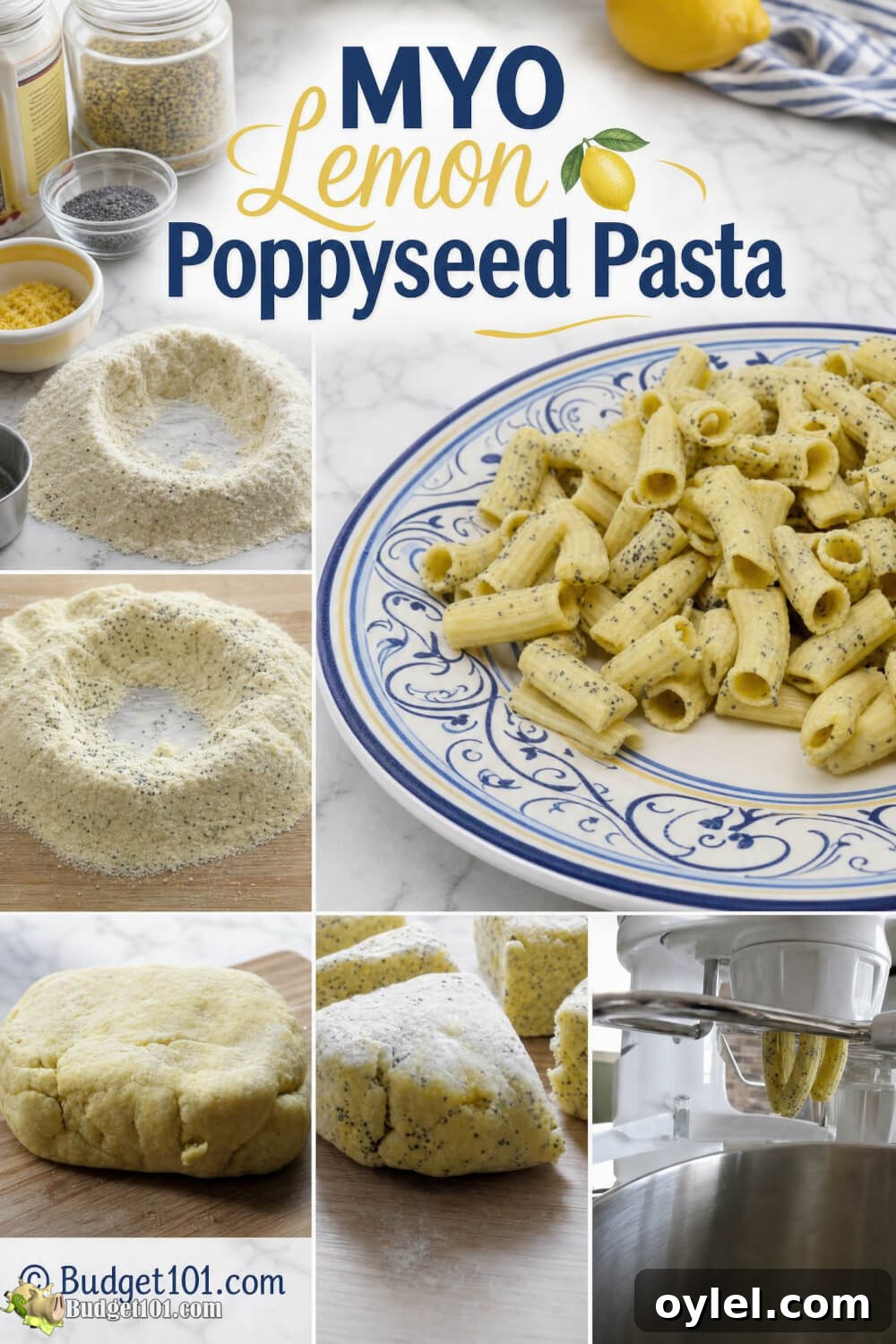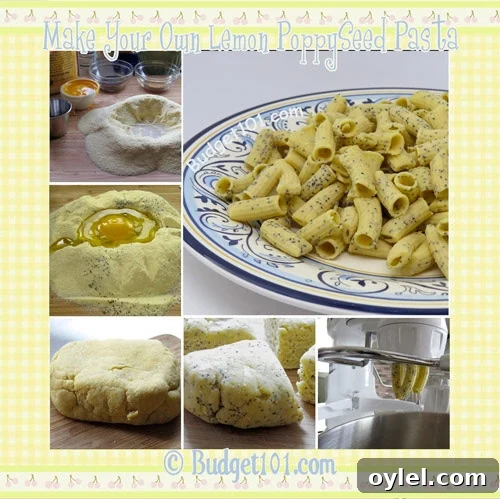
If you want to brighten a meal without spending much, make this homemade Lemon Poppyseed Pasta. It takes just a few inexpensive ingredients—semolina flour, fresh lemon zest, poppy seeds, an egg, and a little liquid—and yields a fresh, flavorful pasta that pairs exceptionally well with lemon chicken, a light cream sauce, or as a unique ravioli wrapper.
Homemade pasta is surprisingly straightforward once you learn the basics. This recipe uses durum semolina flour, which is a coarser flour made from durum wheat and gives pasta a firmer, slightly chewy texture that holds up well to sauces. If you only have all-purpose flour, you can use it, but the result will be softer and prone to swelling or becoming mushy if overcooked. Many cooks mix semolina and all-purpose flour half-and-half to balance texture and cost.
Ingredients
- 1 cup durum semolina flour
- 1 teaspoon freshly grated lemon peel, minced finely
- 2 teaspoons poppy seeds
- 1 egg
- 1–2 tablespoons water or lemon juice (use lemon juice for extra citrus flavor)
Equipment
- Large cutting board or clean work surface
- Pastry scraper (optional, useful for keeping the work area tidy)
- Mixing fork or clean hands
- Pasta extruder or hand-crank roller (or a rolling pin and knife)
- Knife or pasta cutter
Instructions
- Measure the semolina flour onto a large, smooth cutting board or work surface. Create a wide well in the center.
- Add the grated lemon peel and poppy seeds into the well and lightly mix them into the rim of the flour so the flavor distributes evenly.
- Crack the egg into a second well in the center of the flour mixture. Add 1 tablespoon of water or lemon juice to start.
- Use a fork or your fingertips to slowly incorporate the egg and liquid into the flour, pulling from the inside walls of the well until the dough comes together. Add a little more liquid only if the dough feels too dry. The goal is a cohesive, slightly firm dough—not sticky.
- Once combined, knead the dough on the work surface until it becomes smooth and elastic. This usually takes several minutes by hand.
- Cover the dough and let it rest for 10–15 minutes. Resting relaxes the gluten and makes rolling or extruding easier.
- For extruded pasta (bucatini, cavatelli, etc.): break the dough into walnut-sized pieces and feed them through your extruder, cutting each piece as the pasta emerges to the desired length.
- For hand-rolled pasta: divide the dough into four pieces. Roll each piece through a hand-crank roller or with a rolling pin, folding the sheet into thirds and repeating until the sheet is smooth and thin. Because this dough contains poppy seeds, avoid rolling it so thin that the seeds damage the dough; slightly thicker noodles will resist tearing.
- Cut the sheets into thin noodles or the shape you prefer. Nest freshly cut pasta into loose coils for brief drying, or lay sheets over a lightly floured surface if making ravioli.
- Cook fresh pasta in plenty of rapidly boiling salted water for a short time—fresh noodles cook much faster than dried. Test for doneness often and avoid overcooking.
Ravioli Option
If you prefer ravioli, roll pasta into sheets and use a ravioli form or cut rounds by hand. A simple filling that pairs nicely is creamy chicken and chives: mix about 4 ounces cream cheese with half a can of drained, shredded chicken (adjust amounts to taste), add 2 teaspoons chopped chives, and season with salt and pepper. Fill, seal, and cook gently—fresh ravioli will cook quickly in simmering water.
Tips and Variations
- Semolina flour gives the best textured result, but combining semolina with all-purpose flour works well and lowers cost.
- Substitute lemon juice for water to intensify the lemon flavor throughout the dough.
- Keep the dough slightly thicker than you might for plain pasta because poppy seeds can create weak spots when sheets are too thin.
- Refrigerate wrapped dough up to 24 hours. Fresh cut pasta keeps in the refrigerator for up to 2 days. For longer storage, freeze pasta flat on a tray then transfer to airtight bags for up to one month for best quality.
- Serve with lemon chicken and a light lemon-cream sauce, or toss with olive oil, grated Parmesan, and a little cracked black pepper for a simple, bright dish.
Yield and Timing
This batch makes approximately two main-dish servings or four side-dish servings. Active prep, kneading, resting, and shaping take about 25 minutes total; cooking time will depend on the shape and thickness of your pasta.
Notes
- Because homemade pasta cooks quickly, watch it closely once it goes into the pot.
- If you double or triple the recipe, you may need to adjust how you portion and shape the dough and allow a little more working time.
- Use a gentle hand when handling pasta with poppy seeds to reduce tearing during drying or cooking.
Tried this recipe? Save a note of how it turned out and what you paired it with—this pasta is especially rewarding with lemon-forward sauces and simple chicken preparations.