Before I first visited Dubrovnik, I’ll be honest — I knew very little about the city.
I had heard that Croatia was a beautiful place for beach holidays, and friends had recommended certain resorts, but I hadn’t explored the specifics of what to see in Dubrovnik or how different the regions of Croatia can be. Arriving there as the first stop on the European portion of my trip, I came with low expectations. That turned out to be a good thing: starting from a blank slate made every discovery feel more impressive.
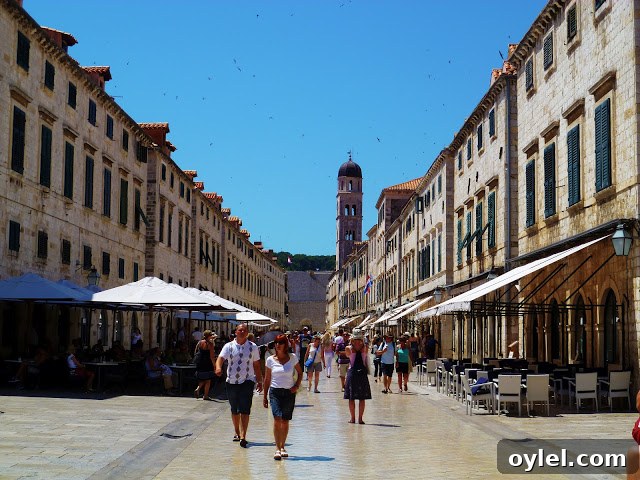
What caught me immediately were two contrasting but complementary impressions. On the one hand, there were the calm, unforgettable sunsets I watched in the smaller town of Cavtat. On the other, there was the Old Town of Dubrovnik itself — narrow cobbled streets, historic buildings, and an architectural character that felt distinctly Italian in places. The combination of dramatic sea views and well-preserved medieval architecture makes Dubrovnik a uniquely photogenic destination.
That said, Dubrovnik has become extremely popular, and the crowds are very noticeable. During my visit we sought shade under awnings and ducked into alleyways to escape the heat, but we were far from alone. The Old Town’s narrow lanes fill quickly with tourists from around the world, many of whom are drawn by the city’s growing international profile and by recent exposure on television. With appearances on glamorized shows such as The Bachelorette in the USA, Dubrovnik’s popularity shows no sign of slowing.
Popularity brings conveniences — a wide choice of restaurants, souvenir shops, and organized tours — but it also brings higher prices and the need to navigate crowds, especially in peak season. For budget travelers, this change is noticeable: food, clothing, and services inside the city walls can be significantly more expensive than in quieter neighborhoods or neighboring towns.
I don’t think Dubrovnik loses its charm because people are visiting; its beauty and history remain intact. My only regret is that I waited until now to see it. I would have loved to experience Dubrovnik before it became such a major tourist magnet, when the streets and cafés were quieter. Still, the city’s appeal is obvious, and it’s easy to understand why so many travelers want to be there.
If you’re planning a trip to Dubrovnik or researching travel to Croatia, here are a few practical points to keep in mind: consider visiting in shoulder seasons (spring or autumn) to avoid the highest summer crowds; explore nearby towns like Cavtat for a quieter seaside experience; walk the city walls early in the morning or late afternoon for better light and fewer people; and budget for higher prices within the Old Town while seeking more affordable options just outside the historic center.
Despite the crowds and rising costs, I would return to Dubrovnik without hesitation. The city’s combination of coastal scenery, rich history, and atmospheric streets makes it one of the stand-out destinations on the Croatian coast. Shared with thousands of visitors or enjoyed in a quieter moment, Dubrovnik is a place worth seeing, and the photographs I took only begin to explain why it continues to attract so many people.