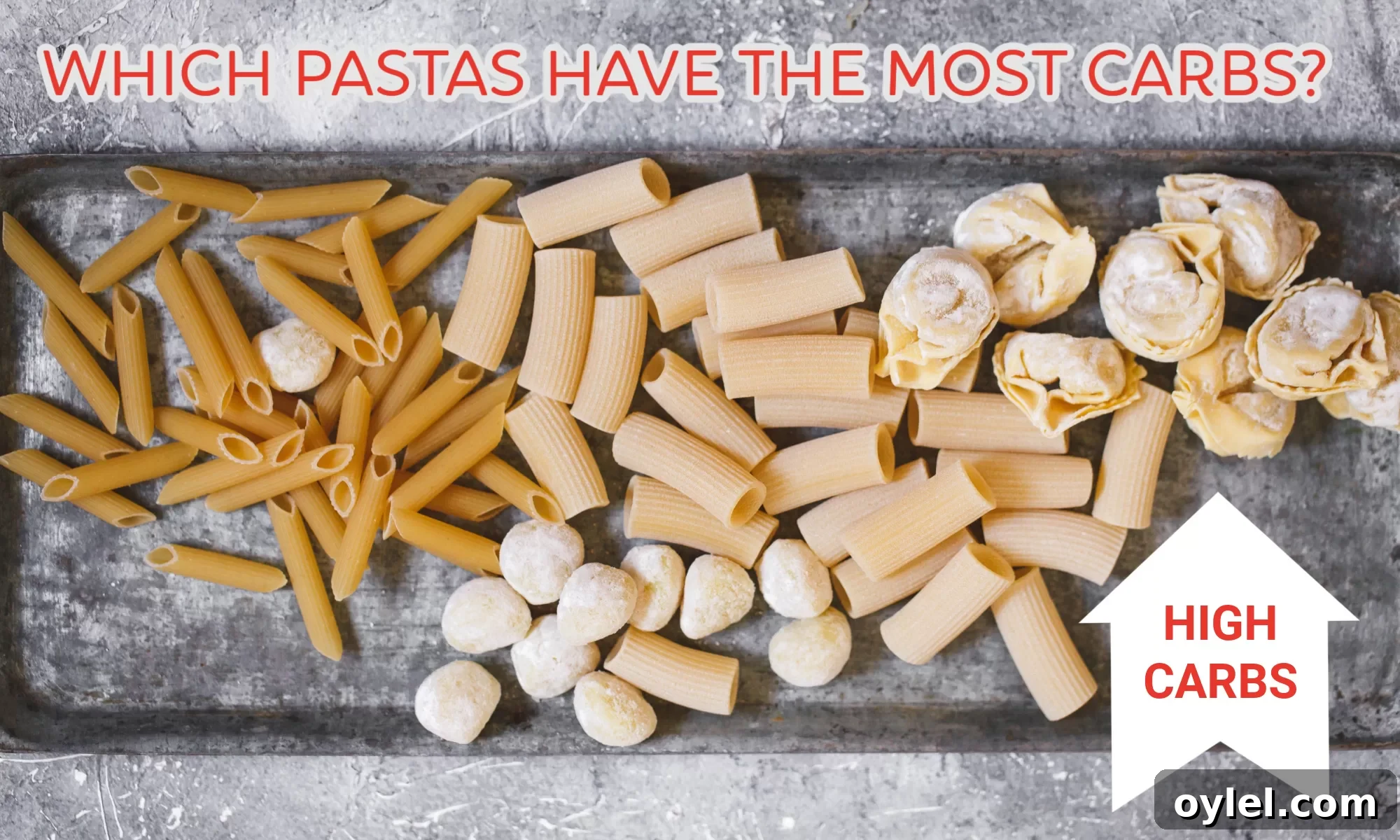
When most people hear “carbs,” they picture bread, potatoes, and pasta. Carbohydrates are a primary energy source in many diets, and pasta—regardless of its ingredient base—can be a significant carbohydrate contributor. If you’re tracking carbs or just curious which pastas are higher in carbohydrates, this guide explains the differences and lists the highest-carb pasta types.
Common high-carb pastas include:
- Almond flour pasta
- Brown rice pasta
- Cassava pasta
- Corn & rice flour pasta (gluten-free varieties)
- Egg noodles
- Regular pasta (durum wheat)
- Soba rice noodles (buckwheat)
- Veggie pasta
- Whole wheat pasta
Read on to learn how many carbs are in each type and which ones rank highest in carbohydrates per typical serving.
Carbs in pasta
Most conventional pastas are made from wheat flour, which is a grain and therefore mainly composed of carbohydrates. When you eat carbs, your body breaks them down to produce glucose, which affects blood sugar—an important consideration for people monitoring glucose or following a low-carb plan.
Pasta made from non-wheat ingredients—such as corn, rice, cassava, or certain legumes—can still be high in carbohydrates because those ingredients are also starchy. Even some products marketed as specialty or gluten-free can contain as many or more carbs than regular pasta.
9 high-carb pastas
Cassava pasta – 49 grams per serving
Cassava pasta, often labeled as grain-free or “Paleo” pasta, is made from the starchy cassava root. While it’s grain-free, it tends to be the highest in carbohydrates among common pasta alternatives because cassava is very starchy.
Brown rice pasta – 44 grams per serving
Brown rice pasta is a gluten-free option that can work well for people with wheat allergies or sensitivities. However, it still provides a substantial amount of carbohydrate per serving, so it’s not ideal if you need a low-carb choice.
Gluten-free pasta (corn & rice flour) – 44 grams per serving
Many gluten-free pastas are made from a blend of corn and rice flour. These products can closely resemble traditional pasta in texture and appearance, but they are often comparable to—or higher than—regular pasta in total carbohydrate content.
Soba noodles (rice + buckwheat) – 43 grams per serving
Buckwheat is not a wheat at all but a pseudocereal; it is gluten-free and has a grain-like nutritional profile. Soba noodles vary: some are pure buckwheat or rice-buckwheat blends and are gluten-free, while others include wheat flour. Either way, soba noodles generally have a carbohydrate content similar to other pastas.
Regular pasta – 42 grams per serving
Regular pasta is usually made from durum wheat semolina, a high-protein, high-gluten flour. The various shapes—spaghetti, penne, fusilli—are formed from this same base flour and supply a significant amount of carbohydrates per serving.
Veggie pasta – 40 grams per serving
“Veggie pasta” can be a misleading term. Many commercial veggie pastas are essentially regular wheat-based pasta with added vegetable powders or pieces. They often have carbohydrate levels similar to standard pasta rather than being substantially lower.
Egg noodles – 40 grams per serving
Egg noodles contain eggs added to wheat-based dough, which affects texture and flavor but does not eliminate the high carbohydrate content. Because they are made primarily from wheat flour, egg noodles are not gluten-free and are comparable to regular pasta in carbs.
Whole wheat pasta – 39 grams per serving
Whole wheat pasta is a higher-fiber alternative to refined pasta. The extra fiber lowers net carbs slightly (net carbs = total carbs − fiber), and it also slows digestion, which can help moderate blood sugar response. Still, whole wheat pasta contains a similar total carbohydrate amount to regular pasta.
Almond flour pasta – 39 grams per serving (1 cup)
Almond flour pasta is another grain-free option frequently used in Paleo or lower-carb menus. Pure almond flour is low in carbs, but many almond-based pastas include tapioca or other starches to help the dough bind and hold shape, which raises the carbohydrate content compared with straight almond flour.
Nutrition comparison of high-carb pastas
Listed in alphabetical order. Serving size noted where applicable.
| Pasta (2 oz. dry unless specified) | Calories | Total fat (saturated) | Total carbs (fiber) | Total sugars (added) | Protein |
| Almond flour pasta – 1 cup | 360 | 20 g (2 g) | 39 g (3 g) | 2 g (0 g) | 12 g |
| Brown rice pasta | 210 | 1 g (0 g) | 44 g (2 g) | 0 g | 4 g |
| Cassava pasta | 200 | 0 g | 49 g (4 g) | 2 g (0 g) | 1 g |
| Corn & rice flour pasta (gluten-free varieties) | 190 | 1 g (0 g) | 44 g (2 g) | 0 g | 4 g |
| Egg noodles | 220 | 3 g (1 g) | 40 g (2 g) | 2 g (0 g) | 8 g |
| Regular pasta | 200 | 1 g (0 g) | 42 g (3 g) | 1 g (0 g) | 7 g |
| Soba rice noodles (buckwheat) | 200 | 1 g (0 g) | 43 g (2 g) | 1 g (0 g) | 6 g |
| Veggie pasta (commercial variety) | 200 | 1 g (0 g) | 40 g (2 g) | 3 g (0 g) | 8 g |
| Whole wheat pasta | 180 | 1.5 g (0 g) | 39 g (7 g) | 1 g (0 g) | 8 g |
FAQs:
Pasta made from refined wheat tends to be high in starch and lower in fiber, so it’s not the most nutrient-dense carbohydrate choice. Whole grains, vegetables, fruits, and legumes generally offer more fiber, vitamins, and minerals per serving and are considered healthier carbohydrate options.
Runners often prefer whole wheat pasta because its higher fiber content slows digestion and provides a steadier release of energy compared with refined pasta. It also supplies more micronutrients and protein per serving.