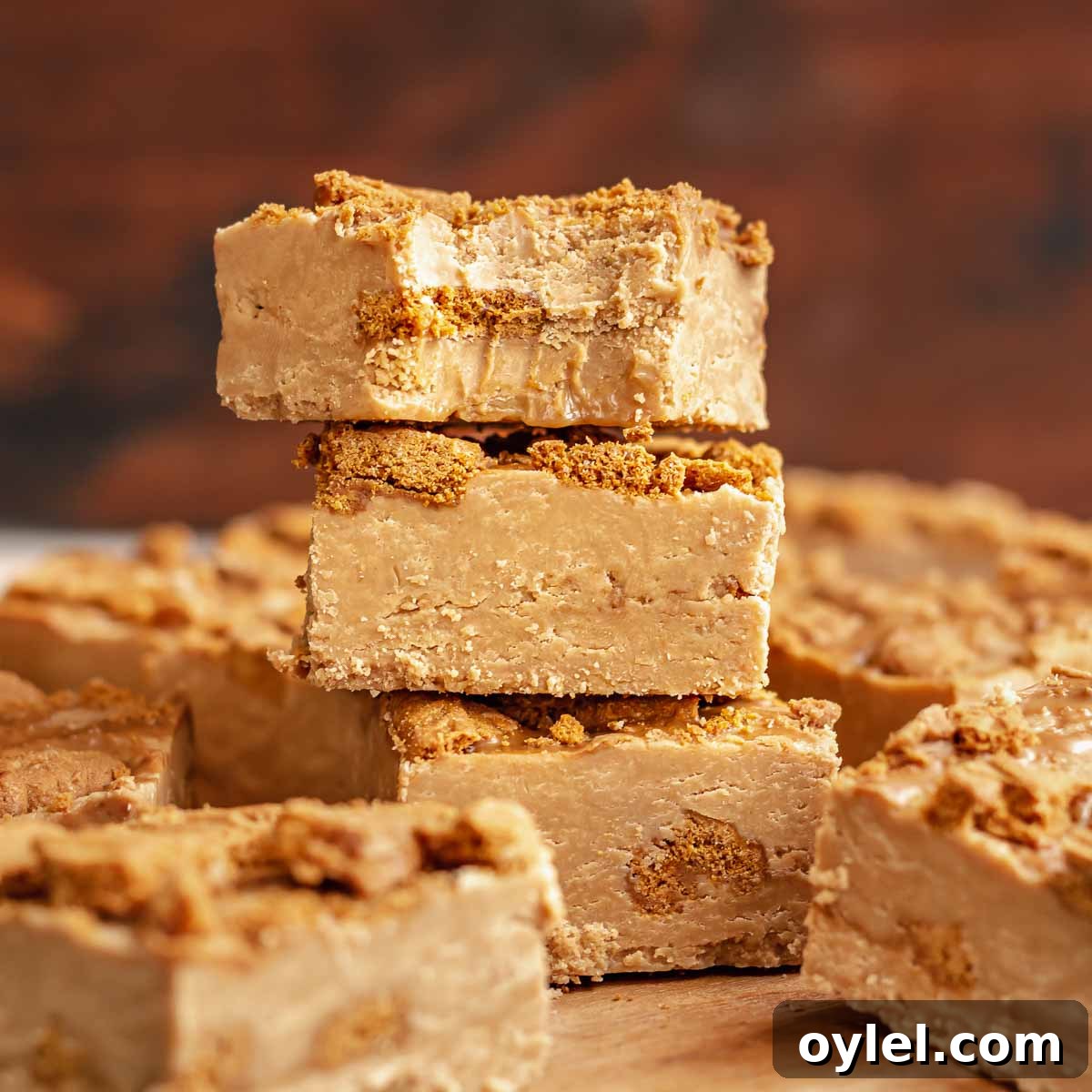
Biscoff fudge is a rich, no-bake confection that combines creamy cookie butter with crunchy cookie pieces and a smooth, condensed-milk fudge base. With just a few ingredients and minimal hands-on time, this fudge delivers the caramelized, spiced flavor of Biscoff in every bite—perfect for gifting, holiday trays, or an indulgent snack.
Easy to prepare and wonderfully indulgent, this Biscoff fudge works especially well for seasonal celebrations like Christmas and Easter thanks to its warm, spiced notes.
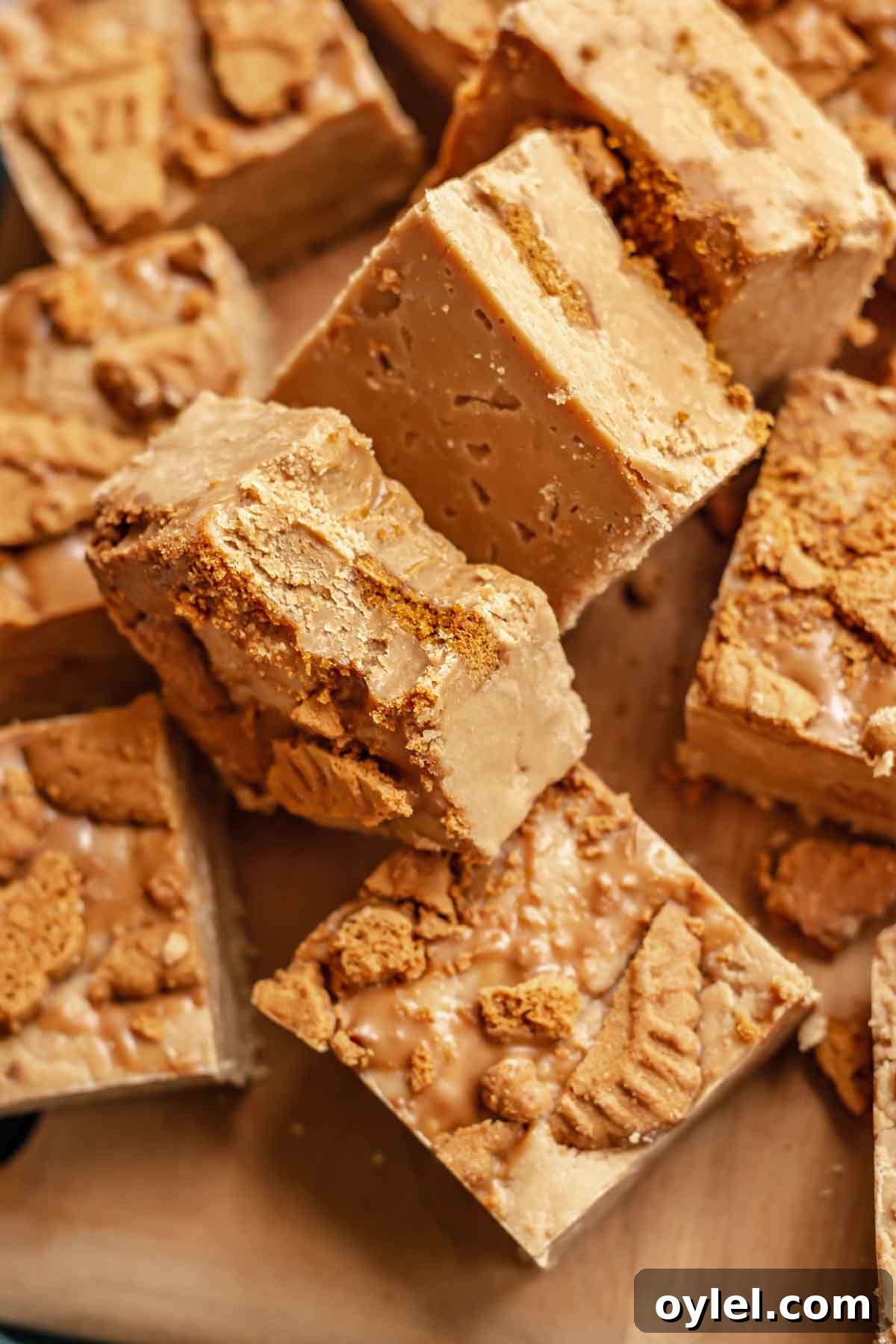
Why You’ll Love This Recipe
No-bake and simple. This Biscoff fudge requires no oven—just a microwave (or a double boiler) to melt ingredients. There’s no candy thermometer or advanced technique required, making it accessible for cooks of all skill levels.
True cookie-butter flavor. The recipe uses Biscoff spread (cookie butter) and crushed Biscoff cookies to layer caramelized, spiced speculoos flavor throughout the fudge.
Quick to assemble. With only a few ingredients and a handful of steps, the fudge sets quickly and yields a crowd-pleasing dessert or gift.
Ingredients
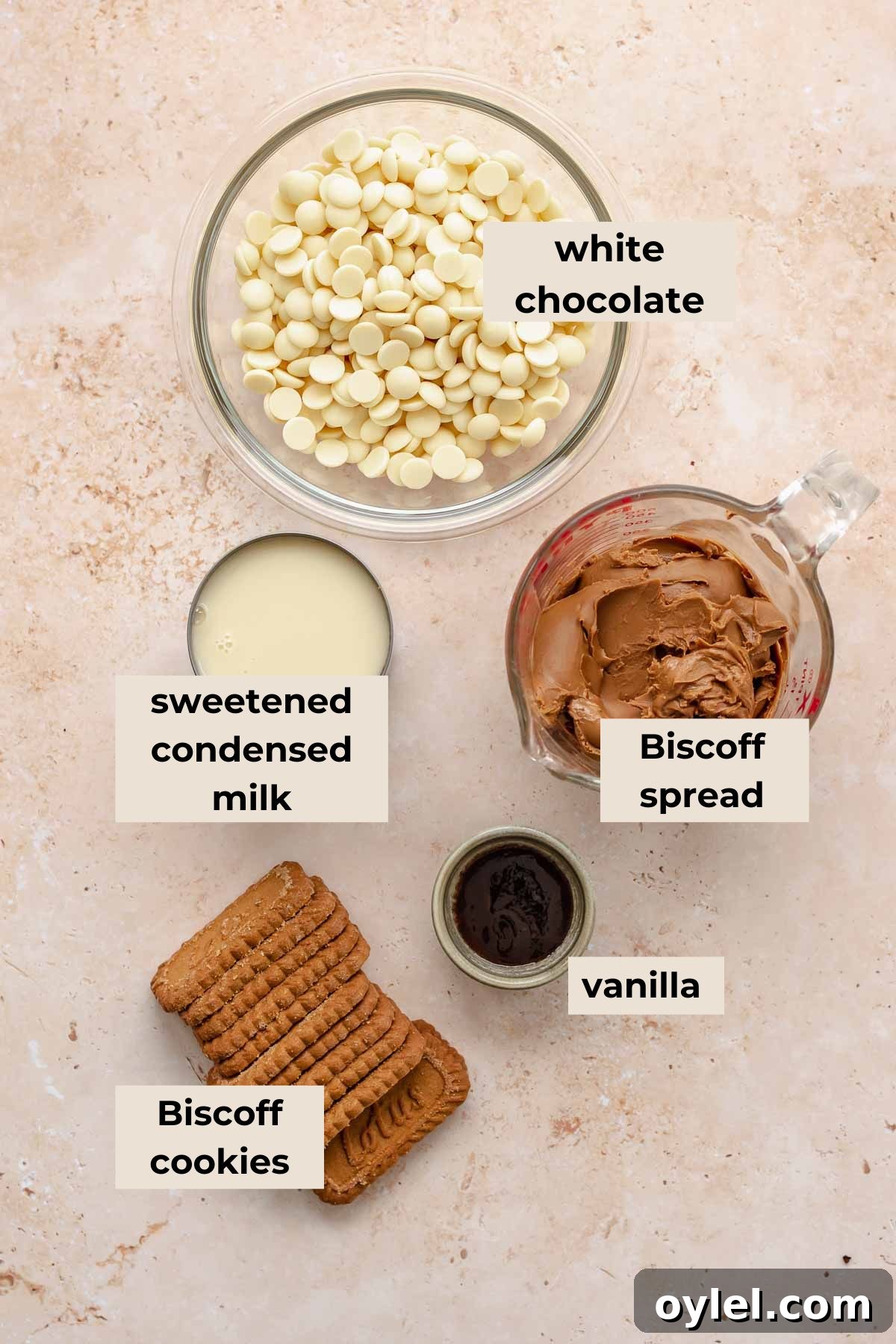
- White chocolate – chips or chopped bars melt smoothly when heated gently; avoid overheating to prevent seizing.
- Sweetened condensed milk – gives the fudge a chewy, creamy texture and sweetness.
- Biscoff spread (cookie butter) – the star ingredient; use creamy or crunchy based on texture preference.
- Biscoff cookies – crushed into pieces for folding or sprinkling on top for crunch.
See the recipe card below for exact quantities, servings, and nutrition details.
What is Biscoff?
Biscoff cookies are thin, crunchy spiced cookies with caramel and cinnamon notes that are commonly served with coffee. The cookies are the base for Biscoff (or speculoos) spread—also called cookie butter—a smooth, spreadable paste made from ground cookies and oil. You may see the cookie referred to as speculoos in European markets; Biscoff is the popular brand name in many countries.
Substitutions and Variations
- Use crunchy Biscoff spread instead of creamy for extra texture in the fudge.
- Fold additional crushed cookies into the center layer or sprinkle more on top for a pronounced crunch.
- If white chocolate isn’t available, use a high-quality white chocolate alternative or a white chocolate confectionery coating designed for melting, but adjust heat carefully to avoid graininess.
How to Make This Recipe
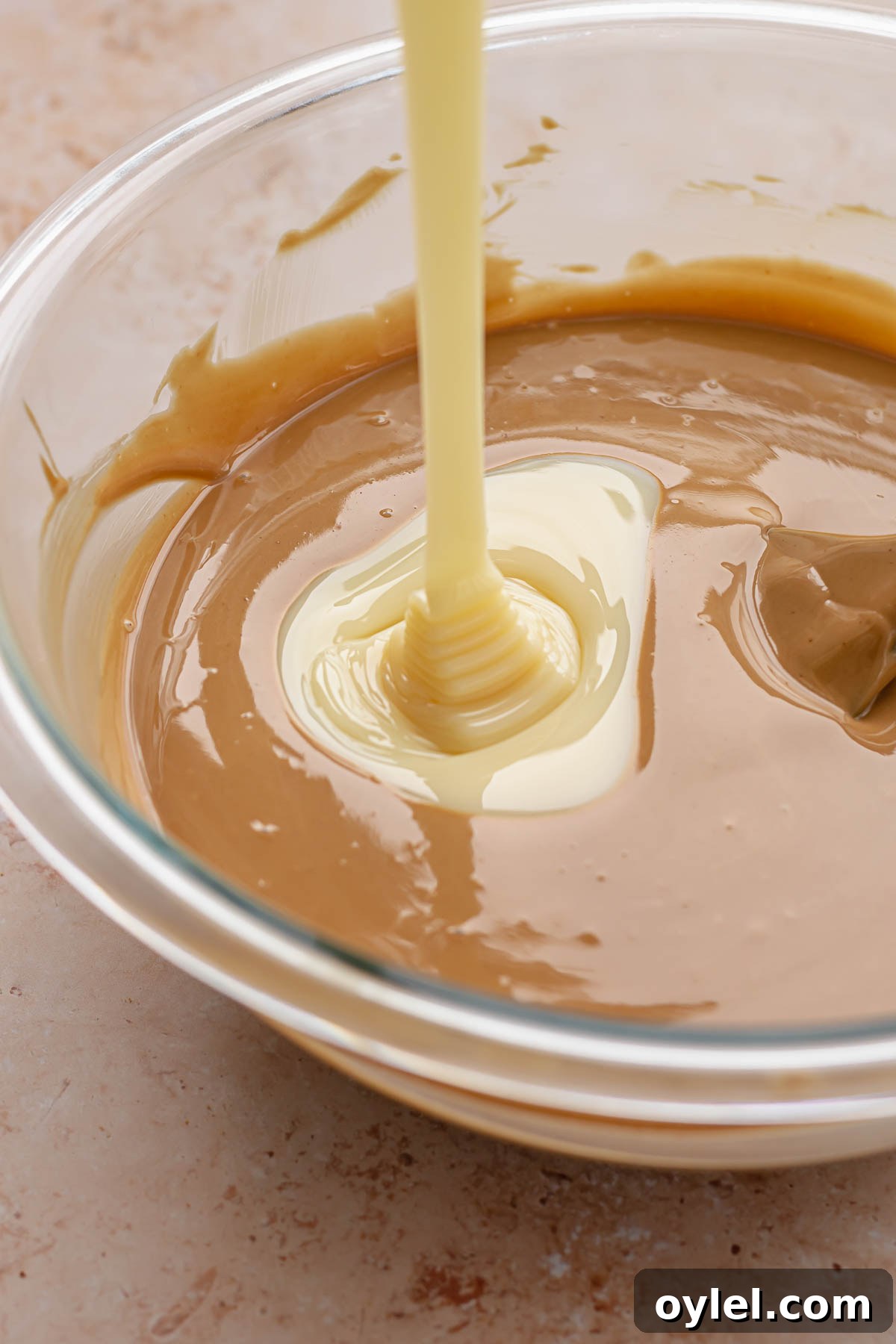
1. Gently melt white chocolate with most of the Biscoff spread. Use 30-second bursts in the microwave, stirring between bursts, or melt over low heat in a double boiler until smooth.
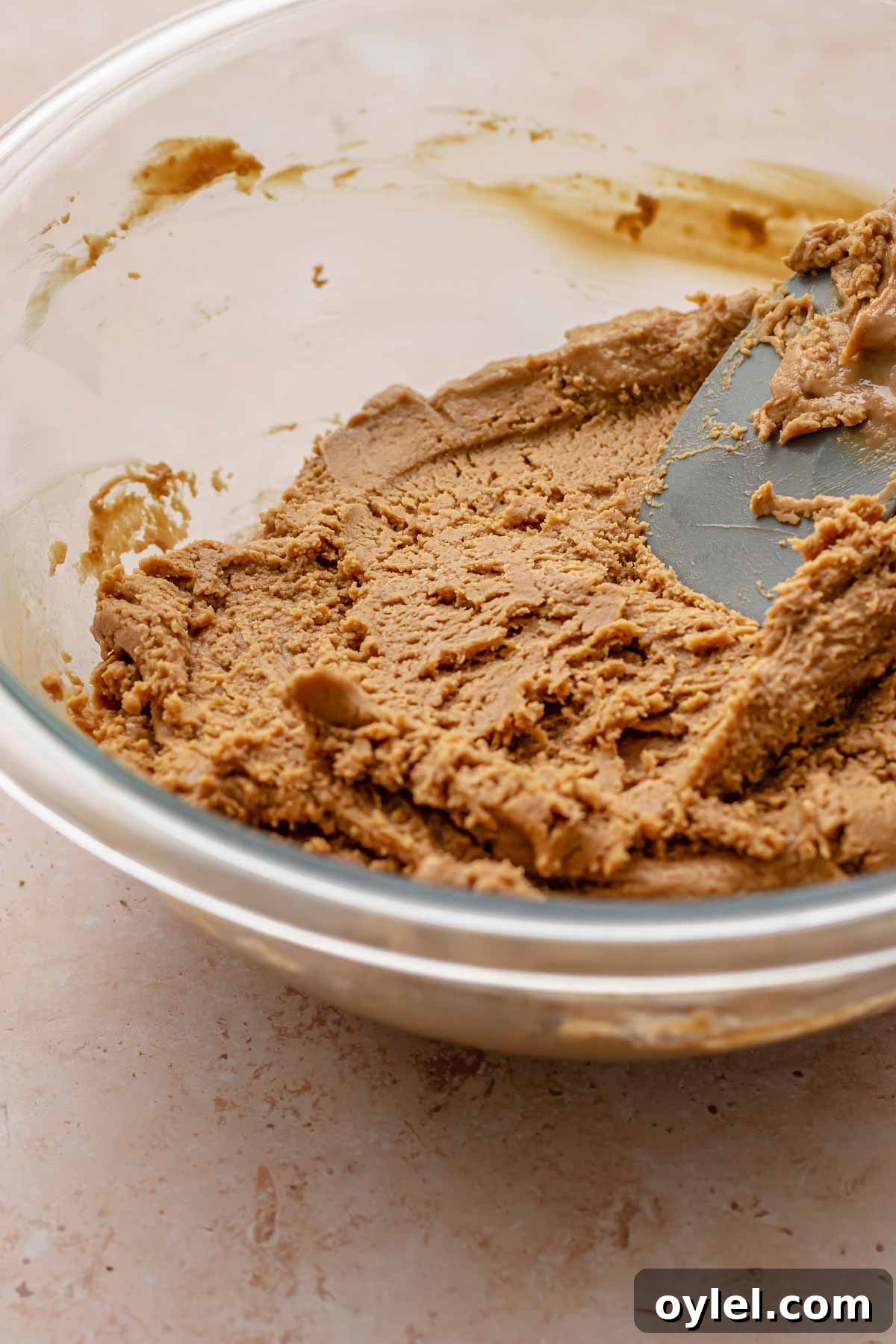
2. Stir in the sweetened condensed milk until everything is combined. The mixture will thicken quickly as it cools.
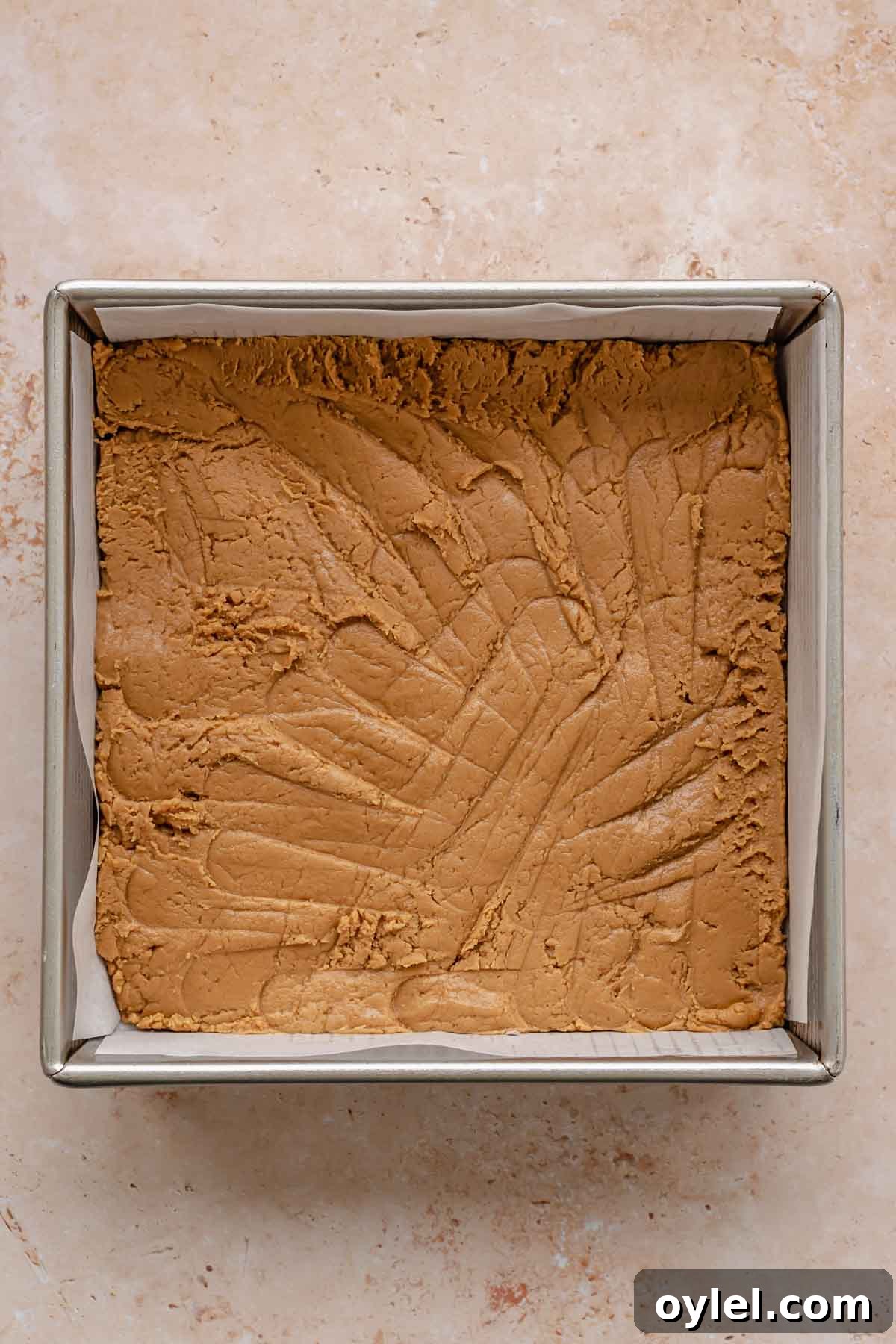
3. Line an 8×8-inch pan with parchment and press half the fudge into the pan to form the base layer.
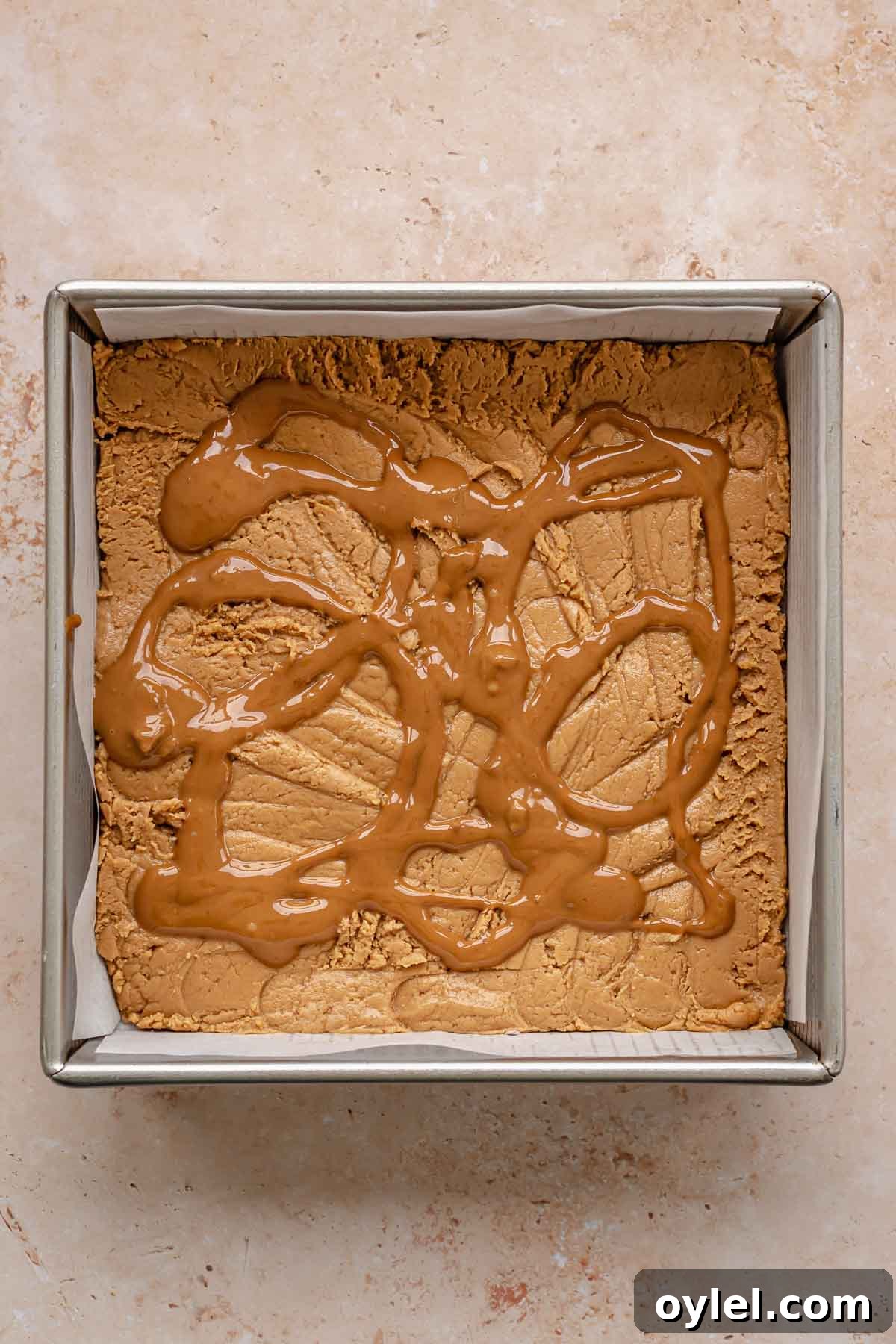
4. Melt the reserved Biscoff spread and drizzle some over the first layer in a swirl pattern.
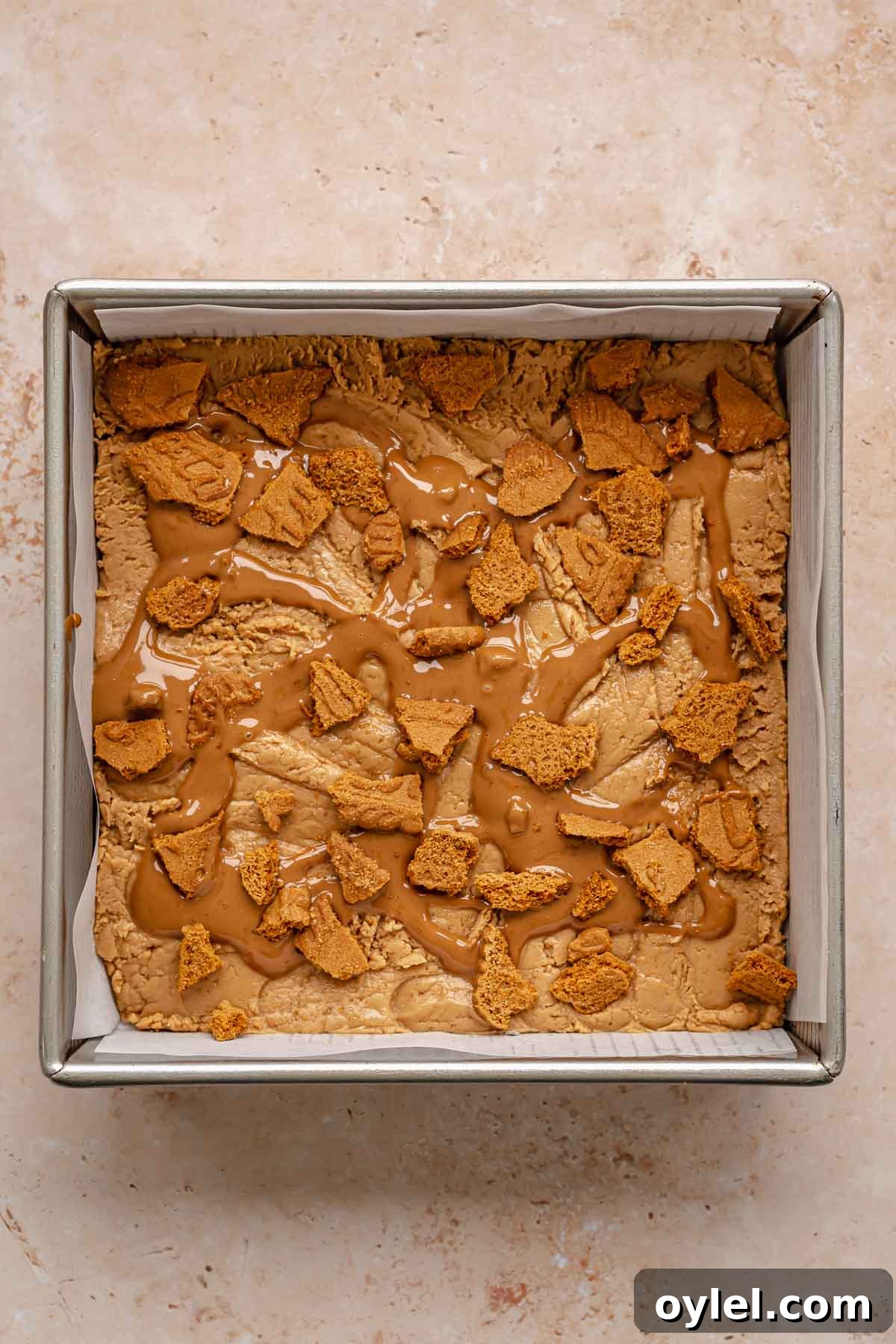
5. Sprinkle or press half the crushed Biscoff cookies into the pan so they stick to the first layer.
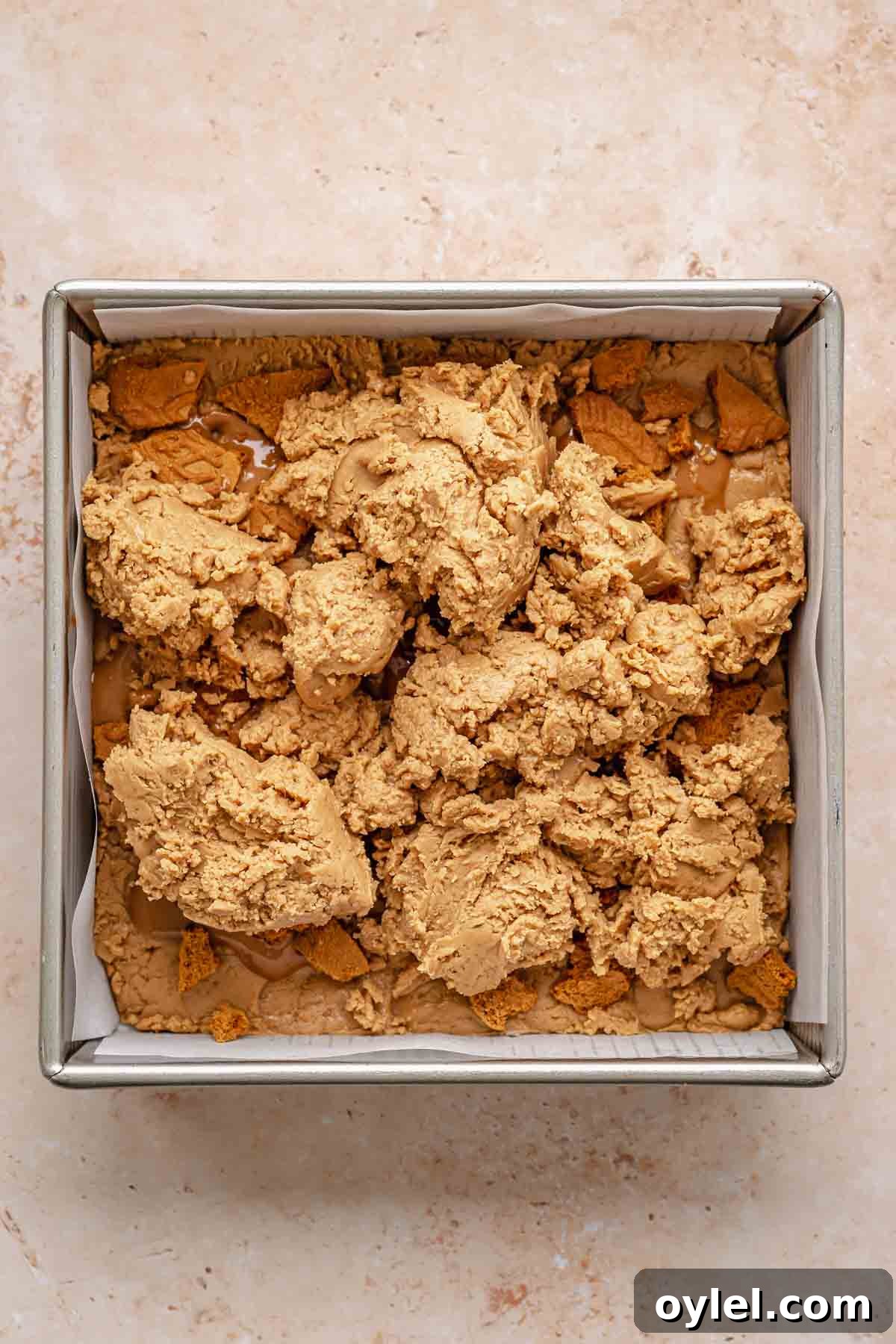
6. Drop spoonfuls of the remaining fudge over the cookies and gently press into an even top layer.
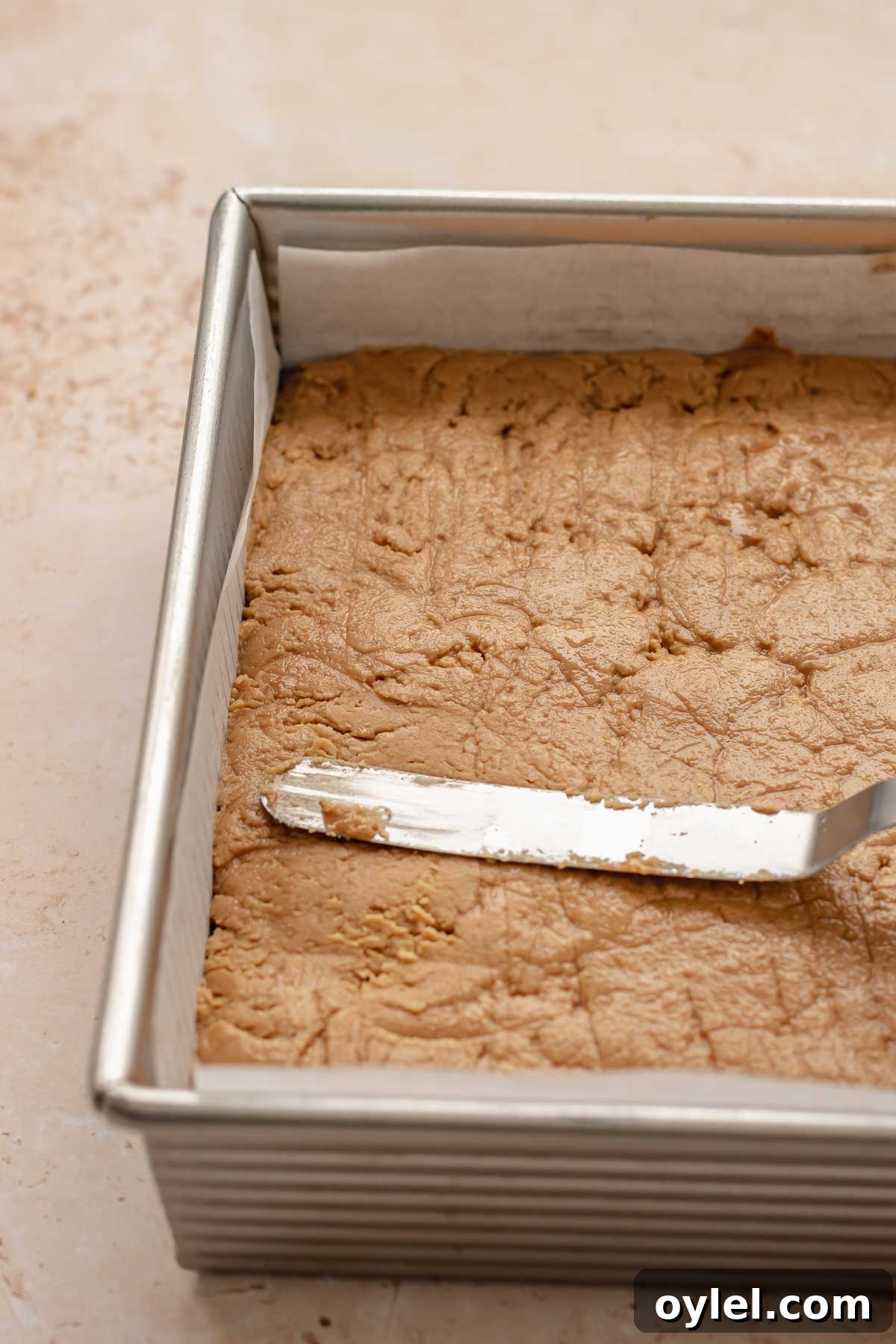
7. Smooth the top with an offset spatula or the back of a spoon so the surface is even.
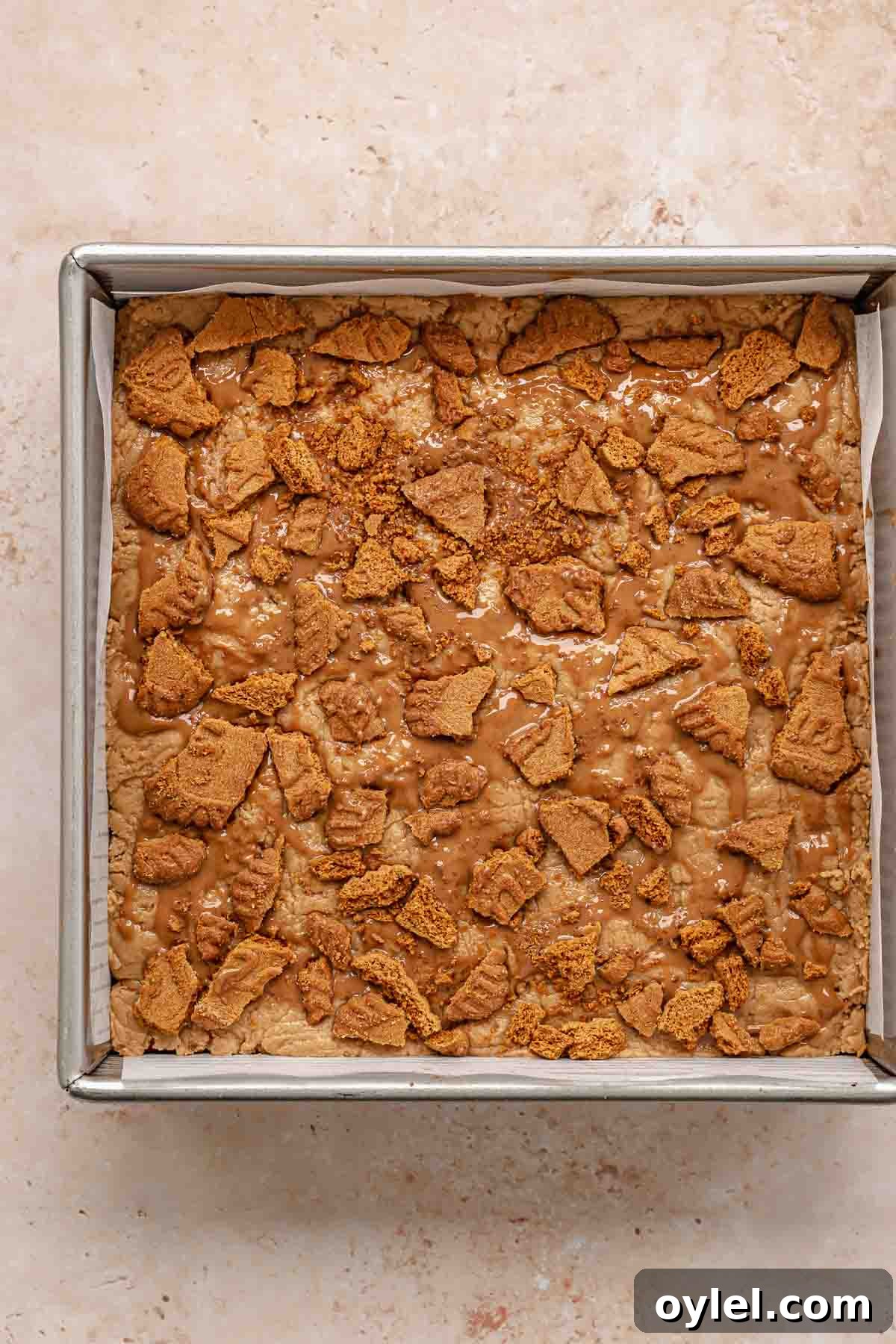
8. Finish with more cookie butter drizzled on top and additional crushed cookies. Press the pieces in lightly so they stick.
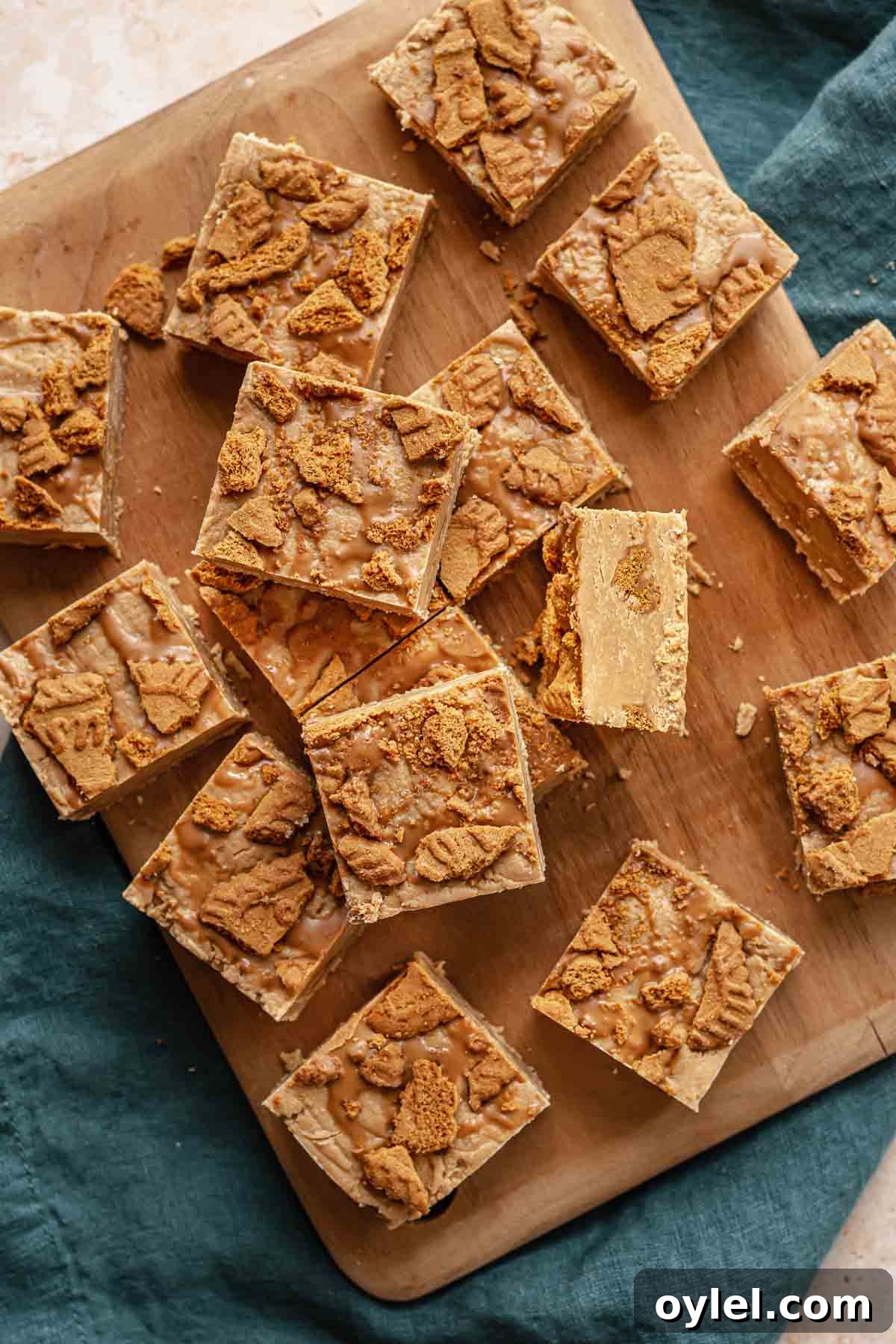
9. Let the fudge set at room temperature for about one hour, then remove from the pan, slice into squares, and serve.
Expert Tips
- Line the pan with parchment paper for easy removal and clean edges when slicing.
- An offset spatula or the flat bottom of a spoon helps smooth into corners and creates a professional finish.
- Add cookie butter and cookie pieces to the top right away and gently press them in so they adhere as the fudge firms up.
- Warm white chocolate and Biscoff slowly—too much heat can cause white chocolate to seize. Stop heating once just melted and stir until smooth.
- Work quickly after mixing: the fudge will thicken as it cools, so have your pan and cookie pieces ready before you combine everything.
Recipe FAQs
Storage
Store Biscoff fudge in an airtight container at room temperature for up to four days. Keep it covered to prevent drying out.
To freeze, wrap the sliced fudge tightly with plastic wrap and place it in a sealed container or freezer bag. Freeze for up to two months. Thaw completely at room temperature before serving.
Recipe
- 12 oz white chocolate (chips or chopped bars)
- 1 ¾ cups creamy Biscoff spread, divided (use crunchy if preferred)
- 14 oz sweetened condensed milk (one can)
- 12 Biscoff cookies, broken into pieces for topping
Directions
- Line an 8×8-inch pan with parchment paper and set aside.
- In a microwave-safe bowl, combine the white chocolate and 1 ¾ cups of the Biscoff spread. Heat in 30-second intervals, stirring between each, until melted and smooth. Alternatively, melt gently in a double boiler.
- Warm the remaining ¼ cup of Biscoff spread until pourable for drizzling.
- Stir the sweetened condensed milk into the melted chocolate and cookie butter until fully combined. The mixture will thicken quickly.
- Press half of the fudge into the prepared pan. Drizzle half of the warmed Biscoff spread over the layer and scatter half of the crushed cookies on top.
- Drop spoonfuls of the remaining fudge over the cookies and spread to cover evenly. Finish with the remaining drizzled cookie butter and cookie pieces, pressing them lightly into the surface.
- Allow to set at room temperature for about one hour. Lift the fudge from the pan using the parchment, slice into squares, and serve.