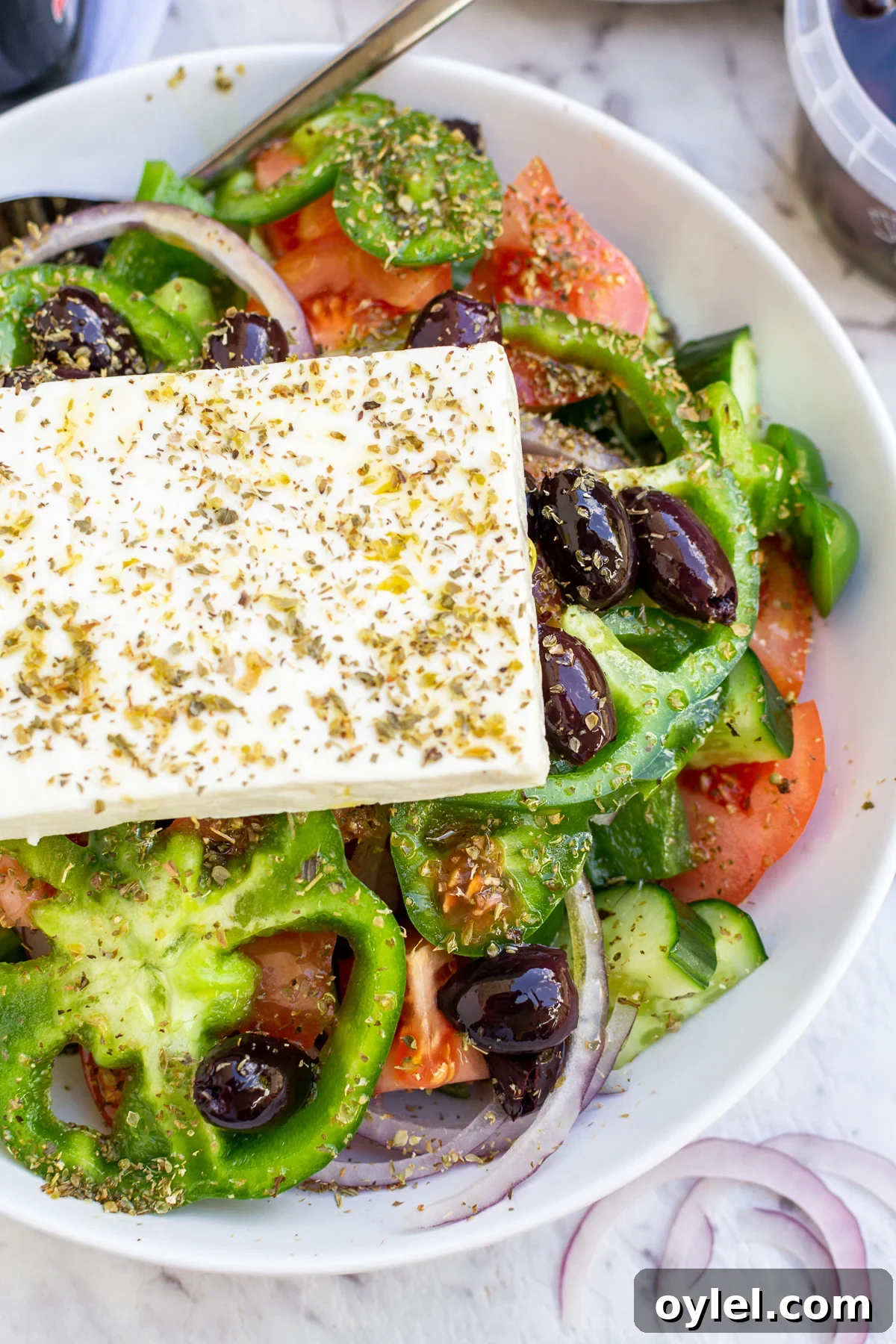
You may think you know how to make a Greek salad, but the authentic village version—known in Greece as horiatiki salata—might surprise you. There’s no lettuce, no crumbled feta mixed through, and no elaborate vinaigrette. Instead, the classic approach is simple: ripe tomatoes, cucumber, red onion and green pepper, black Kalamata olives, a generous sprinkle of dried oregano and plenty of extra virgin olive oil. Finish by laying a large slice of genuine Greek feta on top.
This is one of those effortless recipes I can prepare without thinking. Read on and I’ll show you how to make a perfect, traditional Greek salad every time.
The easiest and best Greek salad recipe
If you want to learn one authentic Greek dish, make the horiatiki salata. I lived in Greece for years and ate this salad everywhere; its core elements rarely change. Abroad, many versions include lettuce, imitation feta or complicated dressings—none of which are traditional.
The authentic method is extremely simple: roughly chop the ripest tomatoes you can find, add chunky slices of cucumber and green pepper, thin rings of red onion, a generous handful of black olives, plenty of oregano and a good pour of extra virgin olive oil. Top it with a large slice of real feta and you’re done. Below are a few tips to elevate the salad further.
📌 Recipe snapshot
- Prep: 10 minutes
- Serves: 4 to 6 (as a side)
- Key ingredients: ripe tomatoes, cucumber, green pepper, red onion, Kalamata olives, dried oregano, extra virgin olive oil, authentic feta
- Why you’ll love it: authentic and simple, made with fresh summer ingredients, colorful and filling, excellent with many main dishes or on its own for lunch
5★ Review
“This is the real Greek salad. The presentation is beautiful and the flavors are perfect. No vinegar or extra salt is needed—the tomatoes, olives and a good olive oil do the work. My family doubted the no-lettuce rule until they tried it. Now it’s our go-to. Perfect.” — Tim
About the ingredients
See the recipe card below for exact quantities. Here’s a concise guide to choosing the best ingredients.
You don’t need exotic items—just pick the freshest produce and a good feta and olive oil.
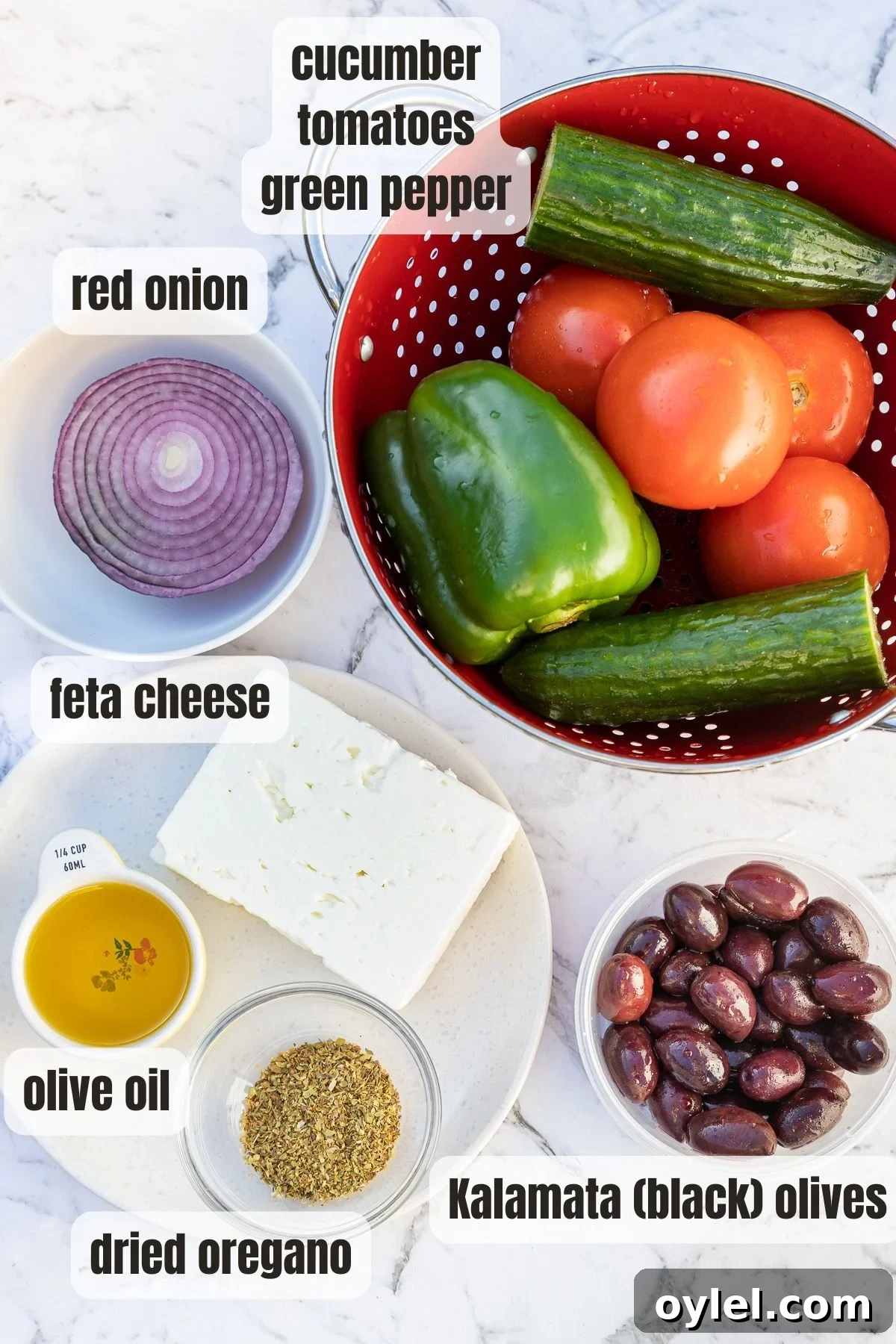
- Tomatoes: Choose the ripest, juiciest tomatoes you can find. Large, red, meaty tomatoes give the best flavor.
- Cucumber: Long English or Lebanese cucumbers work well. I usually leave the skin on unless it’s tough; slice thickly.
- Green pepper: One green pepper adds crunch and color. Slice some into pretty rounds for the top and chop the rest freely.
- Onion: Red onion is milder and typical here; slice thinly. Use less if you prefer a subtler bite.
- Olives: Kalamata or other large black olives are traditional; using stone-in olives offers the most authentic taste.
- Oregano: Dried Greek oregano is classic. Fresh oregano may be used as a substitute—use roughly three times the amount of fresh to dried.
- Extra-virgin olive oil: This is the only dressing, so use a good-quality extra-virgin olive oil. It mixes with the tomato juices to make a simple, delicious dressing.
- Feta cheese: Use a thick slice of authentic Greek feta. A single large slice placed on top is traditional and makes a striking presentation.
Reminder: A traditional Greek village salad usually contains no lettuce. Occasionally a few leaves such as arugula may be added, but that’s not the classic version.
How to make it
Follow these straightforward steps for a reliably excellent horiatiki salad.
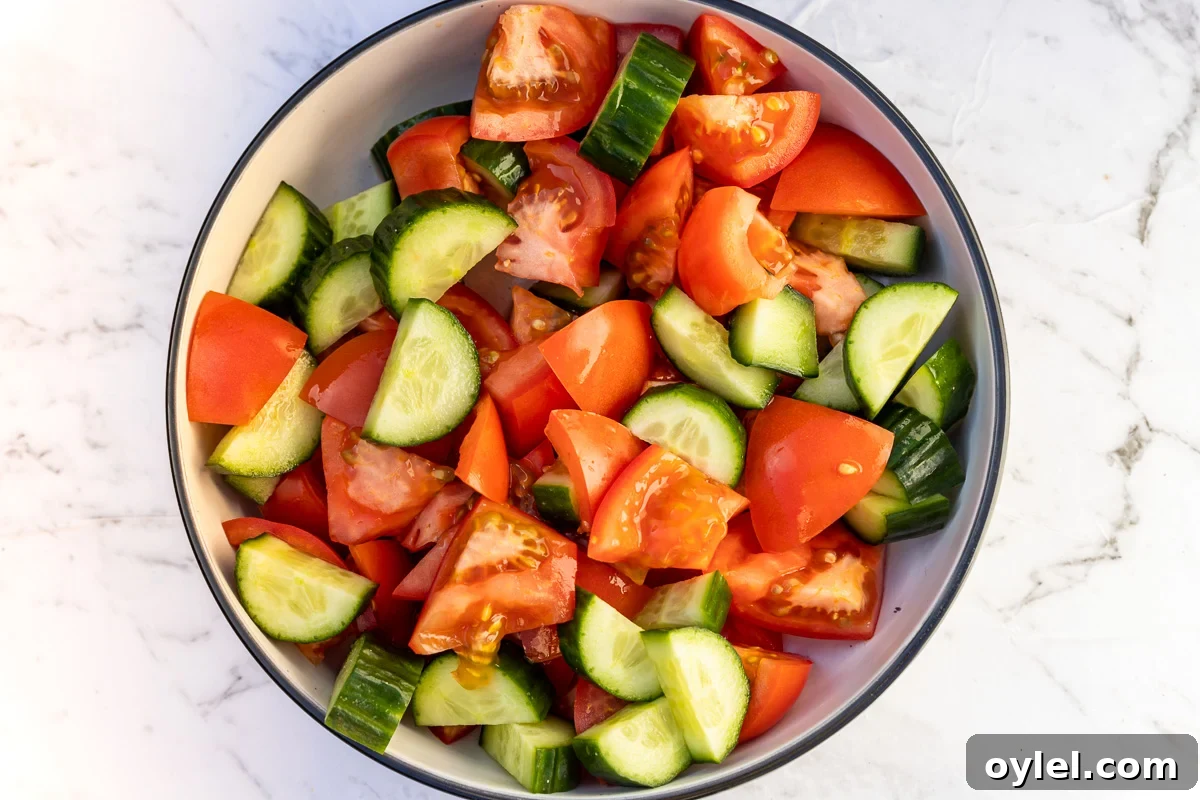
Step 1: Roughly chop the tomatoes into irregular chunks. No need to be precise—this rustic style is part of the charm. Squeeze a little juice from some of the tomatoes into the bowl for extra dressing.
Step 2: Slice the cucumber into thick rounds and then halve or quarter the rounds depending on size. Add them to a large bowl.
Step 3: Thinly slice the red onion and most of the green pepper. Reserve a few neat rounds of pepper and a couple of onion rings for decoration. Add most of the slices, the olives, most of the oregano and most of the olive oil to the bowl and toss gently so the flavors combine.
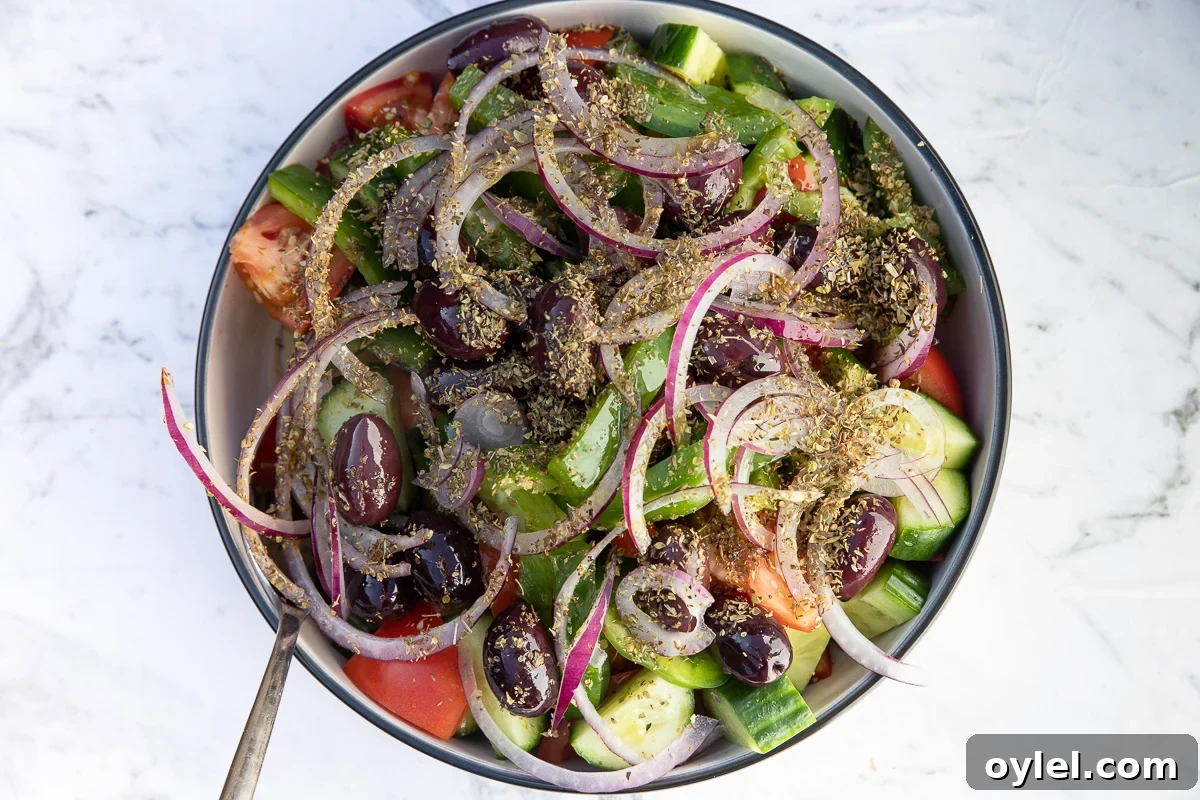
Reserve a few attractive slices of pepper and onion and a couple of olives to place on top for presentation.
Step 4: Place the large slice of feta on the top, sprinkle a little more oregano over everything and finish with the remaining drizzle of olive oil.
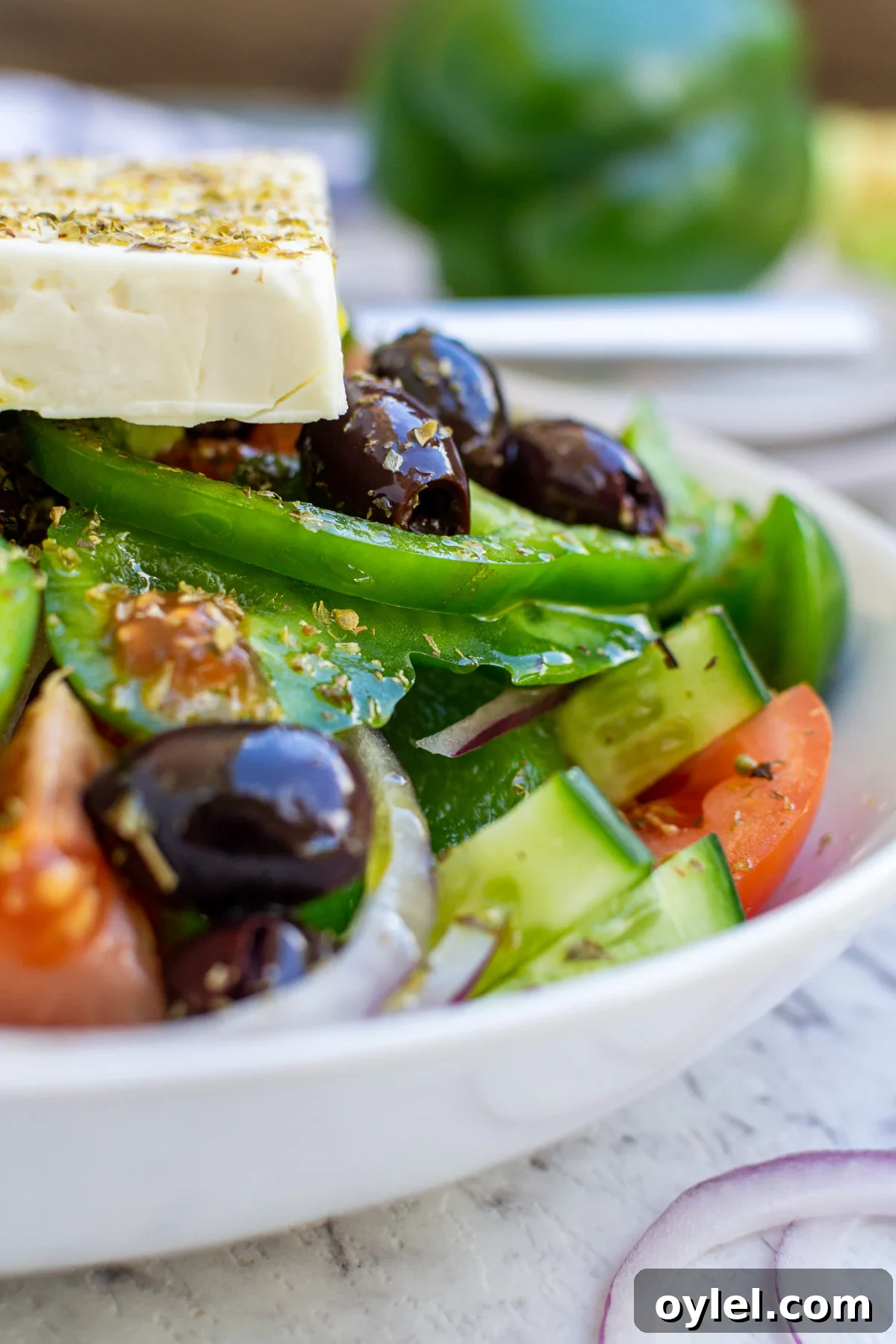
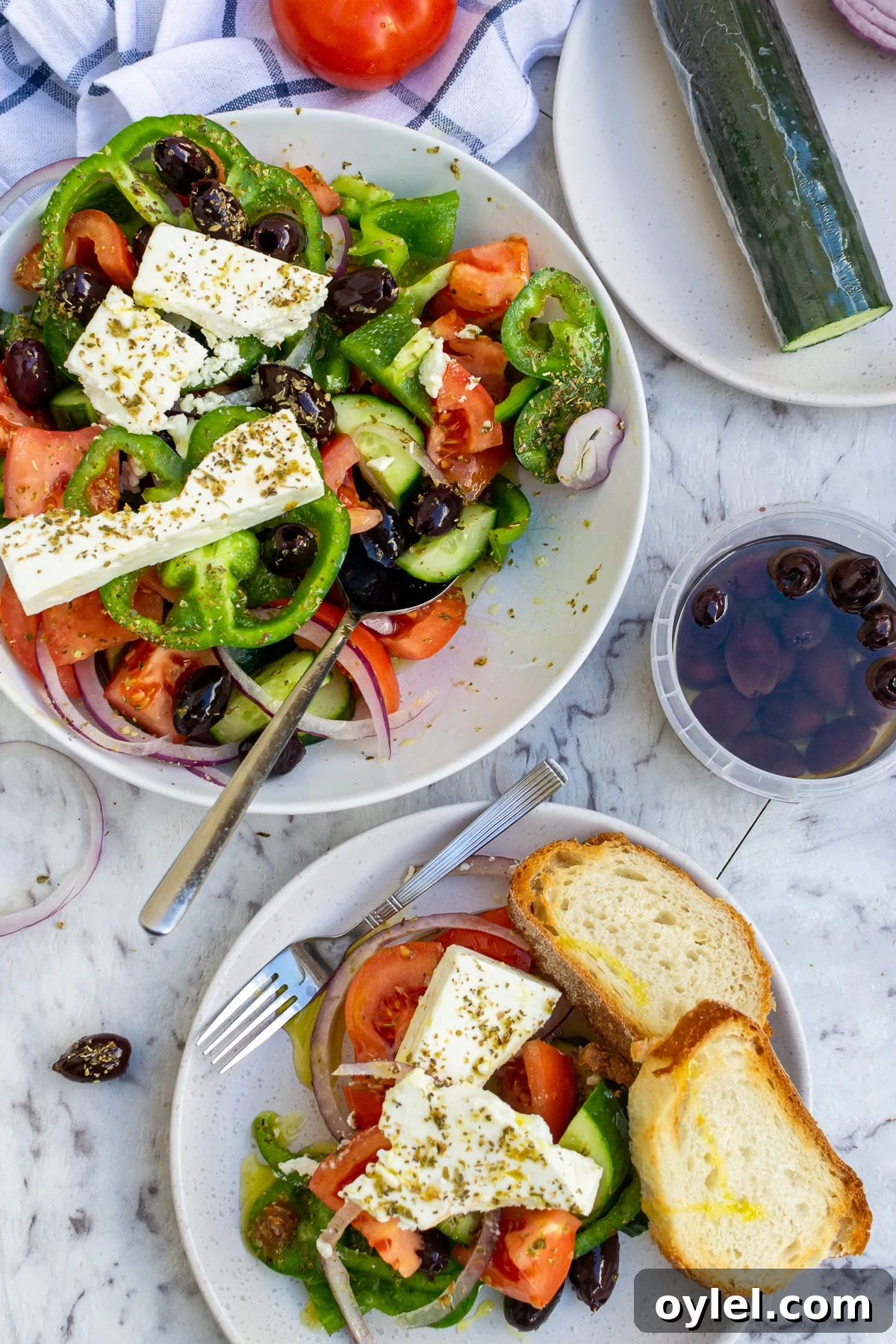
Step 5: Bring the salad to the table and break up the feta just before everyone serves themselves—this traditional approach lets diners control how much cheese they want.
Helen’s Top Tips
- Choose the freshest produce: Summer tomatoes, crisp cucumbers and fresh peppers make the biggest difference.
- Squeeze some tomato juice into the bowl: Releasing a little juice mixes with the oil to create a delicious, mop-up-able dressing.
- Slice the pepper from the bottom up: That produces pretty round slices perfect for arranging on top.
- Mind the olive pits: Even pitted olives sometimes contain fragments; taste carefully and warn guests if you use stone-in olives.
- Bread is essential: Fresh crusty bread or pita is ideal for mopping up the dressing and tomato juices.
- Optional additions: A splash of red wine vinegar or soaked rusks (paximathi) are traditional in some regions—use them if you enjoy the variation.
Serving ideas
This salad is excellent on its own with bread for a light lunch, or alongside many mains. It pairs particularly well with:
- Burgers — adds freshness and acidity to cut through richness.
- Pizza — a bright, contrasty side.
- Grilled or roasted meats — lamb, chicken, pork or beef.
- Quiche or tart — provides a crisp, juicy counterpoint.
- Pasta — especially richer, tomato-based or creamy dishes.
- Greek main dishes — moussaka, pastitsio, souvlaki, baked fish, Greek-style potatoes or spinach and feta pie.
A simple tzatziki is a lovely accompaniment when you want a dip alongside the salad.
Recipe FAQ
Store covered in the refrigerator and eat within a day or two. The salad is best the day it’s made; leftovers are still tasty the next day but lose some texture and brightness.
A few more excellent salads
Salads
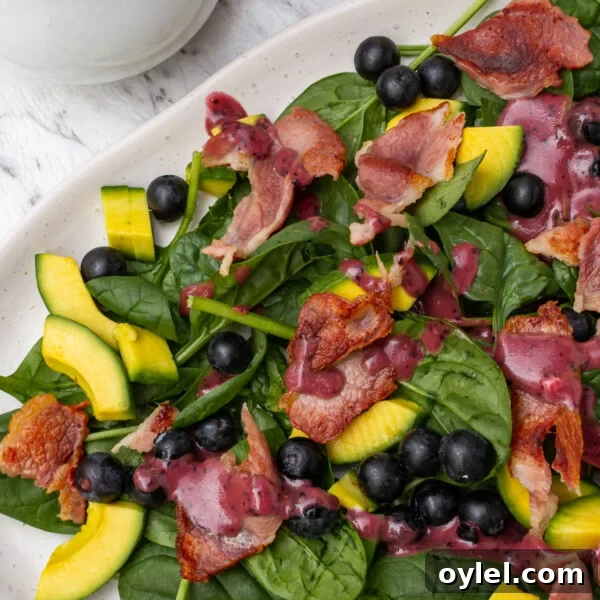
Blueberry Spinach Salad (With Bacon And Avocado)
Salads
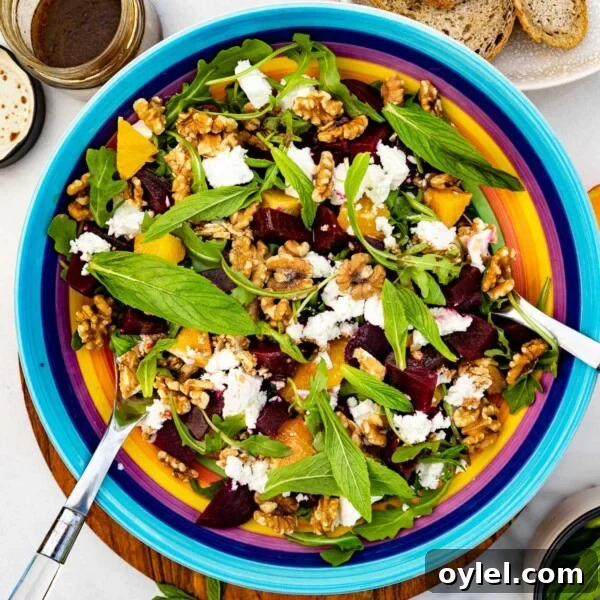
Quick Beetroot, Walnut and Feta Salad (With Cooked Beets)
Salads
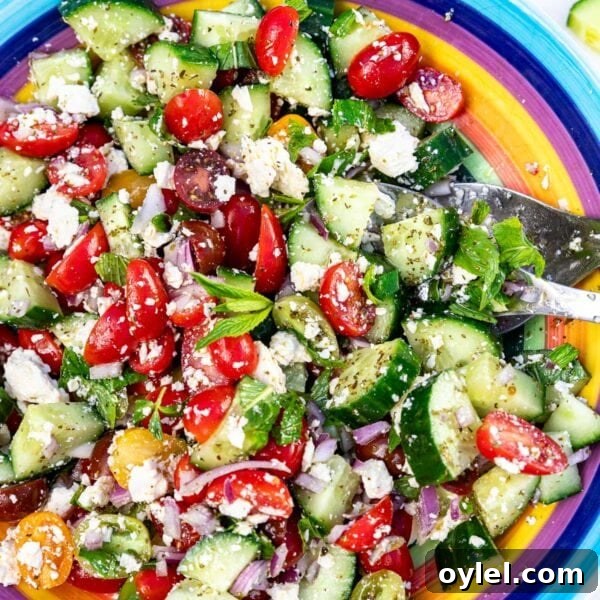
Easy Cucumber, Tomato and Feta Salad
Salads
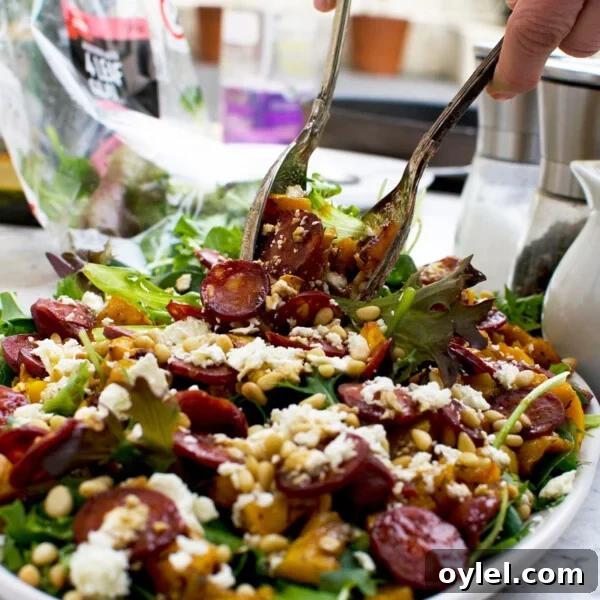
Amazing Roast Pumpkin and Feta Salad (With Chorizo)
Greek Village Salad (Traditional Recipe)
Ingredients
- 4 medium tomatoes, randomly sliced into chunks
- ½ cucumber (½–⅔ depending on size), thickly sliced
- 1 green pepper — slice some into rounds for decoration, the rest chopped
- ⅛ red onion, thinly sliced (adjust to taste)
- 1 cup Kalamata or large black olives (stone in or pitted)
- 2 teaspoons dried oregano
- ¼ cup extra virgin olive oil (good quality)
- 5 ounces (about 150–200 g) feta cheese — one large thick slice
Instructions
- Add the chopped tomatoes and cucumber to a large salad bowl. Squeeze a little juice from some tomatoes into the bowl.
- Add most of the green pepper, most of the onion and most of the olives, keeping a few slices and olives aside for the top.
- Sprinkle most of the oregano and pour in most of the olive oil, then toss gently to combine.
- Arrange the reserved pepper and onion slices and the remaining olives on top.
- Place the large slice of feta on top, sprinkle with the remaining oregano and drizzle the leftover olive oil over everything.
- Serve immediately as a side or with fresh crusty bread for lunch.
Notes
Top tip: Squeezing a little tomato juice into the bowl increases the amount of dressing and makes the salad juicier—perfect for mopping up with bread.
Olives: Choose plump, juicy black olives; Kalamatas are ideal.
Feta: A single large, firm slice of authentic Greek feta is traditional—look for a reputable brand.
Oregano: If you have fresh Greek oregano, use 2–3 tablespoons instead of the dried amount.
Storing: You can make the salad a few hours ahead and refrigerate covered; leftovers are best consumed within a day.
Serving: This salad pairs with many dishes—from grilled meats and pizzas to classic Greek mains—and is excellent with tzatziki and fresh bread.
Nutrition
Like this recipe? Leave a comment or rating below!