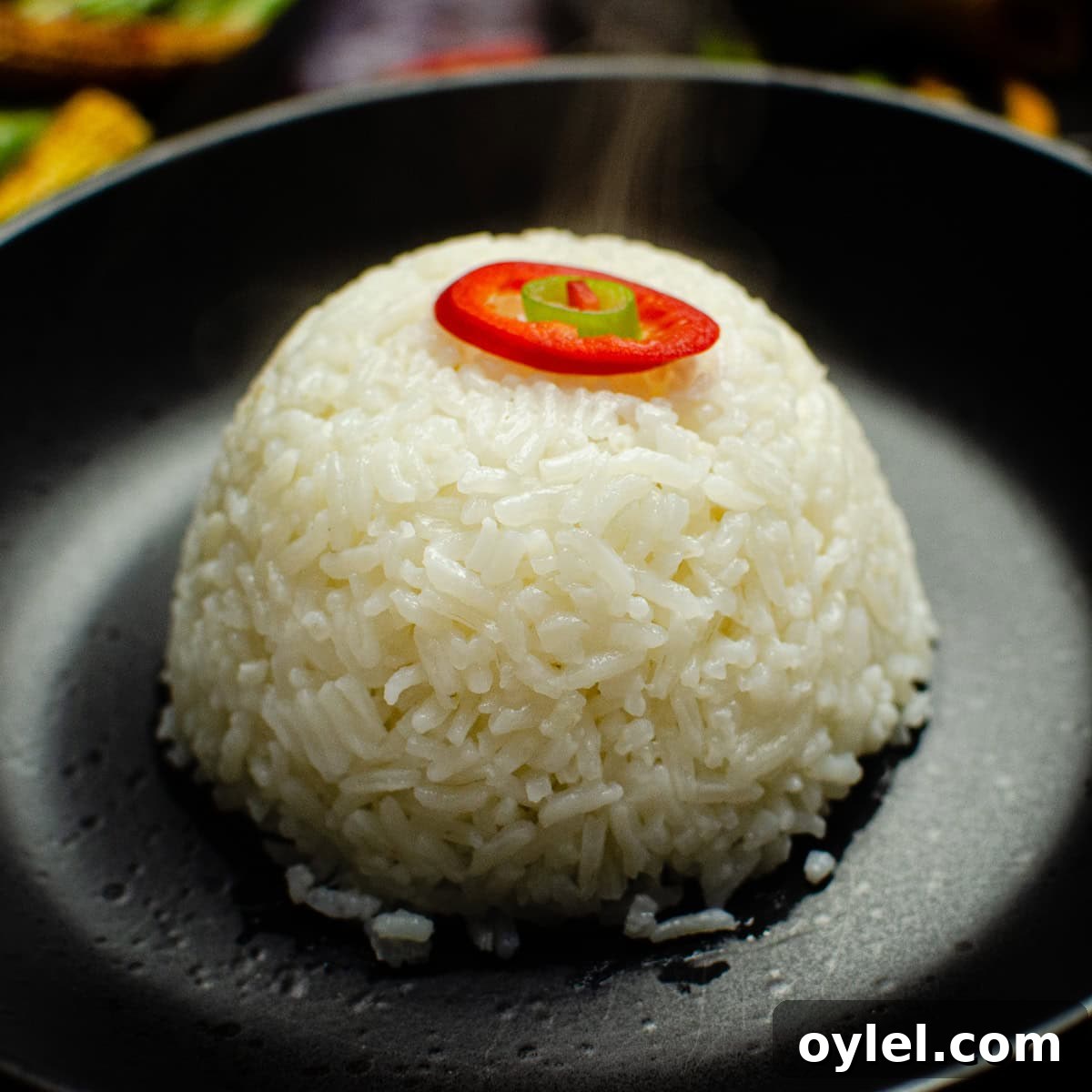
Jasmine rice is naturally sweeter and slightly stickier than many other long-grain rices. When cooked using the right rice-to-water ratio and technique it develops a pleasant cling that works perfectly with a wide range of Asian dishes. This guide shows a quick, reliable way to make sticky jasmine rice every time.
The method is simple: measure accurately, use cold water, keep the lid on while steaming, and resist the urge to rinse the rice. Follow the recipe and tips below for consistent results.
Is Jasmine Rice and Sticky Rice the same thing?
Jasmine rice and glutinous (sticky) rice are different varieties. Jasmine rice, grown widely in Thailand, Cambodia, Laos and Vietnam, becomes naturally slightly sticky when cooked, but it is not as glue-like as true glutinous rice used for some desserts and traditional sticky-rice preparations.
How do I make Jasmine Rice sticky?
To encourage stickiness in jasmine rice, do not rinse the grains before cooking. The surface starch helps the grains cling together once cooked. Use the rice-to-water ratio and the timing below to achieve a tender, slightly sticky texture.
📖 Step by Step Recipe
Jasmine Sticky Rice
Jasmine rice has a sweet aroma and a naturally clingy texture when cooked correctly.
This straightforward recipe produces reliably sticky jasmine rice suitable for curries and other Asian dishes.
For subtle extra flavour we suggest adding a star anise while cooking and a pinch of salt if desired.
Prep Time: 2 mins • Cook Time: 16 mins • Total Time: 18 mins • Serves: 4
Ingredients
- 380 grams Jasmine rice
- 660 ml cold water
- 1 star anise (optional)
- Pinch of salt (optional)
Equipment
- Scales (for accurate measurement)
- Lidded saucepan (stainless steel or similar)
Instructions
-
Do not wash the rice. The surface starch is needed to create the sticky texture.

-
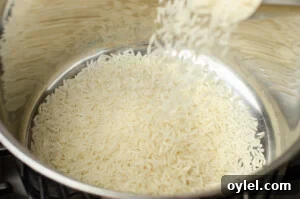
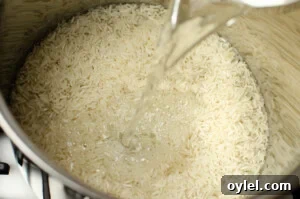
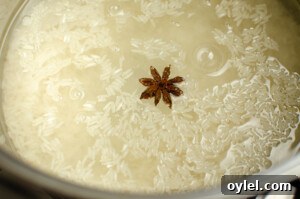
Place 380 g jasmine rice and 660 ml cold water into a pan. Optionally add a pinch of salt and 1 star anise for a subtle flavour. Bring to the boil with the lid off.
-
As soon as it reaches a full boil, reduce the heat to the lowest setting and cover with the lid. Cook for 8 minutes without removing the lid.
-
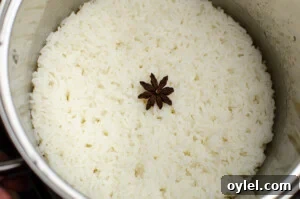
After 8 minutes, turn off the heat and leave the pot covered for a further 5 minutes so any remaining liquid is absorbed. Do not lift the lid during this time. Then remove the lid and discard the star anise.
-
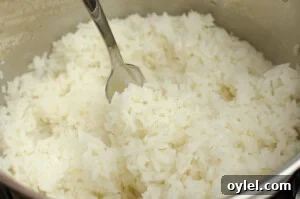
Use a fork to gently separate and fluff the grains a little. Serve immediately.
Notes — Rice to water ratio
Accurate measurement is important: during cooking the water is absorbed into the rice completely. Use the table below to scale the recipe to the number of people.
| Serves | Jasmine Rice | Water |
| 2 people | 1 cup / 190 g | 1 1/3 cup / 330 ml |
| 4 people | 2 cups / 380 g | 2 3/4 cups / 660 ml |
| 6 people | 3 cups / 570 g | 4 1/4 cups / 990 ml |
Nutrition (per serving)
Calories: 124 kcal • Carbohydrates: 27 g • Protein: 3 g • Fat: 1 g • Fiber: 1 g
How much uncooked rice should be cooked for one person?
Half a cup (about 95 g) of uncooked jasmine rice yields roughly one cup (around 250 g) of cooked rice—generally enough for one adult serving.
What pan should I use for cooking rice?
Use a simple lidded saucepan that seals well. A stainless steel saucepan works fine; non-stick is not necessary. The key is a snug lid to trap steam during the low-heat finishing stage.
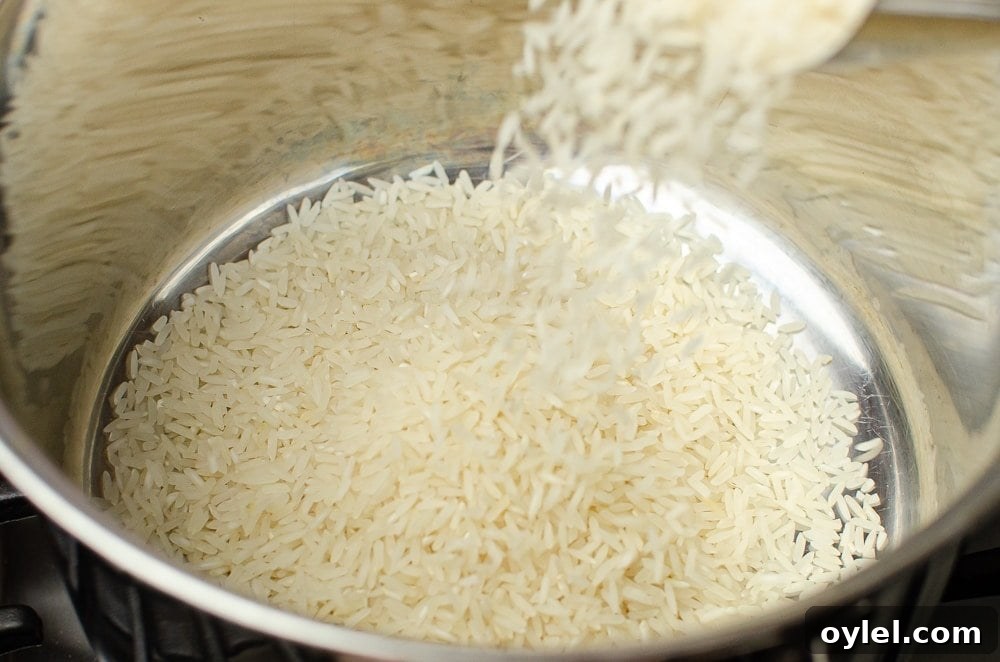
Do I add cold or hot water to cook rice?
Start with cold water poured over the rice and then bring to the boil. This helps the grains cook evenly and promotes the correct absorption and texture.
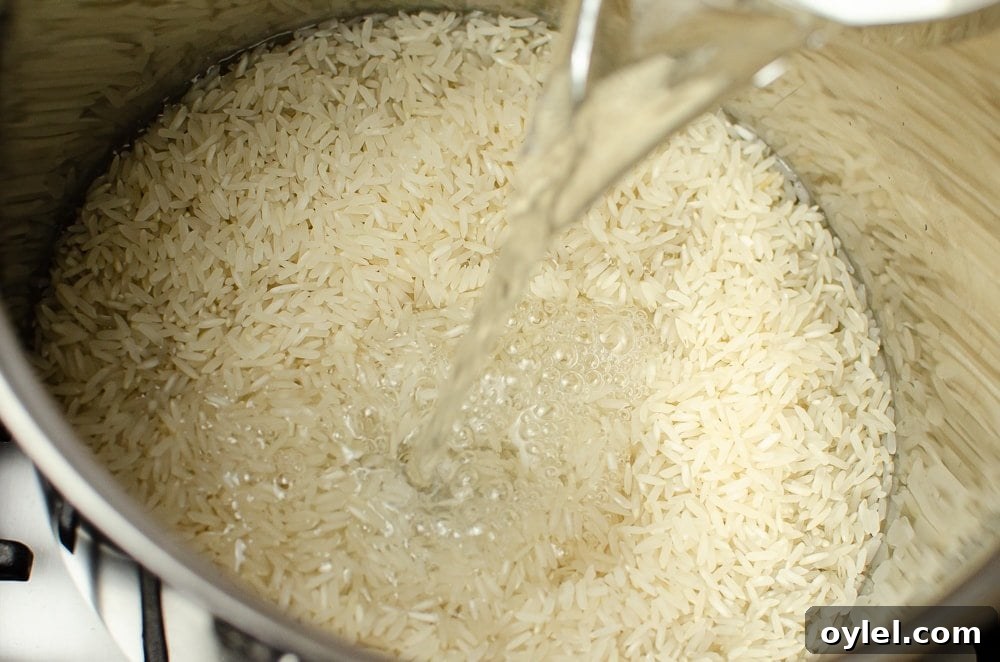
How to add flavour to jasmine rice
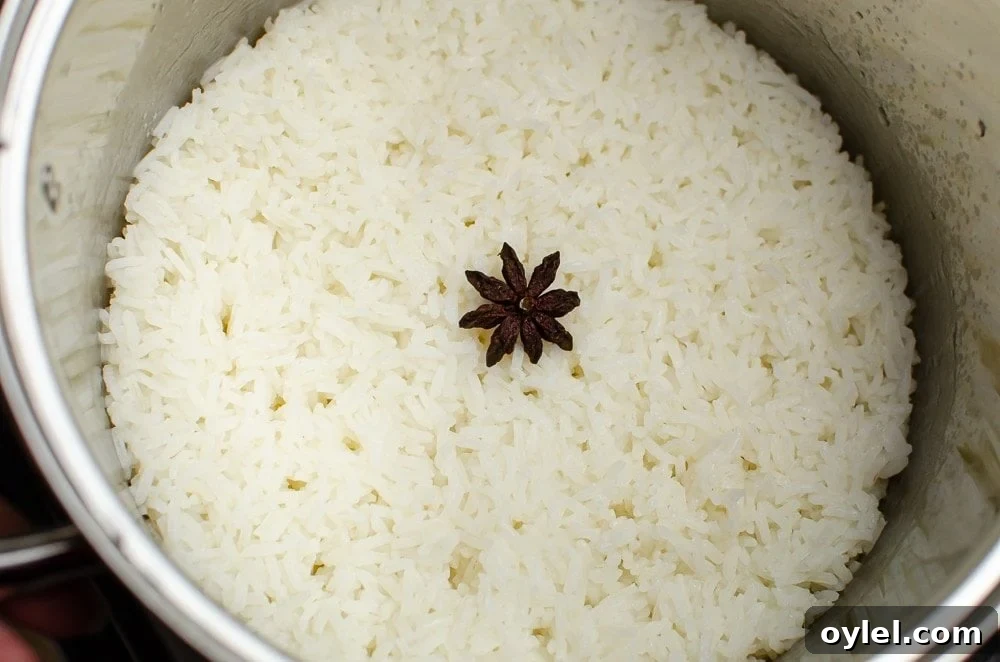
Jasmine rice is fragrant on its own. For subtle enhancement, add a pinch of salt and a whole star anise while cooking. One star anise gives a gentle sweetness; use two for a stronger note. Fresh lemongrass can also be added for citrusy aroma.
How to cook sticky jasmine rice
Follow the measurements above. Bring rice and cold water to a boil uncovered, then cover and reduce to the lowest heat for 8 minutes. Turn off the heat and keep covered for 5 more minutes before uncovering, removing any whole spices, and fluffing with a fork.
What to serve jasmine rice with
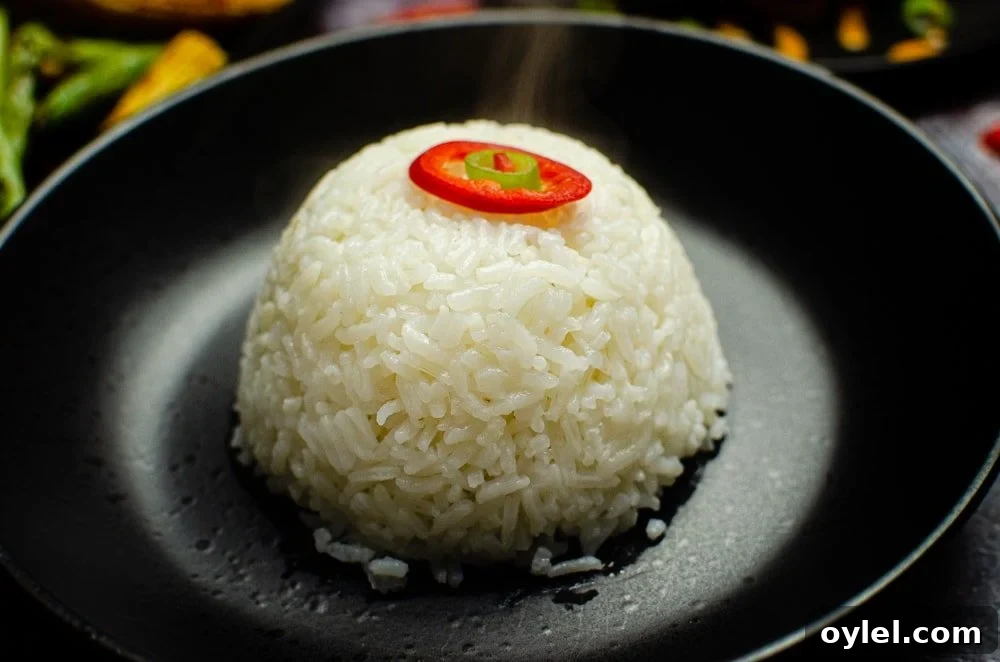
Sticky jasmine rice pairs beautifully with Thai, Chinese, Vietnamese, Korean and Japanese dishes. It works well shaped into a dome using a small bowl or teacup—press lightly, invert onto your plate, then serve curries and saucy mains alongside or around the rice.
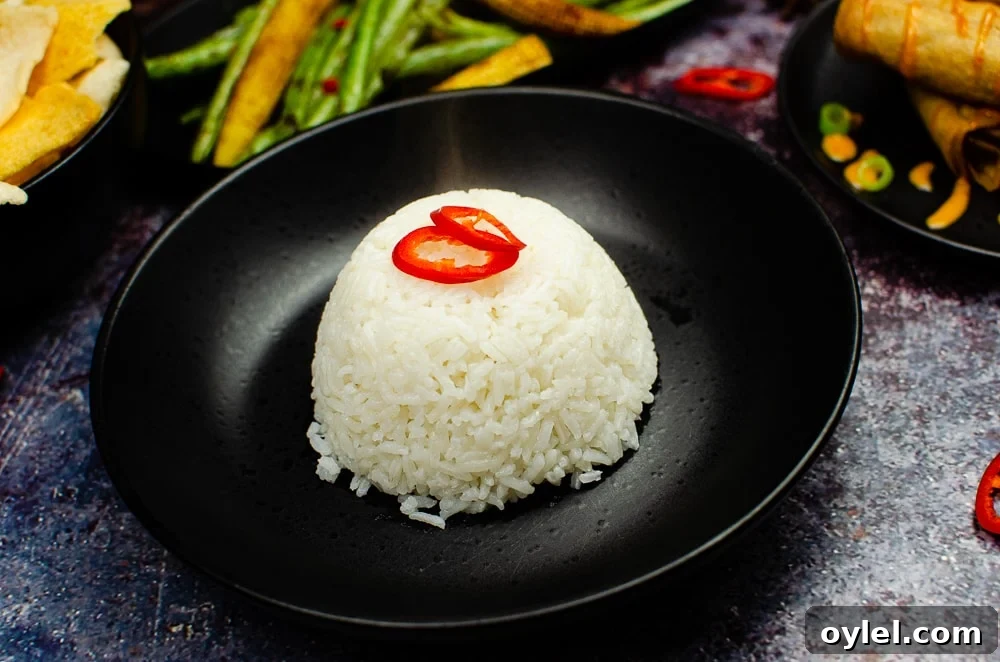
For presentation, fill a small bowl or cup with warm rice, press gently and invert onto the serving plate to form a neat dome. Serve immediately with your chosen main.
Storage
Store cooked jasmine rice in an airtight container and refrigerate within one hour of cooking to reduce the risk of bacterial growth. Refrigerated rice is best used within three days. For longer storage freeze in portion-sized packets; frozen rice keeps for up to one month. Thaw overnight in the refrigerator or use a microwave defrost setting before reheating.
Reheating
Reheat cooked rice until piping hot throughout. Reheat only the portion you plan to eat and avoid reheating multiple times to maintain food safety and quality.
More rice recipes
If you enjoy this method, try other rice preparations such as basmati, pilau, coconut rice or rice salads to expand your repertoire. Experimenting with flavours and accompaniments lets you adapt this basic technique to many cuisines.
This recipe was originally published in 2020 and updated to clarify the method and simplify the layout. Let us know how your rice turns out and what you like to serve with it.