Recipes often call for blanching vegetables, but what does that mean in practice? Blanching is a quick cooking technique where you briefly cook a vegetable in boiling water, then immediately plunge it into an ice water bath to stop the cooking. This process par-cooks the vegetable so it loses its raw bite while retaining bright color, crisp-tender texture, and fresh flavor. Blanching is especially useful when preparing vegetables for salads, cold pasta dishes, or make-ahead side dishes.
The goal of blanching is to soften the vegetable just enough to remove rawness without making it mushy. Proper blanching brightens color, preserves nutrients, and gives a pleasant bite that works well in cold preparations such as pasta salads, composed vegetable salads, or chilled side dishes like my Simple Green Bean Tomato Salad.
Step-by-step blanching process
This step-by-step example uses green beans, a common vegetable to blanch, but the same approach applies to many other vegetables with only the cooking time adjusted.
- Heat enough water in a pot so the beans can move freely. For about 12 ounces (roughly 350 grams) of beans, a 3-quart pot works well. Add a generous pinch of kosher salt to the water and bring it to a rolling boil. Salt seasons the vegetable and helps maintain color.
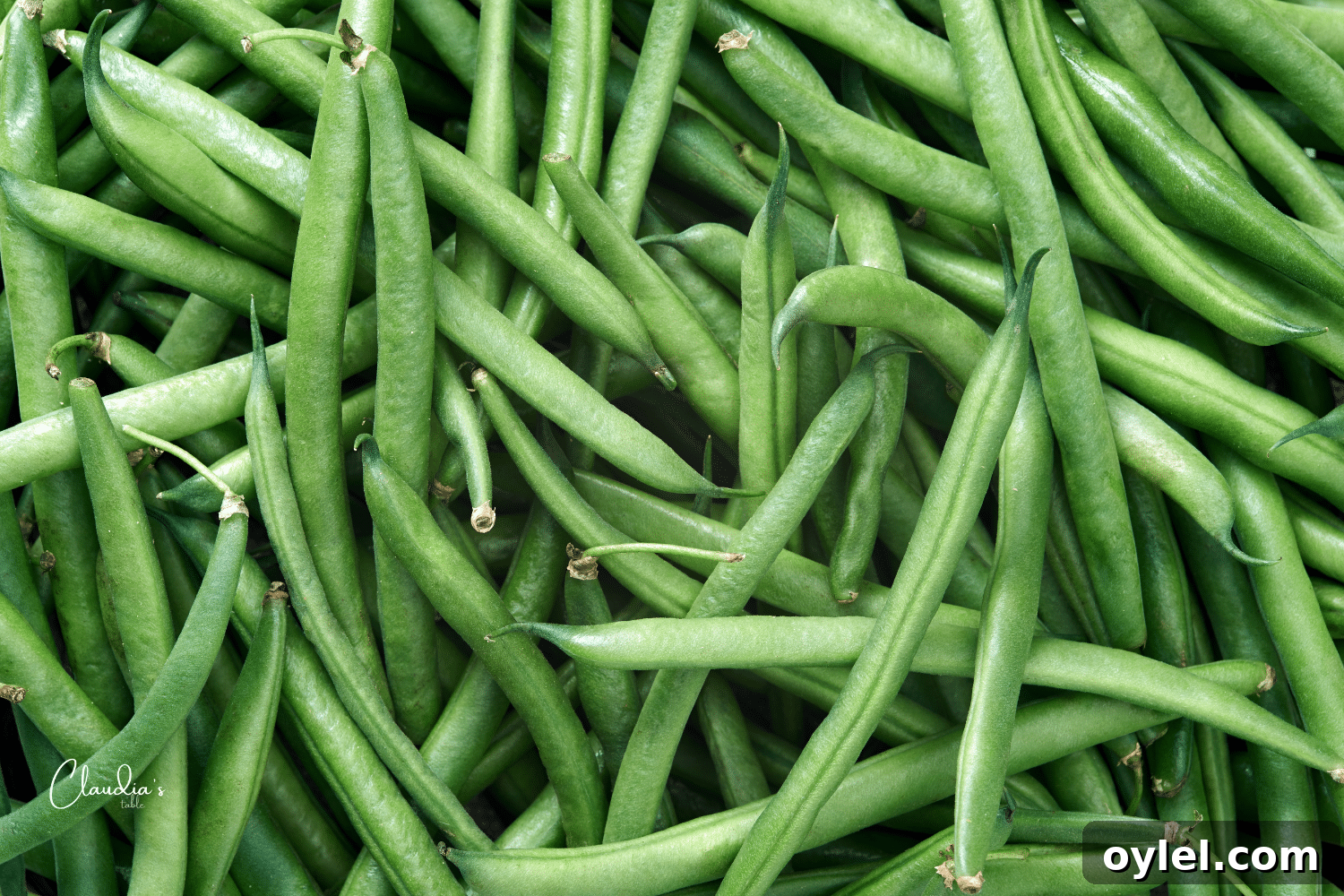
- While the water heats, trim and inspect the green beans. If you purchased loose beans, trim the stem ends and remove any blemished pieces. Pre-trimmed store-bought beans save time but still benefit from a quick check.
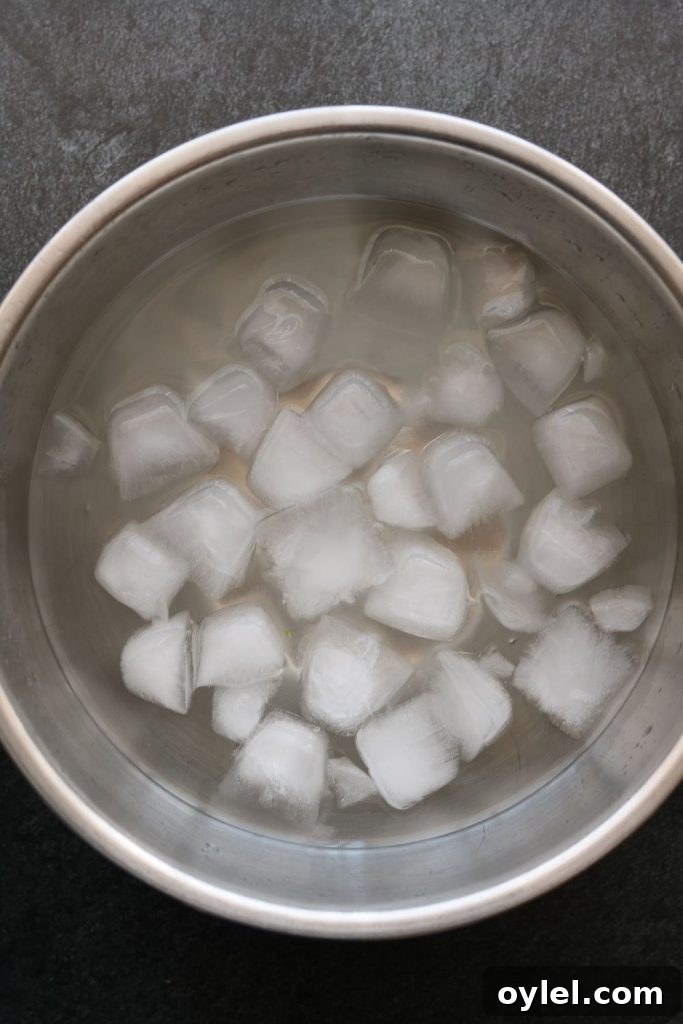
- Prepare an ice bath by filling a large bowl with cold water and plenty of ice. The ice bath stops the cooking immediately and sets the texture and color.
- When the water is boiling vigorously, add the green beans. Cook them for about 3 minutes for a crisp-tender result. If you are blanching a larger quantity, you may need to extend the time by one or two minutes to account for the cooler water temperature as the beans are added.
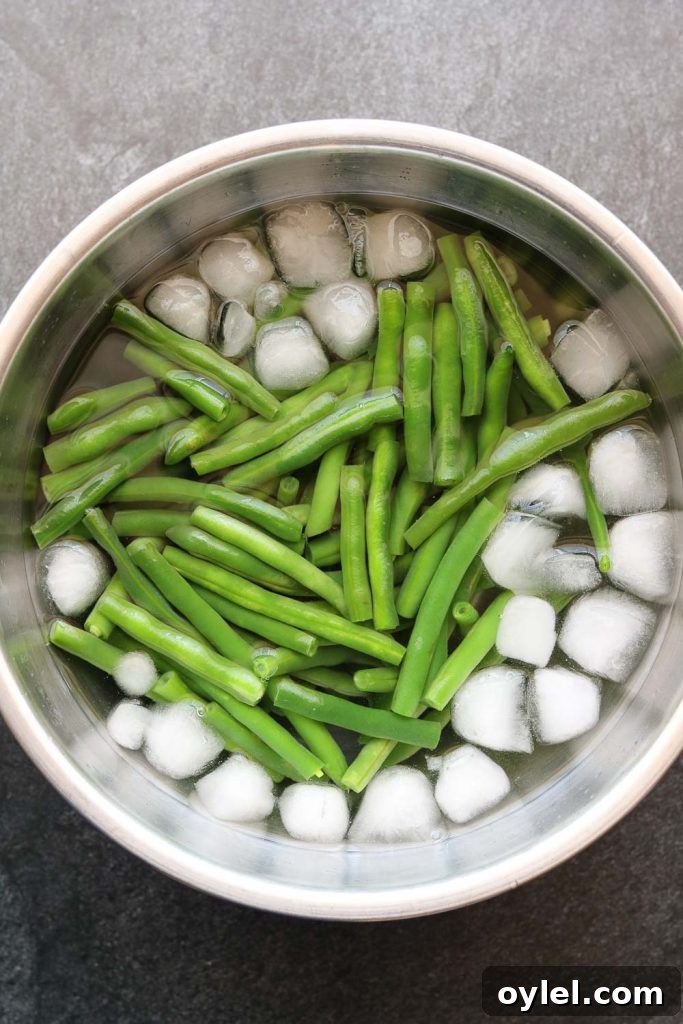
- Use a slotted spoon or skimmer to transfer the beans directly from the boiling water into the ice bath. Avoid letting them sit in the hot water, which will continue to cook and soften them beyond the desired point.
- Let the beans chill in the ice bath for a few minutes until they are completely cool. This ensures the cooking stops and the beans remain firm and brightly colored.
- Drain the beans thoroughly and pat them dry with a clean towel or paper towel before tossing into a salad or storing. Excess moisture can dilute dressings and shorten refrigerated storage life.
- Your blanched green beans are now ready to use in salads, chilled side dishes, or for quick reheating. They can also be stored in an airtight container in the refrigerator for a couple of days for meal prep.
What other kinds of vegetables can I blanch?
- Carrots
- Broccoli
- Cauliflower
- Green beans
- Snow peas
- Asparagus
- Zucchini
- Peas
- Fennel
Each vegetable needs its own blanching time because textures vary. Dense vegetables such as carrots or broccoli florets generally require a longer boil than tender items like snow peas or zucchini. Peas and zucchini blanch very quickly—often under a minute—whereas carrots may take several minutes to reach the desired tenderness. When in doubt, test a piece for texture: it should be just tender and still hold its shape.
Additional blanching tips: use plenty of water so the temperature recovers quickly after you add the vegetables, don’t overcrowd the pot, and keep the ice bath well chilled. After blanching and cooling, dry vegetables thoroughly before combining with dressings to prevent dilution. Blanching is a simple, reliable technique that improves color, texture, and flavor when preparing vegetables for cold dishes or quick finishes in hot recipes.