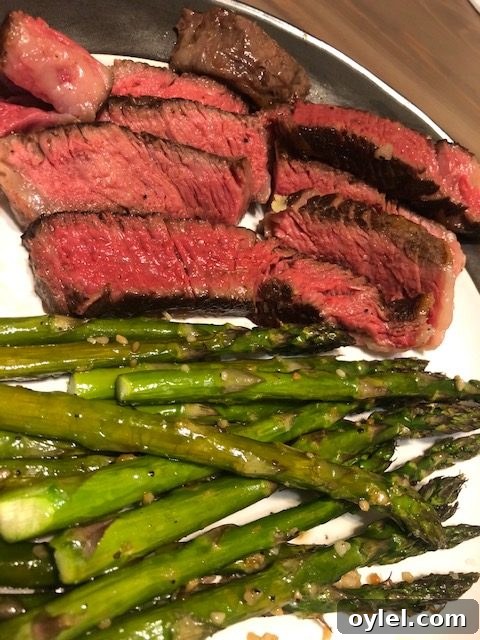
Table of Contents
Today I’m sharing my sous vide ribeye steak method that consistently delivers a tender, juicy steak with well-rendered fat and a perfect crust. While many sous vide cooks target the 129–134°F range for rare to medium-rare, ribeyes benefit from a slightly higher temperature because of their generous marbling. In this guide you’ll find the ideal temperatures, why they work for ribeye, recommended equipment, and a simple step-by-step recipe you can use tonight.
How does it work?
Fat in beef begins to soften and render around 130°F and renders progressively faster as the temperature approaches 140°F. For leaner cuts like filet mignon, a lower temperature preserves tenderness without worrying about fat. Ribeye, however, contains more intramuscular fat. Raising the sous vide temperature a few degrees helps render that fat so it becomes silky and flavorful rather than firm and chewy. The goal is to render the fat while keeping the meat at a consistent doneness throughout.
What is the Best Sous Vide Ribeye Temperature?
For ribeye, I recommend setting your sous vide between 135°F and 137°F. This range achieves a warm medium-rare to low medium doneness while encouraging the fat to render nicely. If you prefer a touch closer to rare or if your steak is thinner, 135°F is a solid choice. For thicker, fattier ribeyes, 137°F helps melt more fat without pushing the meat into a noticeably higher doneness.
After the sous vide bath, cooling the steak briefly in the refrigerator or in an ice bath before searing can reduce carryover cooking during the high-heat sear. This step is optional but useful if you want tighter control over final doneness.
What is a Ribeye Steak?
A ribeye comes from the rib primal and is prized for its marbling and flavor. When served bone-in it may be called a rib steak; boneless portions are commonly referred to as ribeye. This cut is flavorful and tender thanks to the fat marbling that keeps the meat juicy under high-heat cooking.
Why Does Ribeye Taste So Good?
The combination of marbling and tenderness gives ribeye a rich, beefy flavor that many home cooks and chefs prefer. Properly rendered fat adds mouthfeel and carries flavor, making each bite feel buttery and satisfying.
How Thick Should My Steak Be?
Sous vide excels with thicker steaks because it creates an even interior doneness before searing. Aim for steaks about 1.5–2 inches thick; 2 inches is ideal for getting a great sear while maintaining an even interior. Thinner steaks are more likely to overcook during searing, since the interior has less mass to absorb the searing heat without changing temperature.
Equipment
- Sous vide immersion circulator or precision cooker
- Large pot or container to hold water
- Vacuum sealer and bags, or heavy-duty zipper-lock bags suitable for sous vide
- Cast iron skillet or other heavy pan for searing
- High-smoke-point oil or ghee for finishing
- Tongs and a digital thermometer (optional but helpful)
Sous Vide Ribeye Recipe
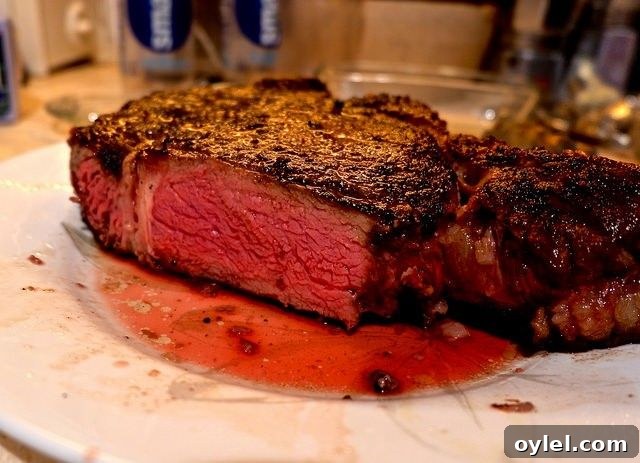
Sous Vide Ribeye Steak
Ingredients
- 1 Ribeye steak (about 1.5–2 inches thick)
- 1/2 tsp Kosher salt
- 1/2 tsp Freshly ground black pepper
- Ghee or other high-smoke-point oil for searing
Instructions
- Fill your pot or container with water and set the sous vide to 137°F (use 135°F if you prefer slightly rarer or if the steak is thin).
- Season the steak lightly with salt and pepper or season after the bath if you prefer. Place the steak in a vacuum bag or a heavy-duty zipper-lock bag and remove the air.
- Once the water reaches temperature, submerge the bagged steak and cook for 2 hours. The sous vide will hold the entire steak at the target temperature for even doneness.
- After cooking, remove the steak from the bag and, if desired, chill it briefly in the refrigerator or an ice bath for 10–15 minutes to limit carryover cooking during searing.
- Pat the steak very dry with paper towels and season generously with salt and pepper if you did not season before cooking.
- Heat a cast-iron skillet over high heat until very hot. Add a tablespoon of ghee or high-smoke-point oil and sear the steak 30–45 seconds per side to develop a deep brown crust. Use tongs to sear the edges if needed.
- Let the steak rest for a couple of minutes, slice against the grain, and enjoy.
This sous vide method highlights the ribeye’s natural marbling by encouraging fat to render while keeping the interior uniformly cooked. It’s a simple approach that reliably produces a steak with a juicy, buttery texture and a satisfying seared crust.
Tips: use a well-sealed bag to prevent water ingress, dry the steak thoroughly before searing for the best crust, and use a heavy pan or cast iron for even browning. Adjust time and temperature slightly based on steak thickness and personal preference, but 135–137°F is an excellent starting point for most ribeyes.