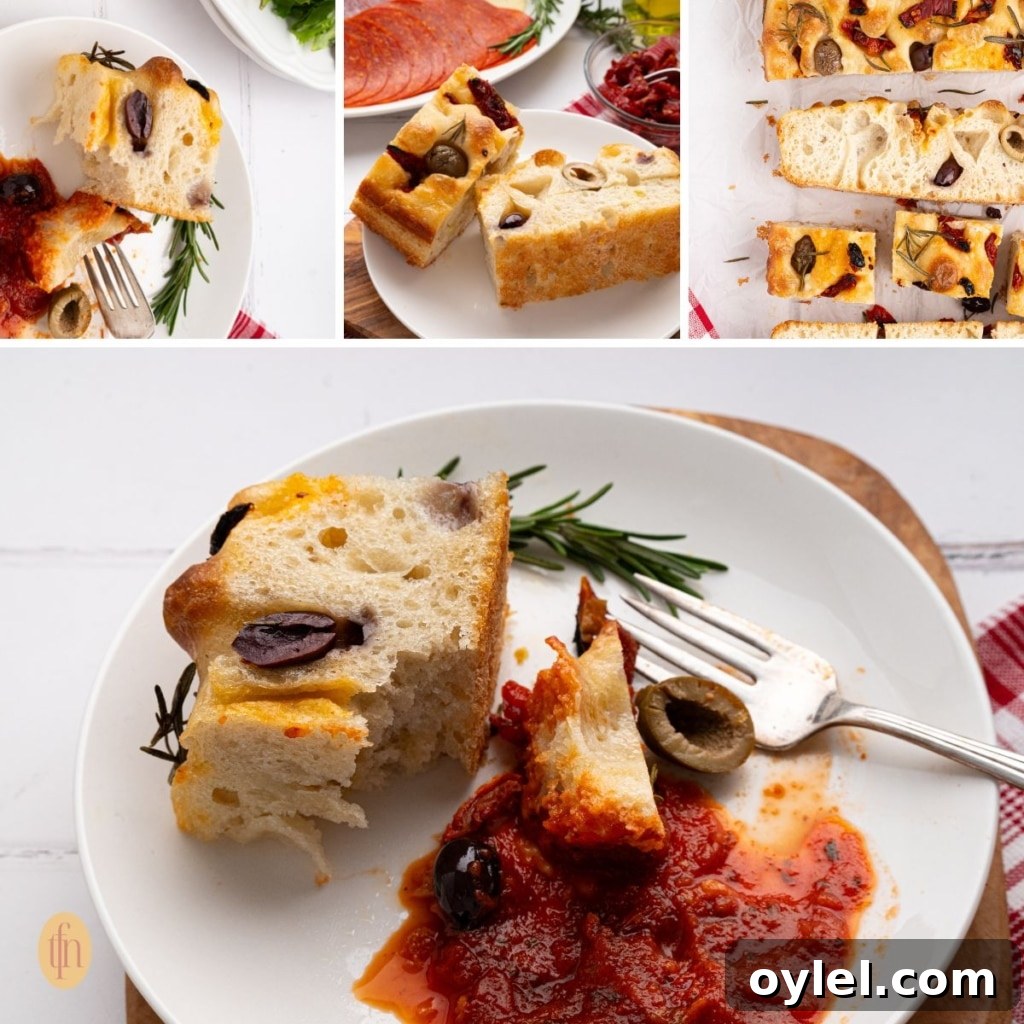
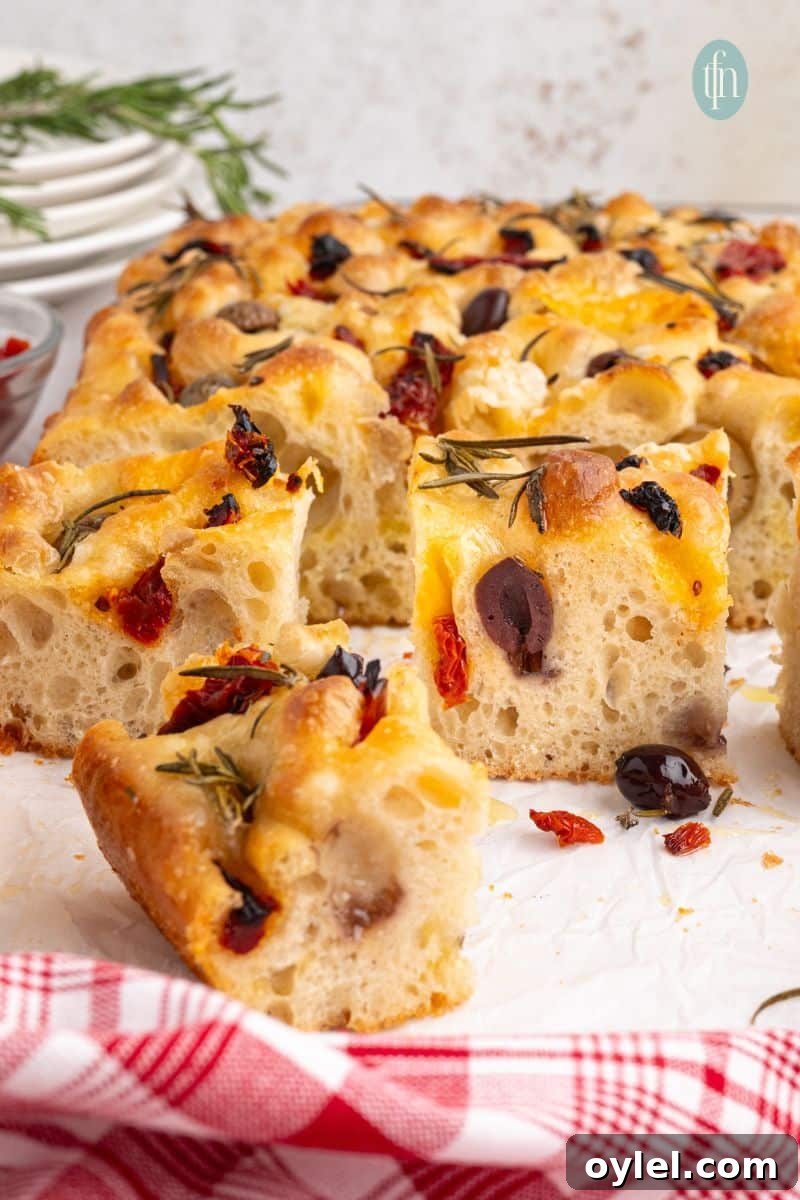
Craving a crispy, airy, and flavorful focaccia? This sourdough focaccia recipe uses a sourdough starter (perfect for using up discard) and needs no commercial yeast. It yields a golden, dimpled loaf ideal for sandwiches, dipping, or serving as an appetizer. With a high-hydration dough and natural fermentation, the result is light and airy with a crisp, savory crust.
This focaccia is naturally leavened with a mature sourdough starter rather than instant yeast, which gives the bread its distinctive tang and depth. Because focaccia calls for a wetter dough than many other breads, the crumb remains open and soft while the top becomes beautifully crisp and golden.
With a little time and gentle handling, you can bake a bakery-style sourdough focaccia that works as sandwich bread, a pizza-style base, or a flavorful side. It’s one of the most satisfying sourdough discard recipes to make at home.
If you enjoy sourdough baking, try exploring other recipes using discard or fermented starters, such as classic sourdough loaves, pancakes, or a sourdough pizza crust. These recipes all rely on the same slow fermentation process for rich, developed flavor.
Content Covered Here
- Why we love this sourdough discard focaccia
- Ingredients and substitutions
- Equipment used in this recipe
- How to make sourdough focaccia
- Serving suggestions and storage
- Recipe FAQs and notes
Why We Love This Sourdough Discard Focaccia
- No commercial yeast required. The starter provides natural fermentation and a complex, tangy flavor.
- Make ahead friendly. After the initial rise you can refrigerate the dough overnight, then bring it to room temperature before baking for added convenience.
- Highly customizable. The neutral base accepts herbs, cheeses, roasted vegetables, olives, garlic, or simple sea salt and olive oil—so you can tailor it to your tastes.
Using your sourdough discard in recipes helps reduce waste while producing delicious baked goods. If your starter needs attention, consult general troubleshooting resources for issues like poor rise or sluggish activity.
Ingredients and Substitutions
The recipe separates dough ingredients and toppings so you can easily swap flavors. The dough yields a soft, hydrated base; toppings add texture and character.
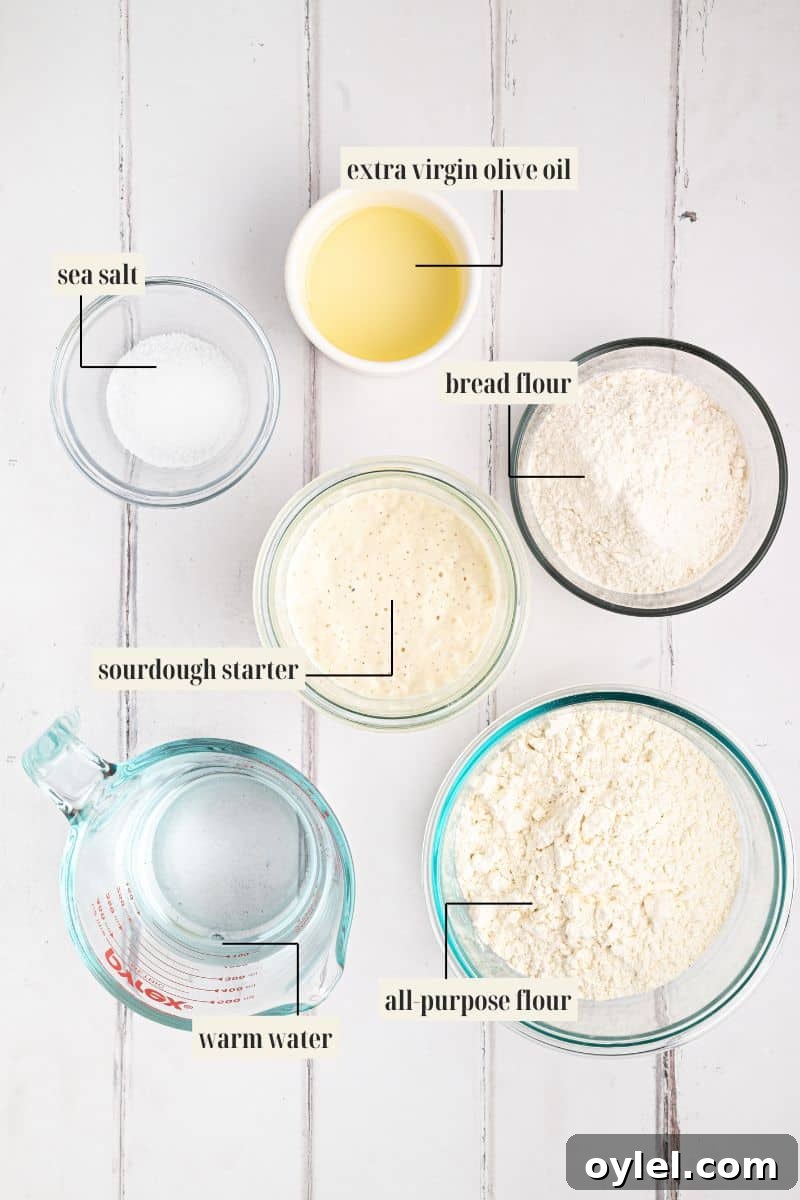
Dough Ingredients:
- Mature sourdough starter (discard/unfed): Fed 12–24 hours before starting. The recipe uses an unfed or mature starter rather than one that’s at peak activity.
- Warm water: Helps hydrate the flour and mobilize fermentation.
- All-purpose flour: Provides structure and tenderness.
- Bread flour: Adds strength and chew to the crumb.
- Sea salt: Enhances overall flavor.
- Cooking spray or oil: Prevents sticking in the pan.
Topping Ingredients:
- Extra-virgin olive oil: For richness and a crisp, flavored crust.
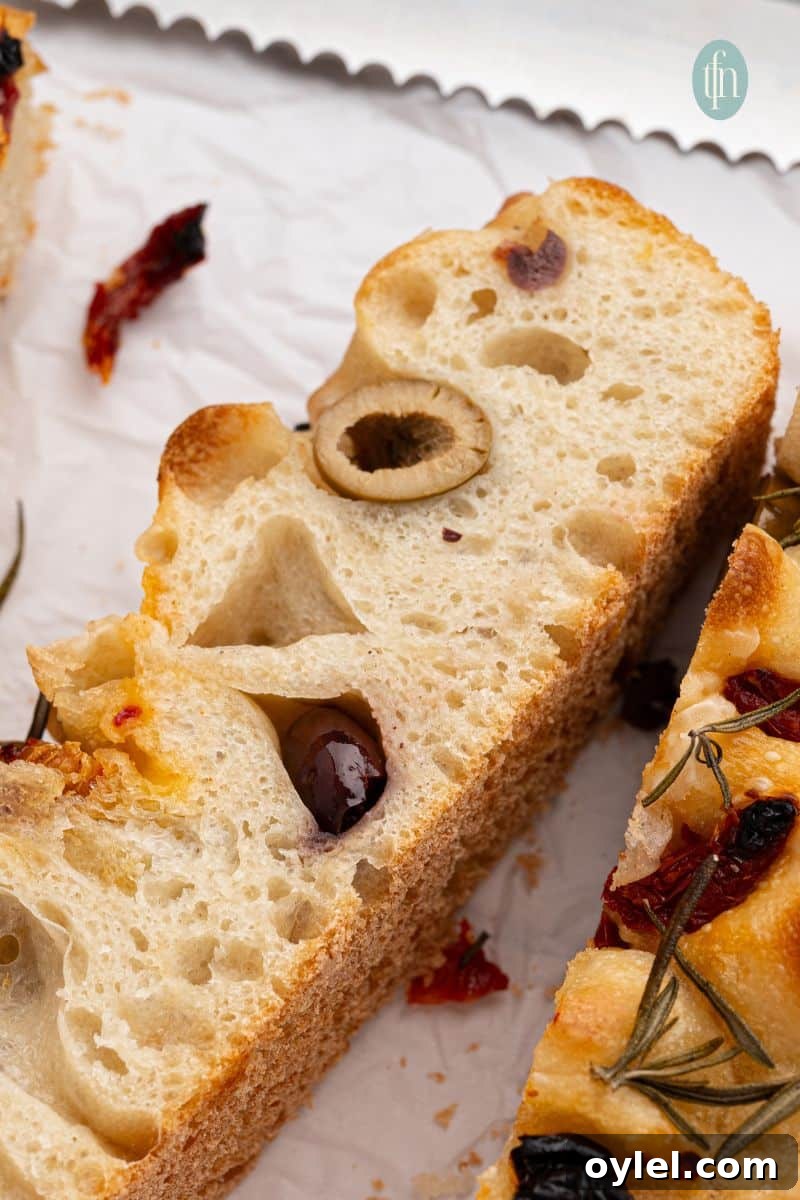
- Sundried tomatoes in oil: Adds sweet-tangy brightness.
- Fresh rosemary: A classic aromatic pairing.
- Kalamata olives: Provides a salty, briny contrast.
- Coarse sea salt: A finishing sprinkle for crunch and flavor.
Recipe Variations
- Garlic herb focaccia: Add roasted garlic and mixed Italian herbs for an aromatic loaf.
- Cheesy focaccia: Scatter shredded Parmesan or mozzarella on top before baking for a golden cheesy crust.
- Caramelized onion and thyme: Sweet, savory caramelized onions with fresh thyme.
- Simple sea salt focaccia: Olive oil and flaky sea salt let the bread shine on its own.
Equipment Used in Our Recipe
This recipe is beginner-friendly. A 9×13 baking pan is the primary piece of equipment most home bakers need. Additional helpful tools include:
- Stand mixer with a dough hook for hands-off kneading (or knead by hand).
- Kitchen scale for accurate measurements (grams listed in the recipe).
- Cooling rack to prevent trapped steam and keep the crust crisp.
- 9×13 baking pan for the classic focaccia shape and thickness.
How to Make Sourdough Focaccia Pizza
Prepare the dough
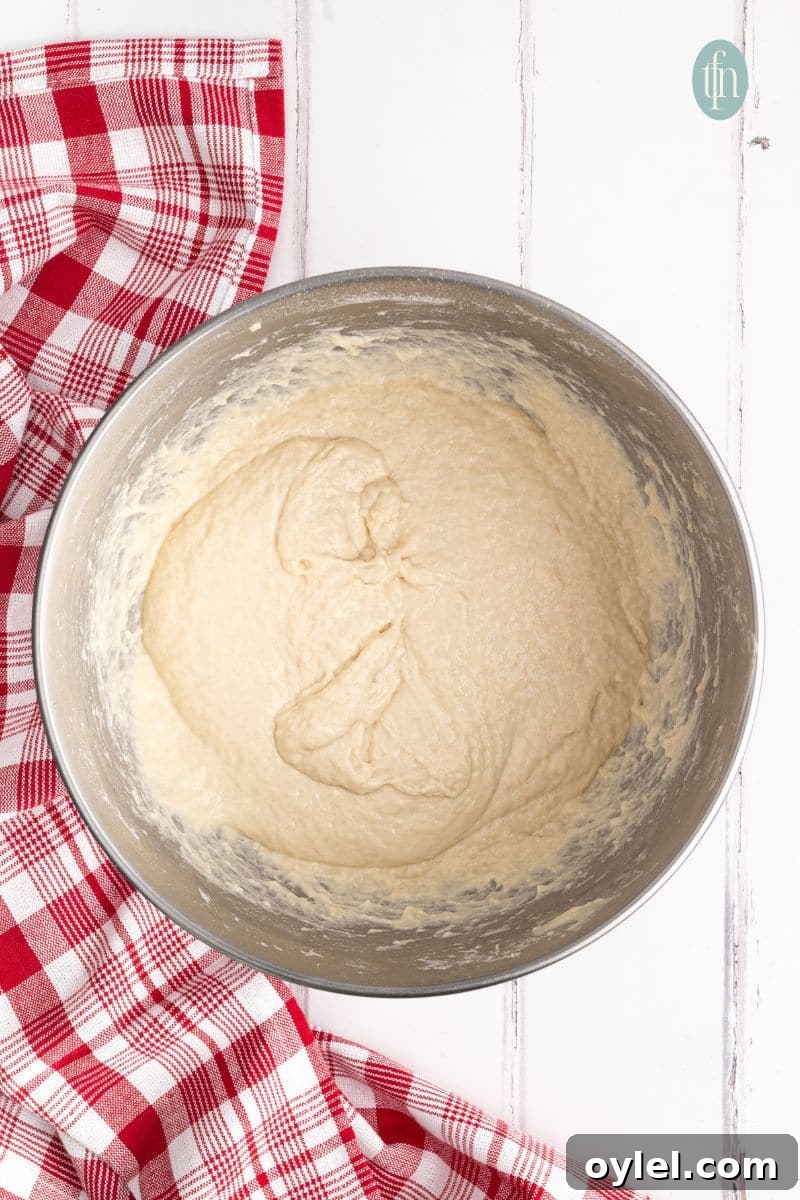
- In a large bowl or stand mixer, whisk the sourdough starter into the warm water until mostly dissolved.
- Add both flours and the salt. Mix on low with a dough hook or stir by hand until combined.
- Increase mixer speed to medium and knead for about 5 minutes, scraping down the sides as needed.
- Reduce speed, drizzle in olive oil slowly, then mix on medium another 2–3 minutes until the dough is cohesive and smooth.
- Cover the bowl and let the dough rest for about 2 hours at room temperature for the first rise.
Shape the dough
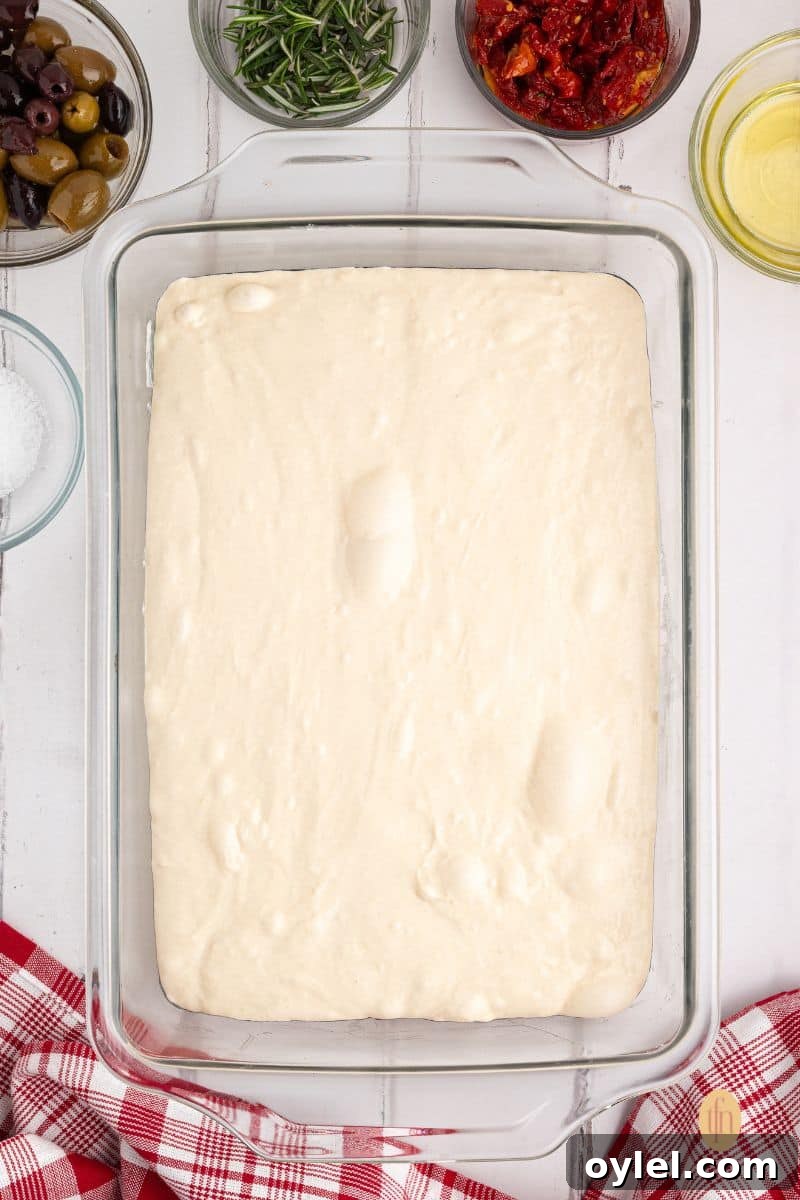
- Generously coat a 9×13 pan with cooking spray or oil.
- Transfer the dough to the pan. With lightly damp hands, gently stretch and press the dough to fill the pan without tearing it.
TFN Pro Tip
Use damp hands: Wet hands prevent sticking and make it easier to stretch the dough without tearing.
Bulk fermentation (long rise)
- Cover the pan with plastic wrap and proof at room temperature for about 4 hours, or until bubbles appear and the dough has visibly risen.
- During the first couple hours, every 30 minutes gently stretch the dough toward the edges with damp hands, allowing it to relax between stretches to build strength.
- Once the dough reaches the corners and holds its shape, leave it undisturbed to finish developing flavor.
Prepare and bake
- Preheat the oven to 450°F (230°C) with a rack in the middle position.
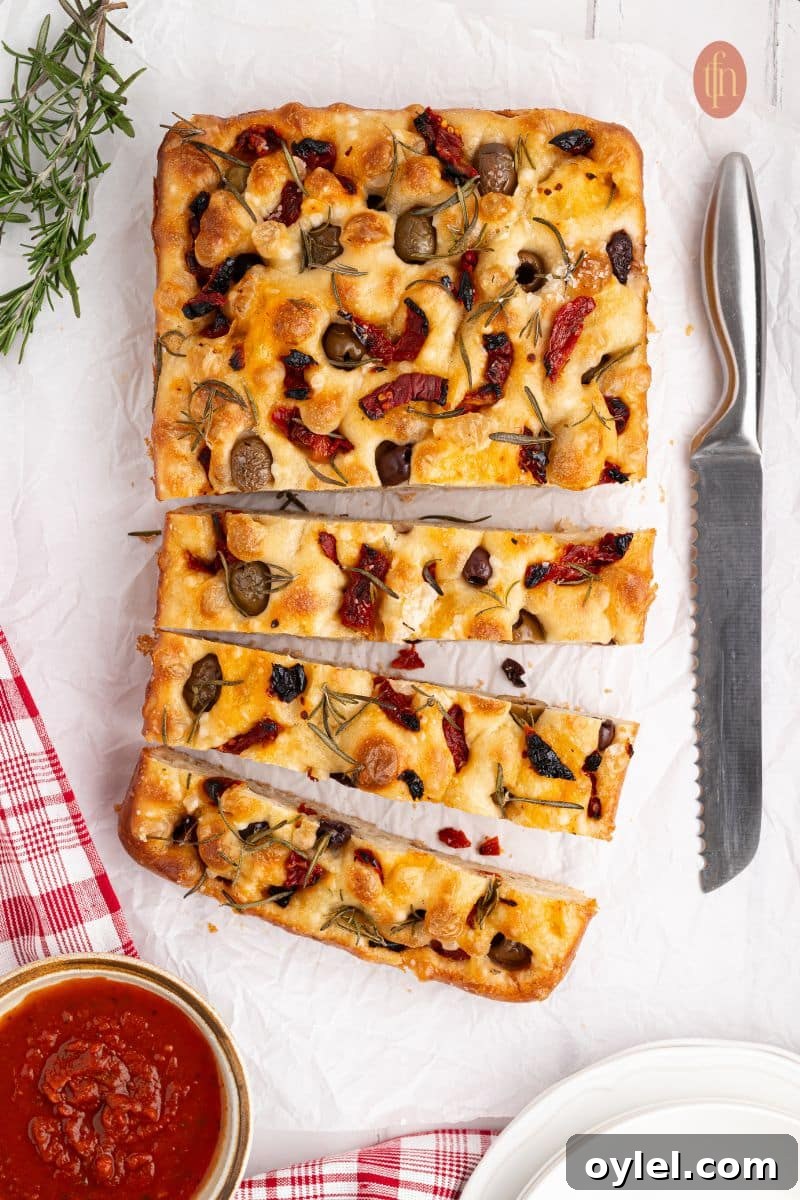
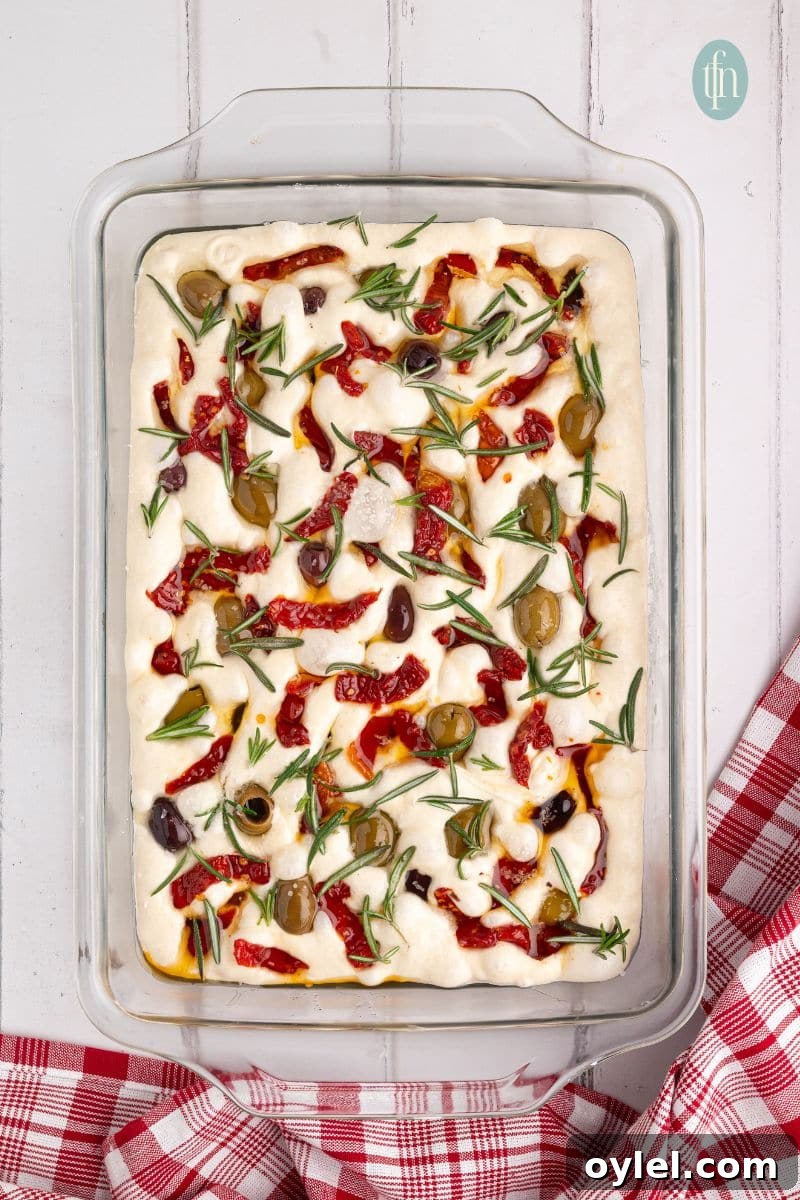
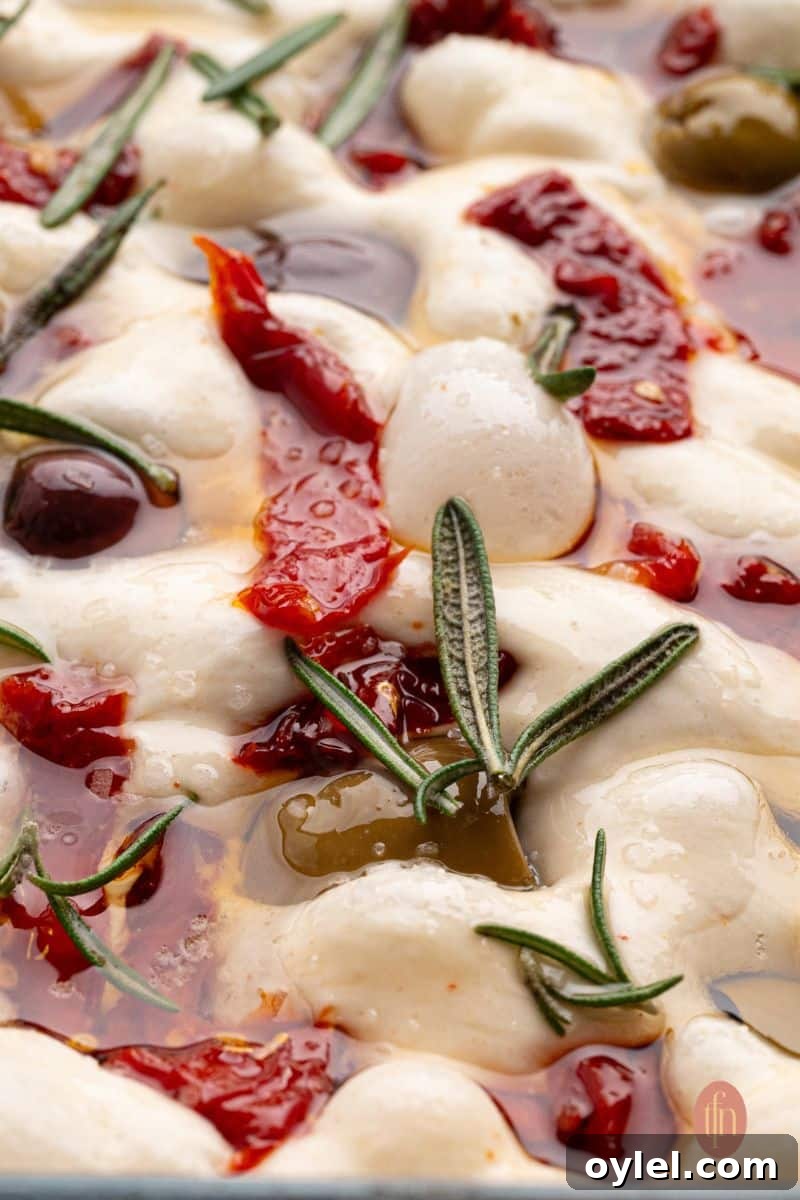
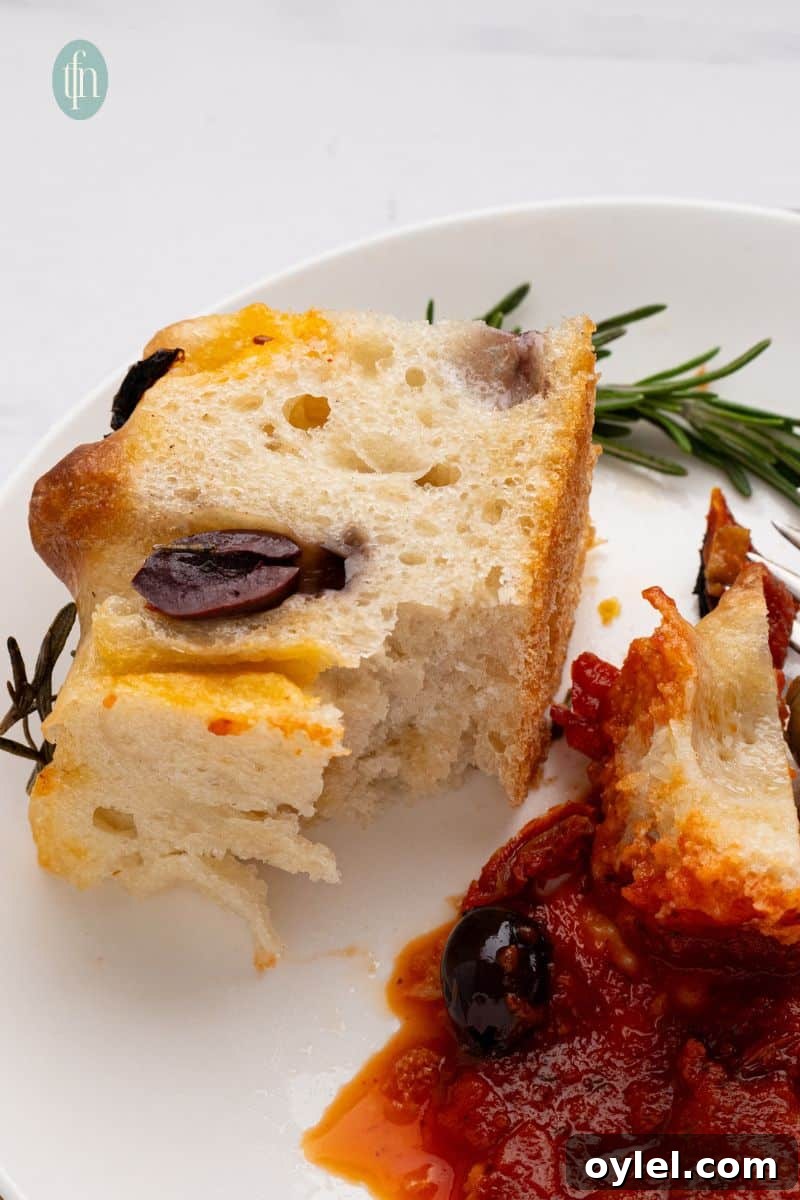
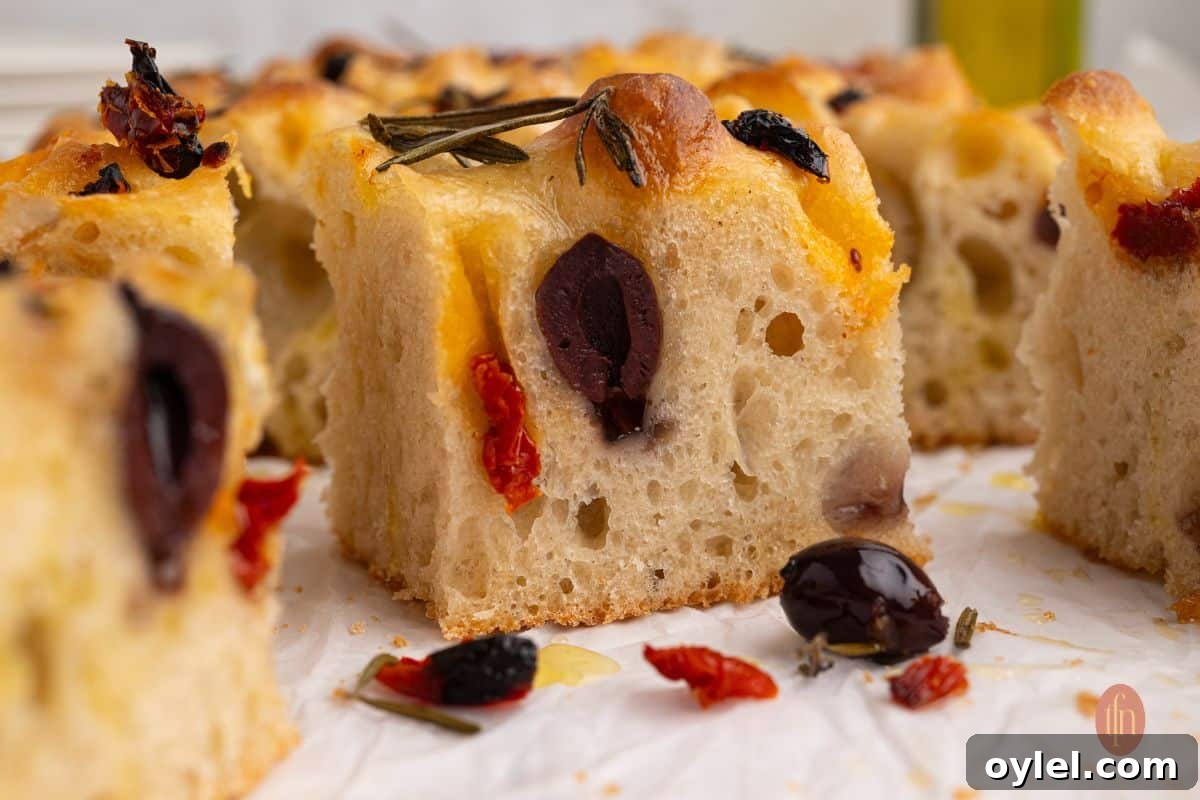
- Using wet fingers, press deep dimples into the dough almost to the pan. Drizzle olive oil across the surface, press in sundried tomatoes, olives, and rosemary about ¼ inch, and sprinkle with coarse salt.
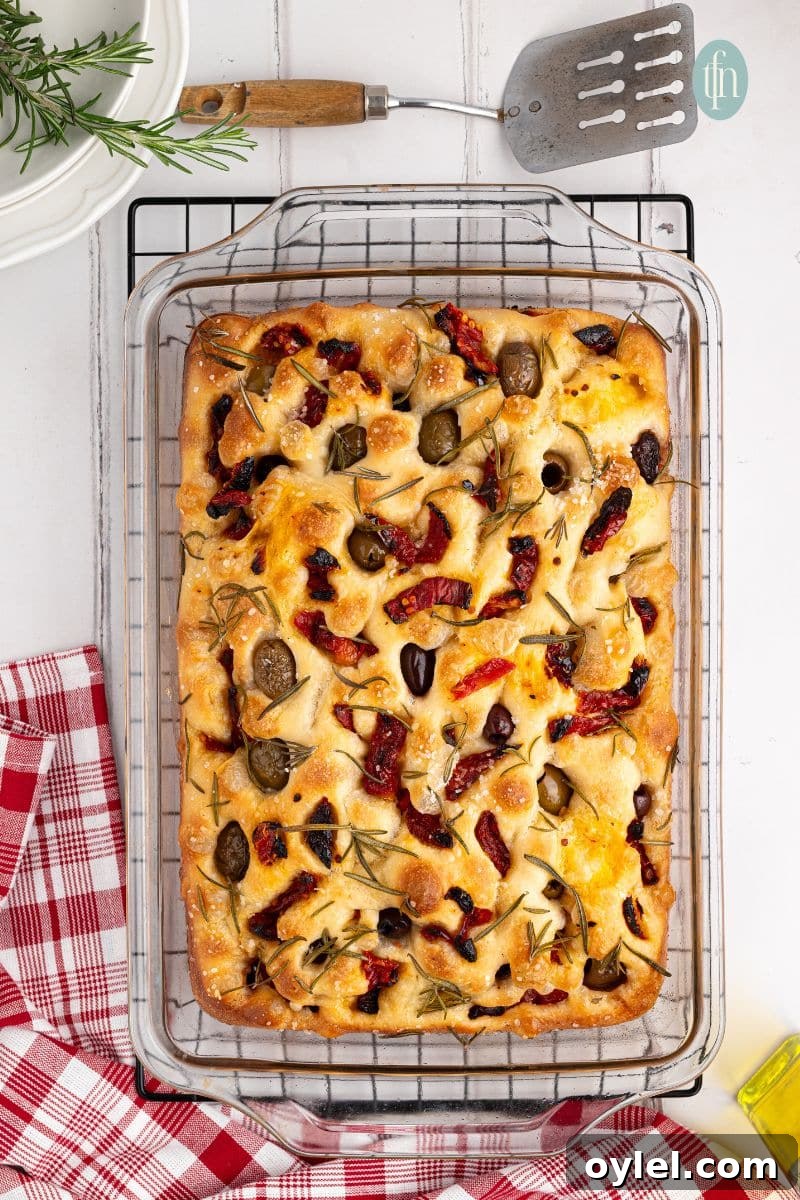
- Bake 30–40 minutes until the top is lightly golden and crisp.
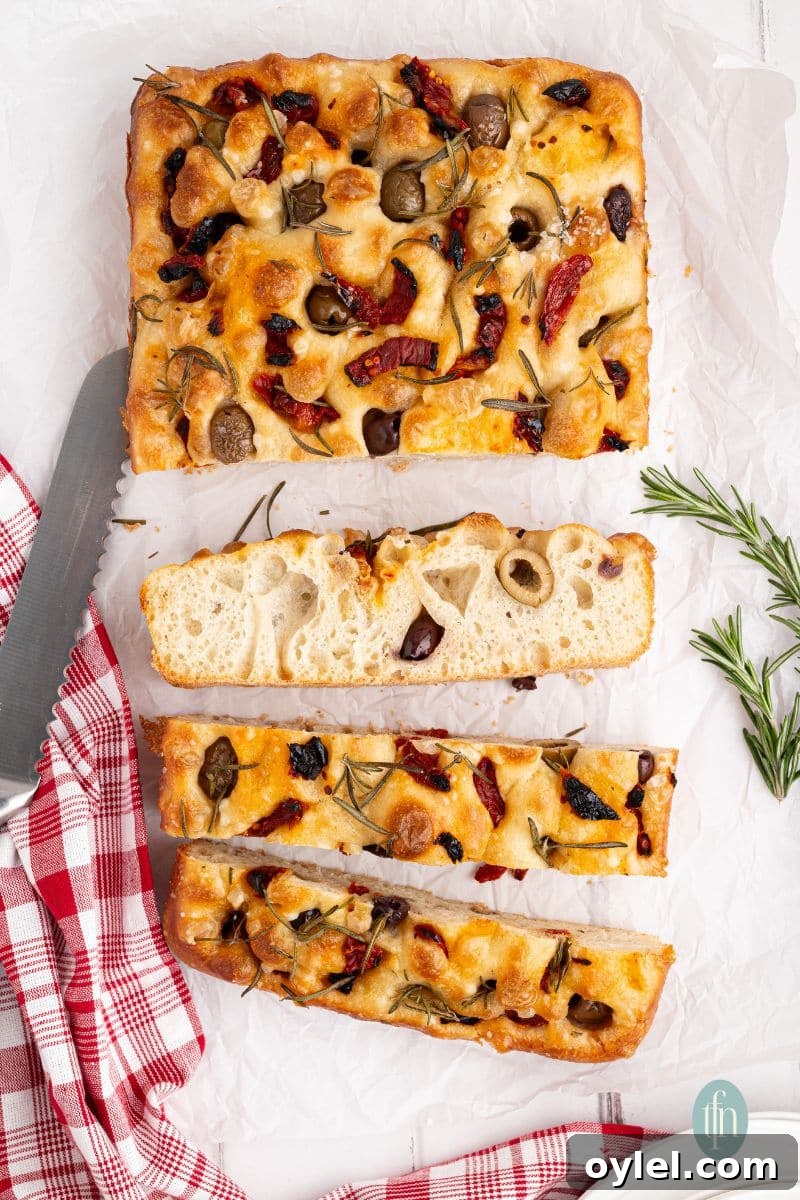
- Cool on a wire rack for about 10 minutes before slicing. Serve warm or at room temperature.
Serving Suggestions
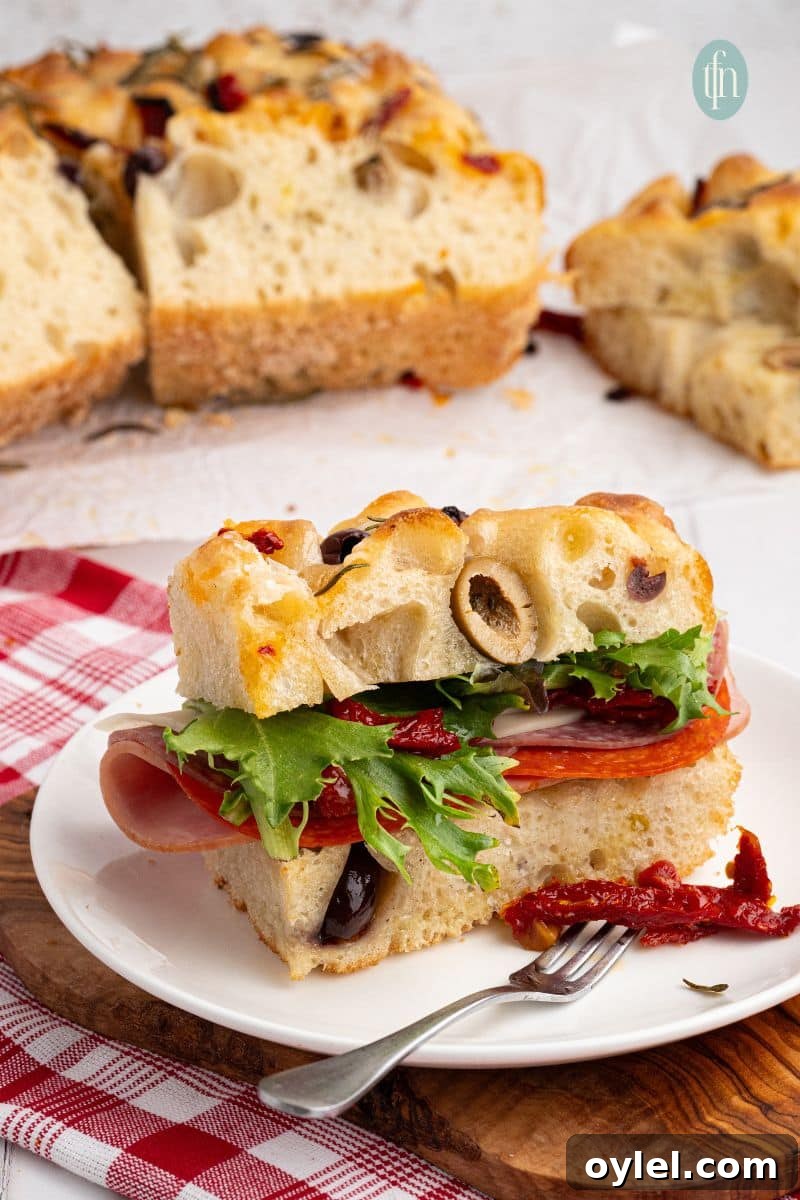
This focaccia is versatile. Serve it alongside soups and salads, use slices for gourmet sandwiches, or offer it as part of a shared appetizer with olive oil for dipping. Leftovers are excellent toasted or used in casseroles.
For gatherings, top with edible flowers or extra herbs and pair with cured meats, cheeses, and pickles for a pleasing spread.
TFN Pro Tip
Refrigerate for deeper flavor: Cold-proofing the dough overnight develops a tangier, more complex sourdough flavor before baking.
Recipe FAQs
Bulk fermentation is typically 4–6 hours at room temperature, depending on your kitchen. For more flavor, cold-proof overnight in the refrigerator.
Yes. Common options include cherry tomatoes, garlic, red onions, caramelized onions, herbs, or even sweet toppings like grapes and figs with a drizzle of honey.
Density can result from under-proofing, over-proofing, or too little hydration. Also ensure your starter is healthy and active.
Use wet fingers and press down firmly to create deep dimples without deflating the dough completely.
Traditional focaccia often uses commercial yeast, but sourdough gives a deeper, tangy flavor. This recipe uses a sourdough starter as the leavening agent.
A mature starter is well-established and has been fed consistently over time. An active starter is one that is recently fed and bubbly; ideally you want a starter that is both mature and active for the best leavening.
Other bread ideas to try:
- Whole wheat sandwich bread
- Jalapeño cheddar sourdough
- Banana bread with self-rising flour
- Sourdough English muffins
If you make this sourdough focaccia or other recipes from this collection, consider leaving a star rating and a short comment to share how it went. Happy baking!
Sourdough Focaccia Recipe
Dough Ingredients
- ½ cup sourdough starter (125 g) fed 12–24 hours before using
- 2 cups warm water (475 g)
- 3¾ cups all-purpose flour (470 g)
- 1½ cups bread flour (185 g)
- 1 tablespoon extra-virgin olive oil (15 g) plus more for topping
- 2 teaspoons fine salt (10 g)
- Cooking spray or oil for the pan
Topping Ingredients
- 6 oz sundried tomatoes in olive oil (170 g)
- 3 sprigs fresh rosemary, leaves separated from stems
- 6 oz Kalamata olives, sliced and drained
- 1 teaspoon coarse salt (5 g) for finishing
Instructions
Mix the dough
- Whisk starter and warm water until mostly dissolved. Add flours and salt and mix until combined.
- Knead on medium about 5 minutes. Reduce speed and slowly add olive oil; mix 2–3 more minutes.
- Scrape the bowl, cover, and let the dough rest for 2 hours in a warm, draft-free spot.
Shape the dough
- Coat a 9×13 pan with oil. Transfer the dough and gently stretch it to cover the pan using damp hands.
Bulk fermentation (long rise)
- Cover and proof at room temperature (about 75°F) for 4–6 hours, or until bubbly and noticeably risen. For cold fermentation, refrigerate overnight.
- During the first couple hours, every 30 minutes gently stretch the dough toward the pan edges to strengthen the gluten network.
Prepare and bake
- Preheat oven to 450°F (230°C).
- Press dimples into the dough with wet fingers, drizzle olive oil, press toppings ¼ inch into the surface, and sprinkle with coarse salt.
- Bake 30–40 minutes until golden. Cool for 10 minutes before slicing and serving.
Notes
Starter: This recipe uses an unfed starter (fed 12–24 hours before use). A 100% hydration starter works well.
Rising times vary: Warmer kitchens speed fermentation; cooler ones slow it. Watch the dough’s appearance rather than the clock. The dough should be puffy and hold dimples when ready.
Ways to keep dough warm: Use the oven light, a heated seed mat, or the oven’s proof setting at a low temperature to maintain a consistent warm environment.
Storage: Store at room temperature in an airtight container up to 2 days. Freeze slices up to 3 months and reheat in the oven after thawing.
Make ahead: After bulk fermentation refrigerate the dough overnight, then bring to room temperature before baking.
Nutrition
Serving: 1 | Calories: 285 | Carbohydrates: 47 g | Protein: 7 g | Fat: 8 g | Sodium: 1010 mg