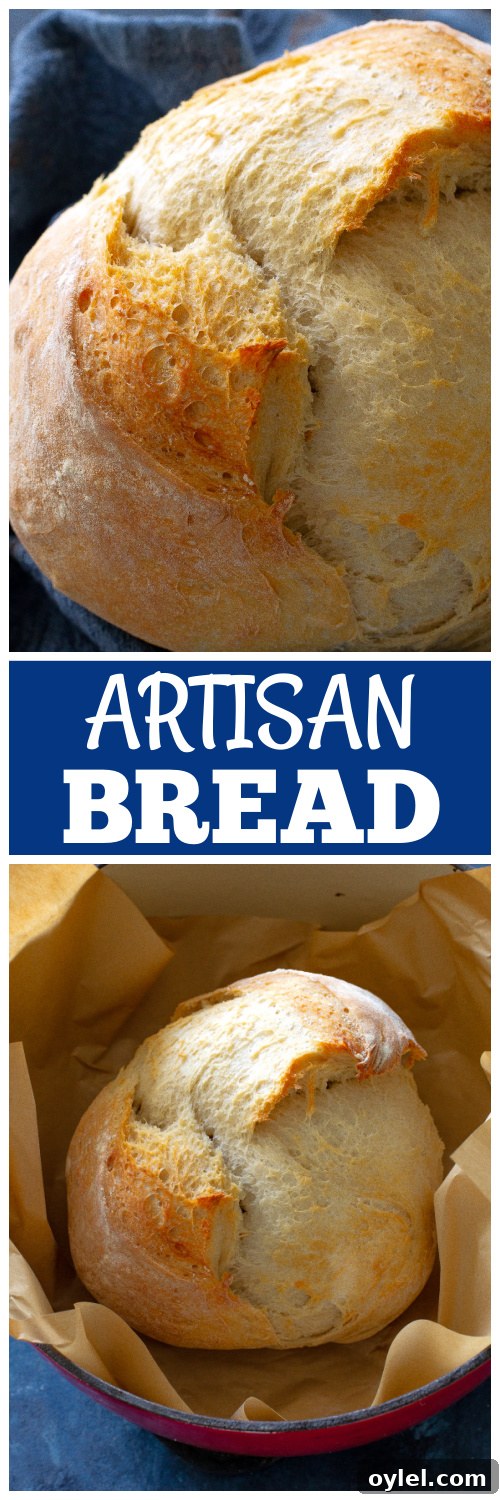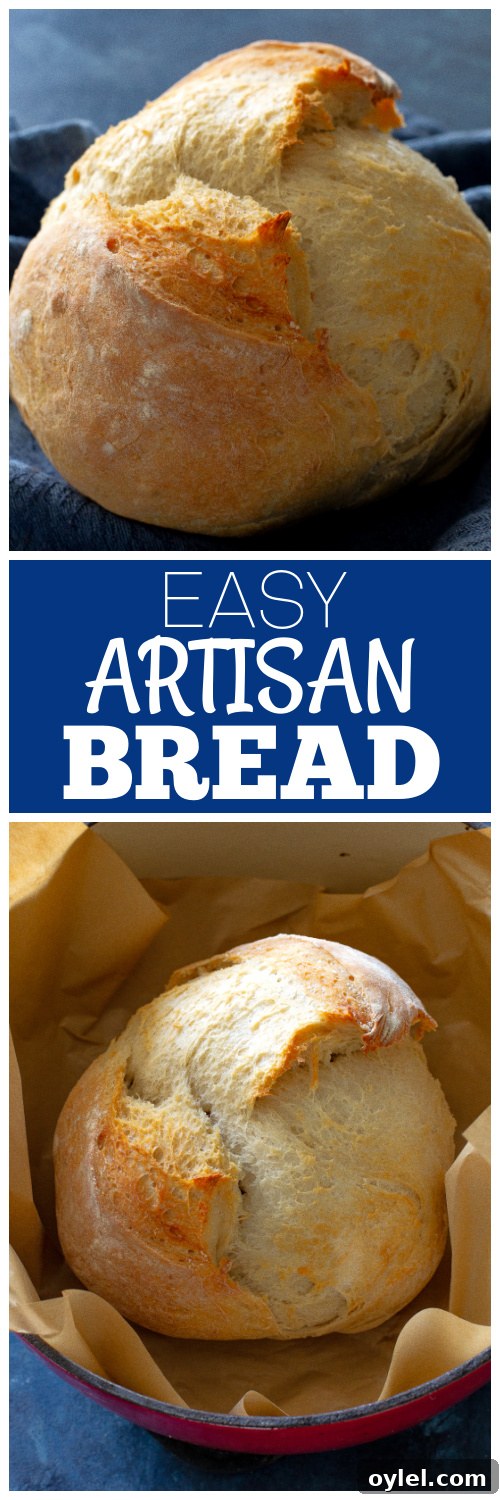
Easy Artisan Bread made from just flour, yeast, salt, and water. If you want a no-fuss recipe for fresh bread, this simple method delivers a rustic, bakery-style loaf with a crisp crust and soft, chewy interior.
ARTISAN BREAD RECIPE
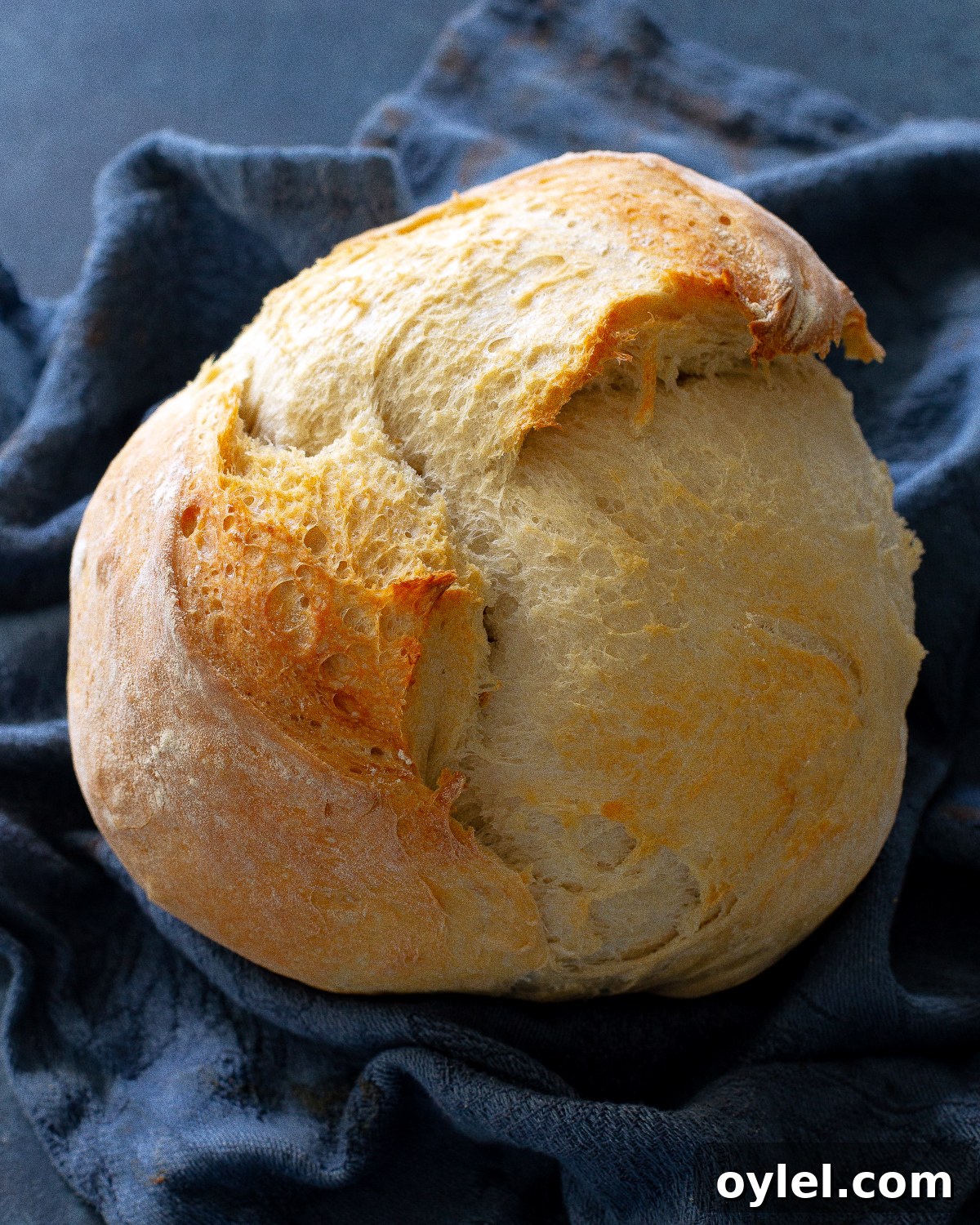
There’s something special about pulling a warm loaf of artisan bread from the oven: the crackly golden crust, the tender crumb with irregular air pockets, and the comforting aroma that fills the kitchen. This recipe is designed to be straightforward so you can enjoy bakery-quality bread without specialized equipment or complicated steps.
Sundays are often my favorite day to make a loaf—simple, comforting, and perfect with dinner or for slicing and toasting the next morning.
The method relies on a wet, shaggy dough and a long, gentle rise. You’ll shape the loaf minimally, bake it in a preheated Dutch oven (or on a baking sheet), and end up with a flavorful, rustic bread that pairs beautifully with soups, sandwiches, or just butter and jam.
Why You’ll Love This Artisan Bread
- Crispy, golden crust with a soft, open crumb
- No kneading required—easy for beginners
- Simple pantry ingredients you likely already have
- Great for soups, sandwiches, or serving with butter
- Bakery-style flavor without sourdough upkeep
What Is Artisan Bread?
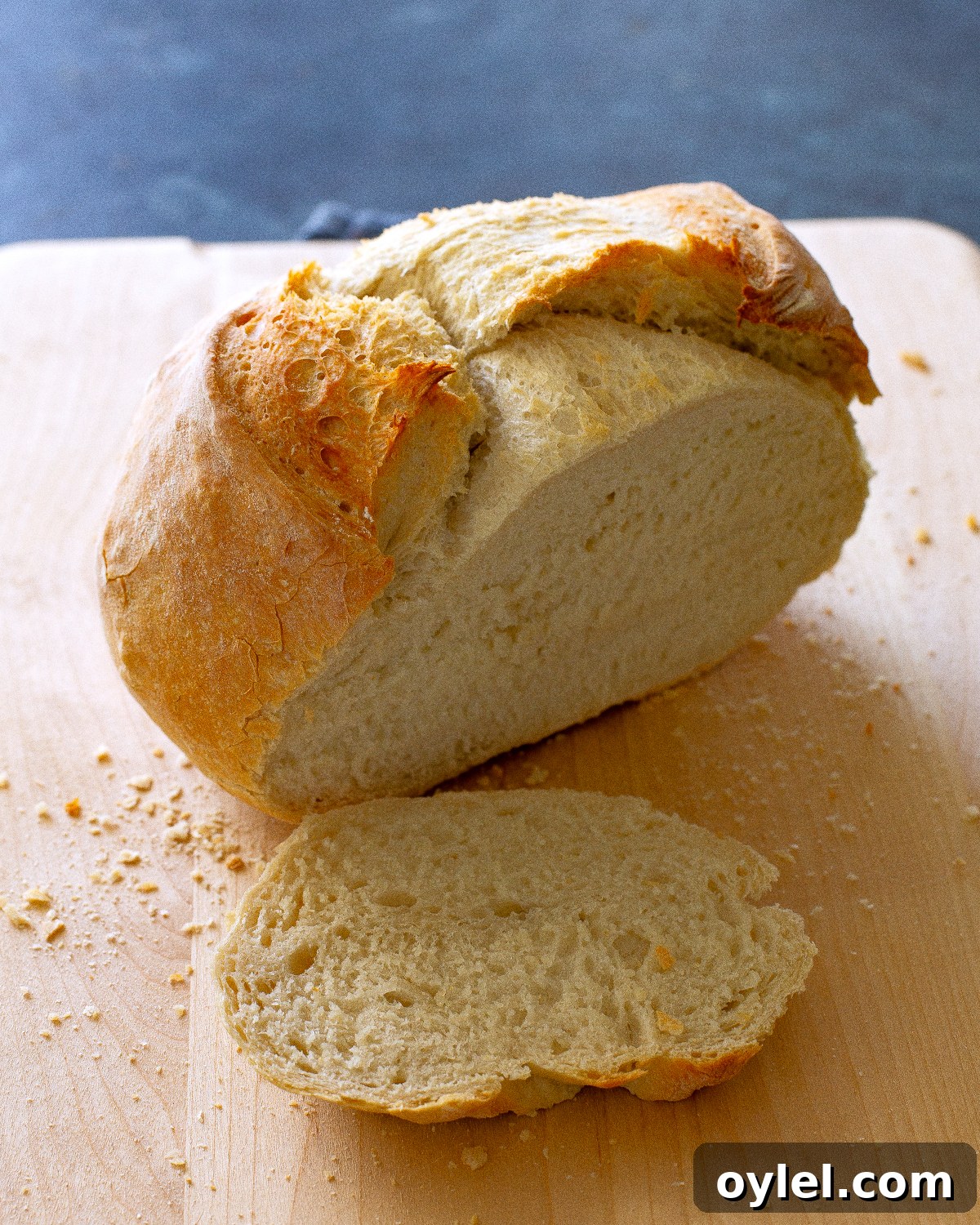
Artisan bread refers to rustic loaves made with basic ingredients—flour, water, yeast, and salt—using traditional techniques. These breads are distinct from store-bought sandwich loaves: they develop a chewy texture, a deeply browned crust, and attractive, irregular holes throughout the crumb.
High-temperature baking, often inside a covered pot like a Dutch oven, traps steam and encourages the signature crust. The result is a loaf that looks and tastes homemade but very close to what you’d find at a small bakery.
Ingredients for Homemade Artisan Bread
- Flour (bread flour or all-purpose)
- Instant yeast
- Salt (coarse or fine)
- Warm water (about 115–125°F / 46–52°C)
How to Make Artisan Bread
Step 1: Mix the Dough
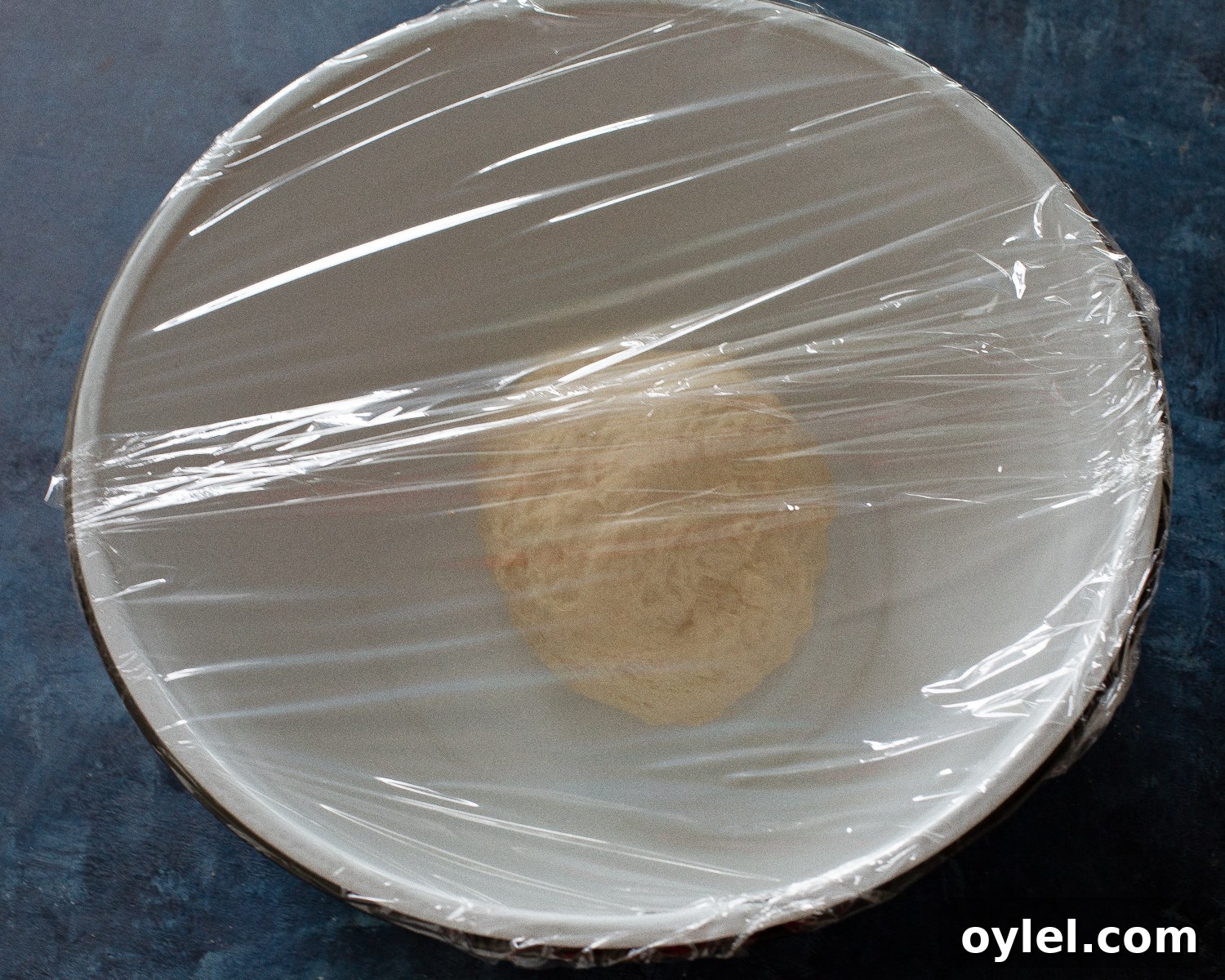
In a large bowl, combine the flour, yeast, and salt. Pour in the warm water and stir until a shaggy, wet dough forms. The dough will look sticky—that’s correct. Cover the bowl with a kitchen towel or plastic wrap.
Step 2: Let the Dough Rise
Allow the dough to rise at room temperature for about 2 hours, until it has noticeably puffy volume. For deeper flavor, you can refrigerate the dough and let it develop slowly for up to 3 days—remove it from the fridge about 45 minutes before baking to take the chill off.
Step 3: Shape the Dough
Lightly flour a clean surface and turn the dough out gently. Fold the edges toward the center several times, then shape it into a round loaf. Avoid overworking the dough—gentle folding is all that’s needed. Place the shaped dough on a piece of parchment paper and score a shallow slit on top with a sharp knife.
Step 4: Preheat the Dutch Oven
Place a Dutch oven (with its lid) into the oven and preheat to 450°F (about 230°C). Preheating the pot helps create steam when the dough is added, which promotes a crisp, blistered crust. If you don’t have a Dutch oven, you can bake on a hot baking sheet; the result will still be good, though slightly different in texture.
Step 5: Bake
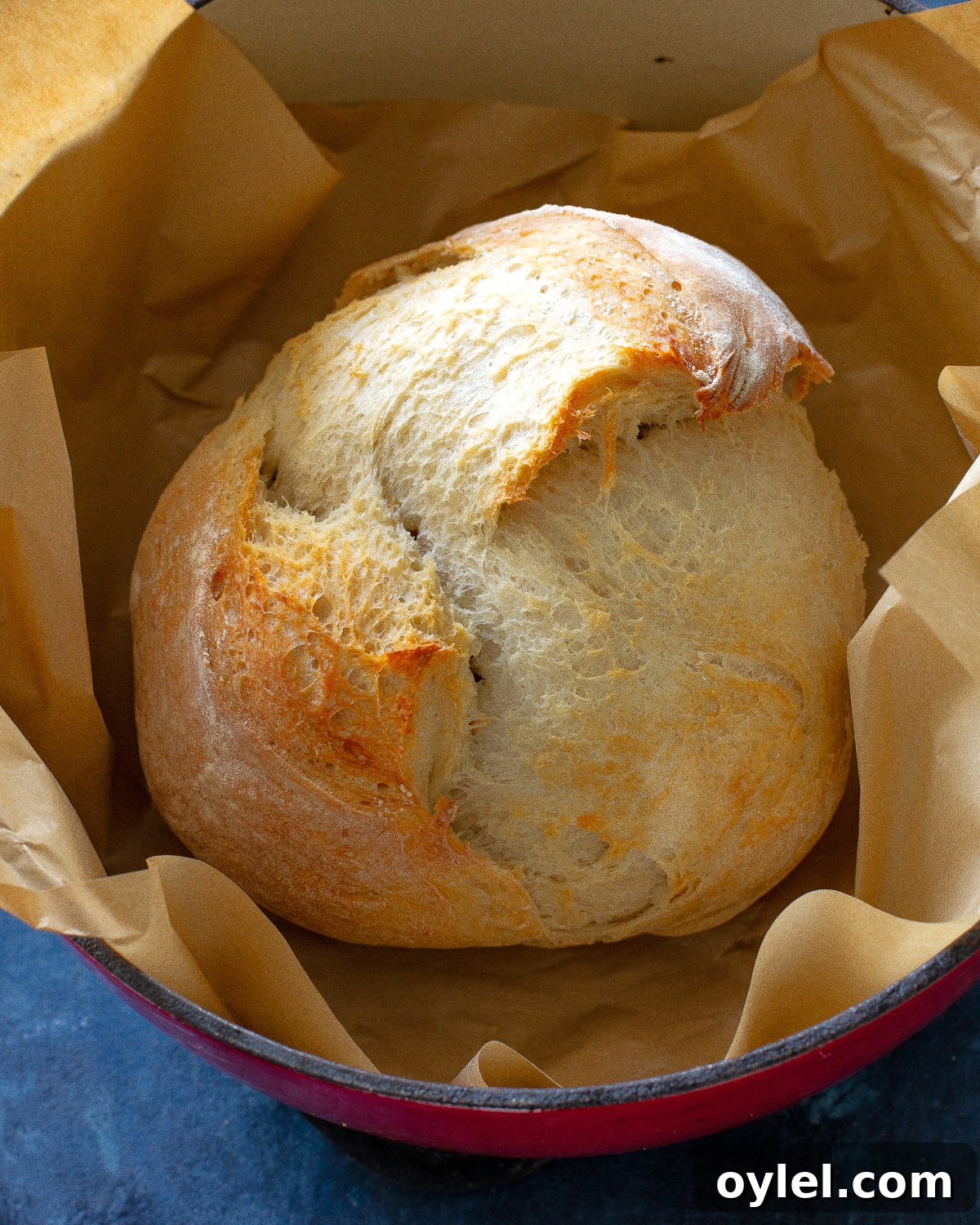
Carefully lift the dough by the parchment and place it into the hot Dutch oven. Cover and bake for 30 minutes, then remove the lid and bake another 10–15 minutes until the loaf is deeply golden. Remove the bread from the pot and cool on a rack for at least 20 minutes before slicing to allow the crumb to set.
How to Store Homemade Bread
Store the loaf loosely wrapped at room temperature for up to 3 days. For longer storage, slice and freeze the bread in an airtight bag. Reheat slices in the oven for a freshly baked texture.
Can I Use All-Purpose Flour Instead of Bread Flour?
Yes. Bread flour gives a slightly chewier texture and more structure, but all-purpose flour will still produce a delicious loaf. If you don’t have a Dutch oven, bake on a baking sheet; a Dutch oven mainly helps trap steam for a crisper crust.
Why Is My Artisan Bread Dense?
Common causes of dense bread include:
- Not allowing enough rise time
- Using expired or inactive yeast
- Adding too much flour, which dries the dough
Simple Recipe Details
Recipe: Artisan Bread
Author: Christy Denney
Prep Time: 10 mins • Cook Time: 45 mins • Rising Time: 2 hrs • Total Time: 2 hrs 55 mins
Servings: 1 loaf
Ingredients
- 3 1/2 cups bread flour or all-purpose flour (you may need a touch less or more)
- 2 1/4 teaspoons instant yeast (one packet)
- 1 1/2 teaspoons coarse salt (use 1 teaspoon if using fine salt)
- 1 1/5 cups warm water (about 115–125°F / 46–52°C)
Equipment
- Dutch oven (recommended) or a baking sheet

Instructions
- Mix all ingredients in a large bowl. You can use a stand mixer or mix by hand. The dough should be wet but not liquid; add only enough flour to keep it manageable. Cover and let rise at room temperature for about 2 hours until puffy. To delay, refrigerate immediately and allow it to rise slowly in the fridge for up to 3 days; remove it about 45 minutes before baking.
- Preheat the oven to 450°F with a Dutch oven inside (lid on). Lightly flour a surface and shape the dough by folding the top down to the bottom, rotating and repeating until it forms a round. Place seam-side down on parchment paper and let rest while the oven finishes preheating.
- Score a 1/4-inch slit down the center. Lift the dough with the parchment into the hot Dutch oven, cover, and bake 30 minutes. Remove the lid and bake 10–15 more minutes until deeply golden. Cool on a wire rack for about 20 minutes before slicing.
Notes
- Bread flour gives more chew; all-purpose flour works fine.
- If you don’t have a Dutch oven, bake on a preheated baking sheet; results will still be delicious.
OTHER ROLL RECIPES
- Lion House Rolls
- Homemade Dinner Rolls
- Crescent Rolls