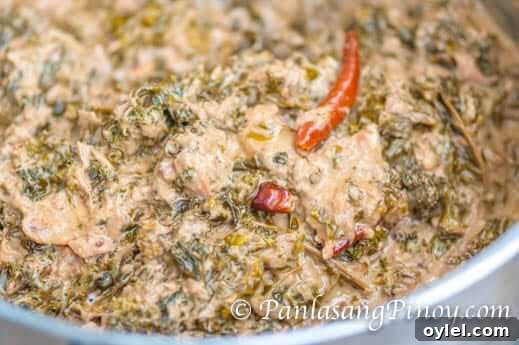
Kale and Tuna Laing is a fresh twist on the classic laing, a Filipino dish traditionally made with taro leaves simmered in coconut milk. This version substitutes dried kale for taro leaves and uses canned tuna to keep the recipe simple and accessible. It’s an ideal adaptation for cooks living abroad or anyone who cannot easily find dried taro leaves.
Though dried taro leaves are available in some specialty stores, dried kale is often easier to source or make at home. In this recipe I describe how to prepare dried kale, how to build flavor, and how to adjust spice and richness so the dish remains true to the comforting, coconut-forward character of laing while showcasing kale’s distinct vegetal note.
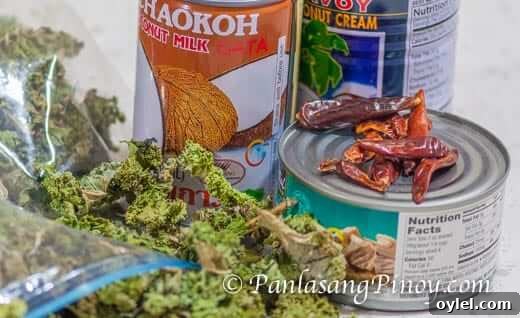
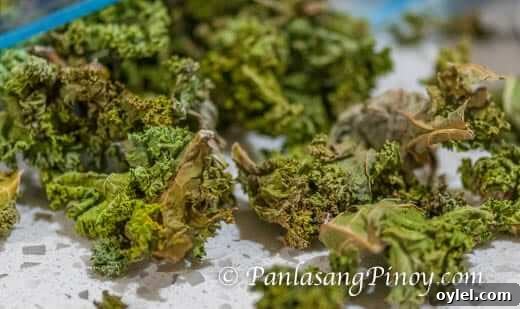
To dry kale at home, strip and chop the leaves into bite-size pieces and spread them in a single layer on a wide tray or screen. Dry them in a well-ventilated, shaded area rather than direct sun; direct sunlight can make the leaves overly brittle and change the color. A food dehydrator speeds things up and yields consistent results. If you don’t want to fully dry the kale, lightly wilting fresh kale in the coconut mixture will also work, but drying concentrates the texture and helps the leaves absorb the coconut flavors more like traditional laing.
Using canned tuna in water is convenient and keeps the dish lighter than pork while still adding savory body. When using canned tuna, I often add the tuna along with its liquid to the pot; the canned liquid carries flavor and helps create a saucier consistency before the kale absorbs it.
I prefer my kale laing spicy, so I use dried red chilies and a spicy shrimp paste. If you prefer milder food, reduce or omit the dried chilies and use a more mild shrimp paste or less of it. The shrimp paste (bagoong) is optional but recommended: it deepens the umami and ties the flavors together.
Overall, this kale and tuna version is delicious in its own right. You will notice the kale’s flavor, which differentiates it from taro-based laing, but it remains faithful to the creamy, savory profile that makes laing so satisfying. Serve it hot with steamed rice for a simple, comforting meal.
Kale and Tuna Laing Recipe
Servings: 6
Prep: 10 minutes
Cook: 1 hour 30 minutes
Total: 1 hour 40 minutes
Ingredients
- 2 cups coconut milk (from 1 can)
- 2 cups coconut cream (from 1 can)
- 12 ounces canned tuna in water (include the liquid)
- 5 to 8 dried red chili peppers (adjust to taste)
- 3 cups dried chopped kale leaves (or equivalent wilted fresh kale)
- 1/4 cup sliced ginger
- 1 teaspoon minced garlic
- 1/4 cup spicy shrimp paste (bagoong), or to taste
Instructions
- In a medium pot, combine the coconut milk, canned tuna with its liquid, dried chilies, minced garlic, and sliced ginger. Stir gently to combine.
- Bring the mixture to a gentle boil over medium heat. Once boiling, cover and simmer on medium heat for about 10 minutes to allow the aromatics to infuse the coconut base.
- Add the dried chopped kale leaves on top of the coconut mixture. Do not stir immediately—cover and cook on low to medium heat for 15 minutes so the kale begins to soften and absorb liquid.
- Remove the lid and gently stir so the kale gets coated and can absorb the coconut milk. If the mixture looks dry, add a little more coconut milk or water. Cover again and cook another 15 minutes on low to medium heat.
- Stir in the coconut cream and shrimp paste. Mix well to incorporate. Continue cooking covered on low to medium heat for 45 to 60 minutes, stirring occasionally. Add a splash of coconut milk or water if the mixture becomes too thick or begins to stick.
- When the kale is tender and the flavors have melded into a rich, creamy sauce, remove from heat. Taste and adjust seasoning—add more shrimp paste for saltiness or more chilies for heat if desired.
- Transfer the laing to a serving bowl and serve hot with steamed rice. Leftovers keep well and often taste better the next day after the flavors have had more time to develop.
Notes and Tips
– Drying kale: air-dry in a shaded, well-ventilated area or use a food dehydrator to speed the process. Avoid direct sunlight to preserve texture and color.
– Tuna: using the canned liquid adds flavor and reduces waste. If using oil-packed tuna, drain and reserve a bit of the oil or add water as needed for cooking liquid.
– Spice and salt: control heat by adjusting dried chilies or omitting them. Adjust shrimp paste gradually because it can be quite salty and strong.
– Substitutions: if you can find dried taro leaves, use them for a more traditional flavor. Fresh kale can be used if dried is not available—expect a looser texture and slightly different mouthfeel.
– Storage: refrigerate leftovers in an airtight container for up to 3 days. Reheat gently on low heat and add a splash of coconut milk or water if needed.
© copyright: Vanjo Merano